Rhododendron auriculatum
Rhododendron auriculatum · Accepted scientific name
Scientific literature: Very Sparse (5 studies) · ★☆☆☆☆
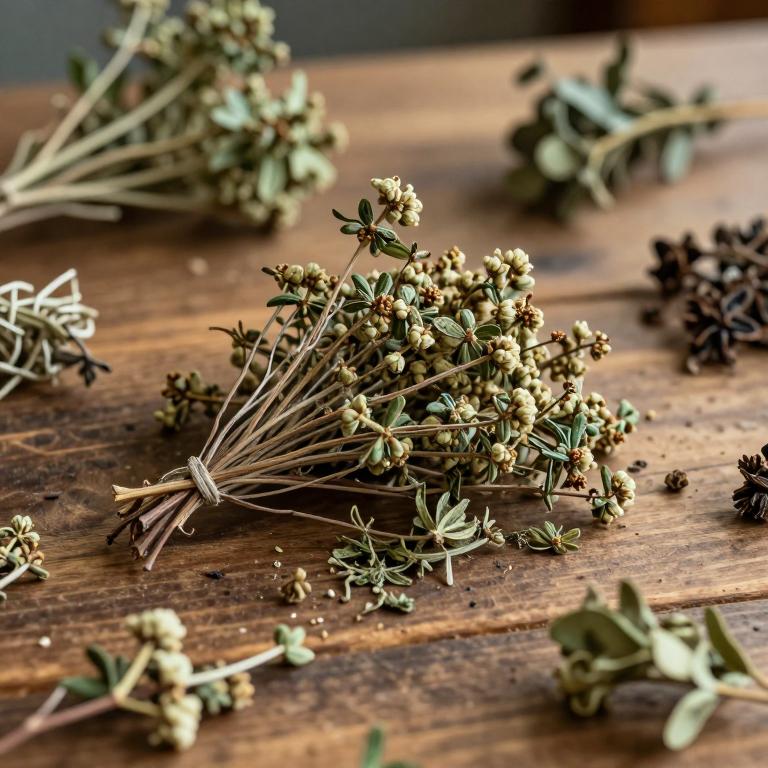
Rhododendron auriculatum, scientifically known as Rhododendron auriculatum, is a remarkable medicinal shrub native to the Himalayan regions. Renowned for its vibrant blooms, this plant holds significant therapeutic value in traditional medicine. It is primarily utilized for treating respiratory ailments, inflammation, and various skin conditions through its bioactive compounds.
- Family
- Ericaceae
- Native range
- Asia-Temperate
- Parts used
- Leaf
- Common names
- Not available
- Scientific synonyms
- Azalea Auriculata
Names and Synonyms
Scientific Names
Accepted name
Rhododendron auriculatumSynonyms
- Azalea auriculata
Sources: Wikidata, Catalogue of Life
Taxonomical Classification
This plant belongs to the kingdom Plantae and is classified under the phylum Streptophyta and class Equisetopsida. Within the subclass Magnoliidae, it is further categorized under the order Ericales and the family Ericaceae. Finally, it is identified by its genus, Rhododendron.
| Rank | Classification |
|---|---|
| Kingdom | Plantae |
| Phylum | Streptophyta |
| Class | Equisetopsida |
| Subclass | Magnoliidae |
| Order | Ericales |
| Family | Ericaceae |
| Genus | Rhododendron |
Sources: The World Checklist of Vascular Plants (WCVP)
Distribution
This plant exhibits a specific range of occurrence within the diverse landscapes of China. Its primary distribution is noted across the China South-Central region. Additionally, the species can be found extending into China North-Central areas. These two distinct zones represent the key geographical territories where the plant thrives. Consequently, its habitat is concentrated within these specific central provinces of the country.
| Region | Area |
|---|---|
| China | China South-Central |
| China | China North-Central |
Sources: The World Checklist of Vascular Plants (WCVP)
Botanical Identification
Ecology
The ecology of Rhododendron auriculatum is defined by its specific altitudinal distribution within montane ecosystems, where it thrives across a varied vertical gradient. It is typically found within an elevational range that begins at a minimum of 600 m AMSL and extends up to a maximum of 2000 m AMSL. Throughout its habitat, the species maintains a mean elevation of approximately 1300 m AMSL, positioning it within mid-altitude montane zones characterized by distinct seasonal shifts and specific moisture requirements.
- Elevational range max:
- 2000 m AMSL
- Elevational range mean:
- 1300 m AMSL
- Elevational range min:
- 600 m AMSL
Life history
The life history of Rhododendron auriculatum is characterized by its nature as a perennial species, allowing it to persist through multiple growing seasons and establish a stable presence within its ecological niche. As an evergreen plant, it maintains its foliage throughout the year, providing a continuous photosynthetic capacity that is essential for its survival in its natural habitat. This combination of a long-lived life cycle and constant leaf retention enables the plant to endure varying environmental conditions while maintaining its structural integrity over time.
- Deciduousness :
- evergreen
- Lifecycle :
- perennial
Morphology
The morphology of Rhododendron auriculatum is characterized by its stature as a woody shrub, exhibiting a robust and perennial growth form. This plant reaches significant dimensions, with a height that typically ranges from a minimum of 5 m to a maximum of 10 m, maintaining a mean height of approximately 7.5 m. Structurally, the species is classified as self-supporting, meaning it does not rely on other structures for climbing but maintains its own upright presence within its habitat.
- Climber :
- self-supporting
- Growth form :
- shrub
- Plant height max:
- 10 m
- Plant height mean:
- 7.5 m
- Plant height min:
- 5 m
- Woodiness :
- woody
Physiology
The physiology of Rhododendron auriculatum is characterized by distinct morphological dimensions of its foliage, which play a crucial role in its metabolic processes and environmental adaptation. The leaves exhibit significant variability in size, with a mean length of 15.5 cm, though they can range from a minimum of 9 cm to a maximum length of 22 cm. In terms of lateral expansion, the leaf width fluctuates between a minimum of 3 cm and a maximum of 6.5 cm. These dimensional parameters influence the plant's surface area-to-volume ratio, directly impacting its photosynthetic efficiency, transpiration rates, and overall water regulation capabilities within its native habitat.
- Leaf length max:
- 22 cm
- Leaf length mean:
- 15.5 cm
- Leaf length min:
- 9 cm
- Leaf width max:
- 6.5 cm
- Leaf width min:
- 3 cm
Reproduction
The reproduction of Rhododendron auriculatum involves the development of distinct fruit structures following successful pollination. The resulting fruits exhibit measurable variations in size, typically characterized by a length that ranges from a minimum of 3 cm to a maximum of 4 cm. On average, the fruit length maintains a mean value of approximately 3.5 cm, representing the standard dimensions for this species during its reproductive cycle.
- Fruit length max:
- 4 cm
- Fruit length mean:
- 3.5 cm
- Fruit length min:
- 3 cm
Sources: Global Inventory of Floras and Traits (GIFT)
Plant Parts
Rhododendron auriculatum has 1 reported plant parts identified across 2 scientific publications and several other databases that are studied for medicinal purposes. The most consistently reported plant part include leaf.
| Plant part | Supporting sources | Consensus |
|---|---|---|
| Leaf | 2 supporting sources | ★☆☆☆☆ |
Leaf
- Journal of natural products
- Phytochemistry
Chemicals
Rhododendron auriculatum has 1 reported phytochemicals identified across 2 scientific publications and several other databases. The most consistently reported chemicals include Pierisformoside F.
| Chemical | Supporting sources | Consensus |
|---|---|---|
| Pierisformoside F | 1 supporting sources | ★☆☆☆☆ |
Pierisformoside F
- Phytochemistry
Activities
Rhododendron auriculatum has 1 reported activities identified across 2 scientific publications and several other databases. The most consistently reported activities include Analgesic.
| Activity | Supporting sources | Consensus |
|---|---|---|
| Analgesic | 1 supporting sources | ★☆☆☆☆ |
Analgesic
- Phytochemistry
Conditions
Rhododendron auriculatum has 1 reported investigations on conditions identified across 2 scientific publications and several other databases. The most consistently reported conditions include Analgesic.
| Condition | Supporting sources | Consensus |
|---|---|---|
| Analgesic | 1 supporting sources | ★☆☆☆☆ |
Analgesic
- Phytochemistry
Preparations
Rhododendron auriculatum has 1 reported preparations identified across 2 scientific publications and several other databases. The most consistently reported preparations include leaves.
| Preparation | Supporting sources | Consensus |
|---|---|---|
| Leaves | 1 supporting sources | ★☆☆☆☆ |
Leaves
- Phytochemistry