Rhododendron anthopogon
Rhododendron anthopogon · Accepted scientific name
Scientific literature: Very Sparse (29 studies) · ★☆☆☆☆
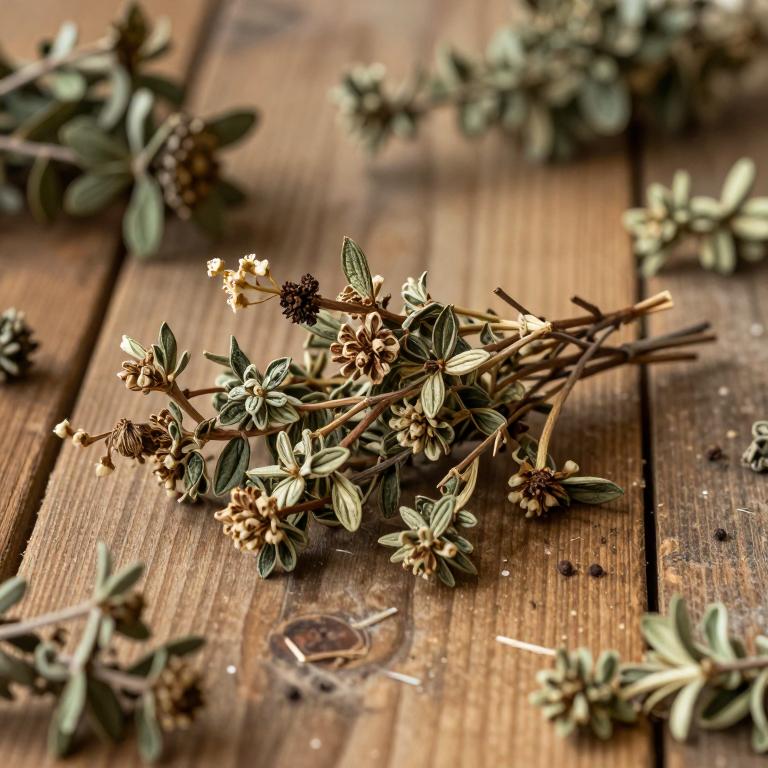
Rhododendron anthopogon, scientifically known as Rhododendron anthopogon, is a distinctive evergreen shrub native to the high-altitude regions of the Himalayas. Valued in traditional medicine, its leaves and flowers possess unique bioactive properties, often utilized to treat inflammatory conditions, respiratory ailments, and various ailments within local herbal practices.
- Family
- Ericaceae
- Native range
- Asia-Temperate
- Parts used
- Not available
- Common names
- Not available
- Scientific synonyms
- Not available
Names and Synonyms
Scientific Names
Accepted name
Rhododendron anthopogonSources: Wikidata, Catalogue of Life
Taxonomical Classification
This plant belongs to the kingdom Plantae and is classified under the phylum Streptophyta and class Equisetopsida. Within the subclass Magnoliidae, it is ordered under Ericales and placed in the family Ericaceae. Finally, it is categorized under the genus Rhododendron.
| Rank | Classification |
|---|---|
| Kingdom | Plantae |
| Phylum | Streptophyta |
| Class | Equisetopsida |
| Subclass | Magnoliidae |
| Order | Ericales |
| Family | Ericaceae |
| Genus | Rhododendron |
Sources: The World Checklist of Vascular Plants (WCVP)
Distribution
This plant exhibits a wide geographical distribution across several mountainous regions. In China, its presence is specifically noted within the Tibet region. It is also widely found across the Indian Subcontinent, particularly in the East Himalaya. Furthermore, the species is documented growing in the high altitudes of Nepal. Finally, its range extends to the West Himalaya and parts of Pakistan.
| Region | Area |
|---|---|
| China | Tibet |
| Indian Subcontinent | East Himalaya |
| Indian Subcontinent | Nepal |
| Indian Subcontinent | Pakistan |
| Indian Subcontinent | West Himalaya |
| Indo-China | Myanmar |
Sources: The World Checklist of Vascular Plants (WCVP)
Botanical Identification
Ecology
The ecology of Rhododendron anthopogon is defined by its specialized adaptation to high-altitude alpine and subalpine environments. This species thrives within a specific vertical distribution, occupying a significant elevational range that begins at a minimum of 2400 m AMSL. It is most commonly found around a mean elevation of 3750 m AMSL, where it serves as a key component of the montane flora. The plant reaches its upper ecological limit at an impressive maximum elevation of 5000 m AMSL, demonstrating a remarkable capacity to withstand the extreme temperatures, intense solar radiation, and thin atmospheric conditions characteristic of the highest mountain zones.
- Elevational range max:
- 5000 m AMSL
- Elevational range mean:
- 3750 m AMSL
- Elevational range min:
- 2400 m AMSL
Life history
The life history of Rhododendron anthopogon is characterized by its status as a perennial species, allowing it to persist through multiple growing seasons and establish a long-term presence in its natural habitat. Throughout its development, the plant maintains an evergreen habit, retaining its foliage year-round rather than shedding it seasonally. This combination of a perennial lifecycle and evergreen foliage enables the plant to maintain continuous photosynthetic activity and structural stability across various environmental conditions.
- Deciduousness :
- evergreen
- Lifecycle :
- perennial
Morphology
The morphology of Rhododendron anthopogon is characterized by its growth form as a woody shrub. It is a self-supporting plant, meaning it does not function as a liana or vine, and it maintains an independent lifestyle rather than acting as a parasite. As a terrestrial species, it is neither aquatic nor an epiphyte. In terms of stature, the plant typically reaches a mean height of 0.75 m, with individual specimens ranging from a minimum height of 0.5 m to a maximum height of 1 m.
- Aquatic :
- terrestrial
- Climber :
- self-supporting
- Epiphyte :
- terrestrial
- Growth form :
- shrub
- Parasite :
- independent
- Plant height max:
- 1 m
- Plant height mean:
- 0.75 m
- Plant height min:
- 0.5 m
- Woodiness :
- woody
Physiology
The physiology of Rhododendron anthopogon is characterized by a C3 photosynthetic pathway, which dictates its metabolic processes and carbon fixation efficiency. The vegetative structure of the plant is defined by specific leaf dimensions that support its physiological needs, with leaf lengths ranging from a minimum of 2.5 cm to a maximum of 3.5 cm, maintaining a mean length of approximately 3 cm. Complementing these longitudinal dimensions, the leaf width varies from a minimum of 1 cm to a maximum of 1.6 cm, contributing to the overall surface area optimized for light absorption and gas exchange within its specific ecological niche.
- Leaf length max:
- 3.5 cm
- Leaf length mean:
- 3 cm
- Leaf length min:
- 2.5 cm
- Leaf width max:
- 1.6 cm
- Leaf width min:
- 1 cm
- Photosynthetic pathway :
- C3
Reproduction
The reproduction of Rhododendron anthopogon is characterized by the development of small, specialized fruit structures and minute seeds. The fruits produced by this species typically range in length from a minimum of 0.3 cm to a maximum of 0.5 cm, with an average fruit length of approximately 0.4 cm. Following the maturation of these fruits, the plant produces seeds that are exceptionally lightweight and uniform in size; the seed mass remains constant at a value of 2e-05 g, with the minimum, mean, and maximum recorded masses all aligning at this specific measurement.
- Fruit length max:
- 0.5 cm
- Fruit length mean:
- 0.4 cm
- Fruit length min:
- 0.3 cm
- Seed mass mean:
- 2e-05 g
Sources: Global Inventory of Floras and Traits (GIFT)
Chemicals
Rhododendron anthopogon has 10 reported phytochemicals identified across 0 scientific publications and several other databases. The most consistently reported chemicals include 2-Ethoxypropane, 2-Phenylethyl 4-methoxybenzoate, 3-Methyl-6-tert-butylphenol, Betulin, Cannabigerorcinic Acid.
| Chemical | Supporting sources | Consensus |
|---|---|---|
| 2-Ethoxypropane | 1 supporting sources | ★☆☆☆☆ |
| 2-Phenylethyl 4-methoxybenzoate | 1 supporting sources | ★☆☆☆☆ |
| 3-Methyl-6-tert-butylphenol | 1 supporting sources | ★☆☆☆☆ |
| Betulin | 1 supporting sources | ★☆☆☆☆ |
| Cannabigerorcinic Acid | 1 supporting sources | ★☆☆☆☆ |
| Diphenylamine | 1 supporting sources | ★☆☆☆☆ |
| Friedelin | 1 supporting sources | ★☆☆☆☆ |
| PENTACOSANE | 1 supporting sources | ★☆☆☆☆ |
| TRICOSANE | 1 supporting sources | ★☆☆☆☆ |
| Ursolic acid | 1 supporting sources | ★☆☆☆☆ |
2-Ethoxypropane
- Zhong yao cai = Zhongyaocai = Journal of Chinese medicinal materials
2-Phenylethyl 4-methoxybenzoate
- Natural product research
3-Methyl-6-tert-butylphenol
- Zhong yao cai = Zhongyaocai = Journal of Chinese medicinal materials
Betulin
- Dr. Duke
Cannabigerorcinic Acid
- Natural product research
Diphenylamine
- Zhong yao cai = Zhongyaocai = Journal of Chinese medicinal materials
Friedelin
- Natural product research
PENTACOSANE
- Zhong yao cai = Zhongyaocai = Journal of Chinese medicinal materials
TRICOSANE
- Zhong yao cai = Zhongyaocai = Journal of Chinese medicinal materials
Ursolic acid
- Natural product research
Activities
Rhododendron anthopogon has 13 reported activities identified across 0 scientific publications and several other databases. The most consistently reported activities include Cytotoxic, AntiHIV, Antibacterial, Anticarcinomic, Antifeedant.
| Activity | Supporting sources | Consensus |
|---|---|---|
| Cytotoxic | 2 supporting sources | ★☆☆☆☆ |
| AntiHIV | 1 supporting sources | ★☆☆☆☆ |
| Antibacterial | 1 supporting sources | ★☆☆☆☆ |
| Anticarcinomic | 1 supporting sources | ★☆☆☆☆ |
| Antifeedant | 1 supporting sources | ★☆☆☆☆ |
| Antiflu | 1 supporting sources | ★☆☆☆☆ |
| Antiinflammatory | 1 supporting sources | ★☆☆☆☆ |
| Antitumor | 1 supporting sources | ★☆☆☆☆ |
| Antiviral | 1 supporting sources | ★☆☆☆☆ |
| Aphidifuge | 1 supporting sources | ★☆☆☆☆ |
Cytotoxic
- Dr. Duke
- Natural product communications
AntiHIV
- Dr. Duke
Antibacterial
- Natural product communications
Anticarcinomic
- Dr. Duke
Antifeedant
- Dr. Duke
Antiflu
- Dr. Duke
Antiinflammatory
- Dr. Duke
Antitumor
- Dr. Duke
Antiviral
- Dr. Duke
Aphidifuge
- Dr. Duke
Conditions
Rhododendron anthopogon has 5 reported investigations on conditions identified across 0 scientific publications and several other databases. The most consistently reported conditions include back pain, bone disease, headaches, sore throat, vomiting.
| Condition | Supporting sources | Consensus |
|---|---|---|
| Back pain | 1 supporting sources | ★☆☆☆☆ |
| Bone disease | 1 supporting sources | ★☆☆☆☆ |
| Headaches | 1 supporting sources | ★☆☆☆☆ |
| Sore throat | 1 supporting sources | ★☆☆☆☆ |
| Vomiting | 1 supporting sources | ★☆☆☆☆ |
Back pain
- Natural product communications
Bone disease
- Natural product communications
Headaches
- Natural product communications
Sore throat
- Natural product communications
Vomiting
- Natural product communications
Preparations
Rhododendron anthopogon has 1 reported preparations identified across 0 scientific publications and several other databases. The most consistently reported preparations include leaf essential oil.
| Preparation | Supporting sources | Consensus |
|---|---|---|
| Leaf essential oil | 1 supporting sources | ★☆☆☆☆ |
Leaf essential oil
- Natural product communications