white rhododendron
Rhododendron albiflorum · Accepted scientific name
Scientific literature: Very Sparse (8 studies) · ★☆☆☆☆
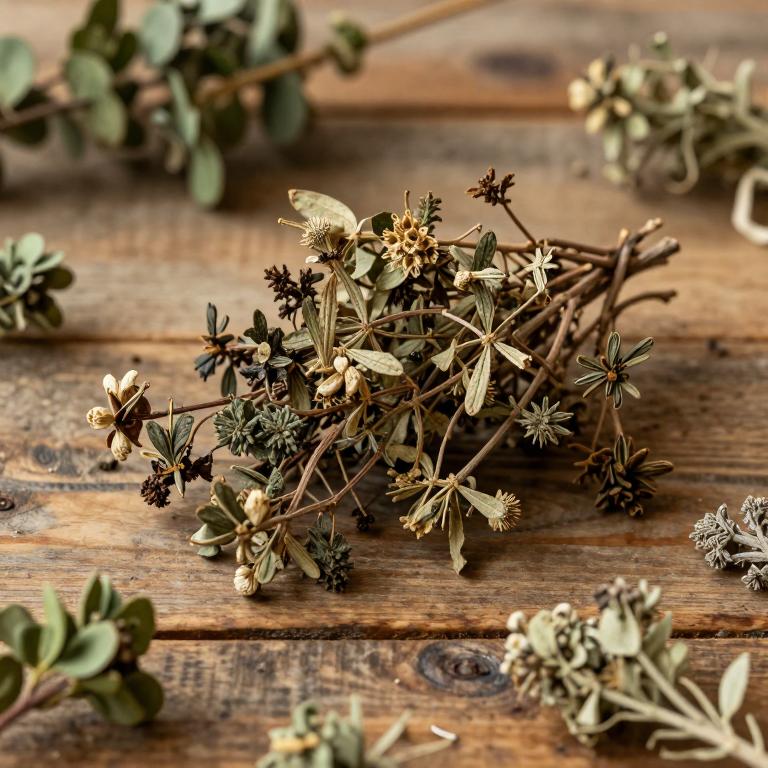
White rhododendron, scientifically known as Rhododendron albiflorum, is a captivating evergreen shrub native to high-altitude regions of China. Renowned for its delicate, snow-white blossoms, this medicinal plant offers unique botanical properties. It is traditionally valued in herbal practices for its potential therapeutic benefits and striking aesthetic appeal.
Names and Synonyms
Common Names
- white rhododendron
- white rosebay
- white-flowered rhododendron
- white rose-bay
- white-flower rhododendron
Scientific Names
Accepted name
Rhododendron albiflorumSynonyms
- Rhododendron warrenii
- Cladothamnus campanulatus
- Rhododendron albiflorum f. poikilon
- Rhododendron albiflorum f. plenum
- Azalea albiflora
- Azaleastrum albiflorum
- Azaleastrum albiflorum subsp. warrenii
- Azaleastrum warrenii
Regional and Traditional Names
German:
- Azaleastrum albiflorum
- Candidastrum
French:
- Azalée blanche
- azalée blanche
- rhododendron à fleurs blanches
Sources: Wikidata, Catalogue of Life
Taxonomical Classification
This plant belongs to the kingdom Plantae within the phylum Streptophyta and the class Equisetopsida. It is further classified under the subclass Magnoliidae and the order Ericales, falling into the family Ericaceae. Finally, it is identified by the genus Rhododendron as the species Rhododendron albiflorum.
| Rank | Classification |
|---|---|
| Kingdom | Plantae |
| Phylum | Streptophyta |
| Class | Equisetopsida |
| Subclass | Magnoliidae |
| Order | Ericales |
| Family | Ericaceae |
| Genus | Rhododendron |
Sources: The World Checklist of Vascular Plants (WCVP)
Distribution
This plant exhibits a widespread distribution across several regions of Western North America. In Western Canada, it can be found growing within the provinces of Alberta and British Columbia. Its range extends southward into the Northwestern United States as well. Specifically, it inhabits the mountainous terrains of Idaho and Montana. Additionally, this medicinal species is located as far south as Colorado.
| Region | Area |
|---|---|
| Western Canada | Alberta |
| Western Canada | British Columbia |
| Northwestern U.S.A. | Colorado |
| Northwestern U.S.A. | Idaho |
| Northwestern U.S.A. | Montana |
| Northwestern U.S.A. | Oregon |
| Northwestern U.S.A. | Washington |
Sources: The World Checklist of Vascular Plants (WCVP)
Botanical Identification
Life history
The life history of Rhododendron albiflorum is characterized by a perennial lifecycle, meaning the plant lives for many years rather than completing its cycle in a single growing season. As a long-lived woody species, it establishes itself through seed germination or vegetative propagation, eventually developing a robust structure capable of surviving multiple seasonal transitions. Throughout its extended lifespan, the plant undergoes consistent vegetative growth and periodic reproductive phases, where it invests energy into the production of its characteristic white blooms. This perennial nature allows the species to maintain a persistent presence in its ecological niche, accumulating biomass and strengthening its root systems over successive years to withstand environmental fluctuations.
- Lifecycle :
- perennial
Morphology
The morphology of Rhododendron albiflorum is characterized by a woody growth form, specifically manifesting as a shrub. It reaches a mean plant height of approximately 1.8 m and is a self-supporting species, lacking the characteristics of a climber, vine, or liana. As a terrestrial plant, it does not exhibit aquatic or semiaquatic tendencies, nor does it function as an epiphyte. Furthermore, it is an independent organism that does not rely on a parasitic lifestyle.
- Aquatic :
- terrestrial
- Climber :
- self-supporting
- Epiphyte :
- terrestrial
- Growth form :
- shrub
- Parasite :
- independent
- Plant height mean:
- 1.8 m
- Woodiness :
- woody
Physiology
The physiology of Rhododendron albiflorum is characterized by a metabolic framework primarily driven by the C3 photosynthetic pathway, which dictates its carbon fixation processes and energy production strategies. As a C3 plant, it utilizes the enzyme Rubisco to fix atmospheric carbon dioxide directly into three-carbon compounds during the Calvin cycle, a process that is highly efficient under the cool, moist, and temperate environmental conditions typically inhabited by the species. This photosynthetic mechanism influences the plant's transpiration rates and water-use efficiency, as it relies on open stomata to facilitate gas exchange, thereby necessitating adaptations to manage moisture retention in its specific ecological niche. Furthermore, its physiological processes are closely integrated with its nutrient uptake and cellular respiration, supporting the growth and maintenance of its specialized floral and vegetative structures through the steady conversion of light energy into chemical energy.
- Photosynthetic pathway :
- C3
Reproduction
The reproduction of Rhododendron albiflorum is characterized by the production of extremely minute seeds, which play a critical role in its dispersal and establishment strategies. The reproductive output of this species is defined by a highly specialized seed mass profile, where the individual seeds are exceptionally lightweight. Specifically, the seed mass exhibits a minimum and maximum value of 3e-05 g, indicating a very narrow range of size among the offspring. When considering the broader population, the mean seed mass is recorded at 0.0001284 g. These infinitesimal measurements suggest that the plant relies on high-volume seed production to compensate for the small individual investment per seed, likely facilitating wind or water-based dispersal to colonize suitable habitats.
- Seed mass max:
- 3e-05 g
- Seed mass mean:
- 0.0001284 g
Sources: Global Inventory of Floras and Traits (GIFT)
Chemicals
Rhododendron albiflorum has 6 reported phytochemicals identified across 0 scientific publications and several other databases. The most consistently reported chemicals include Curzerene, Germacrone, Monoterpenes, Sesquiterpenes, Spathulenol.
| Chemical | Supporting sources | Consensus |
|---|---|---|
| Curzerene | 1 supporting sources | ★☆☆☆☆ |
| Germacrone | 1 supporting sources | ★☆☆☆☆ |
| Monoterpenes | 1 supporting sources | ★☆☆☆☆ |
| Sesquiterpenes | 1 supporting sources | ★☆☆☆☆ |
| Spathulenol | 1 supporting sources | ★☆☆☆☆ |
| Viridiflorol | 1 supporting sources | ★☆☆☆☆ |
Curzerene
- Molecules (Basel, Switzerland)
Germacrone
- Molecules (Basel, Switzerland)
Monoterpenes
- Molecules (Basel, Switzerland)
Sesquiterpenes
- Molecules (Basel, Switzerland)
Spathulenol
- Molecules (Basel, Switzerland)
Viridiflorol
- Molecules (Basel, Switzerland)