Rhododendron afghanicum
Rhododendron afghanicum · Accepted scientific name
Scientific literature: Very Sparse (10 studies) · ★☆☆☆☆
, scientifically known as Rhododendron afghanicum, is a resilient shrub native to the high-altitude regions of Central Asia. Often found in alpine environments, this plant holds significant interest in ethnobotany. While primarily studied for its ecological role, its unique chemical properties offer intriguing potential for traditional and modern medicinal applications.
- Family
- Ericaceae
- Native range
- Asia-Temperate
- Parts used
- Leaf · Stem
- Common names
- Not available
- Scientific synonyms
- Not available
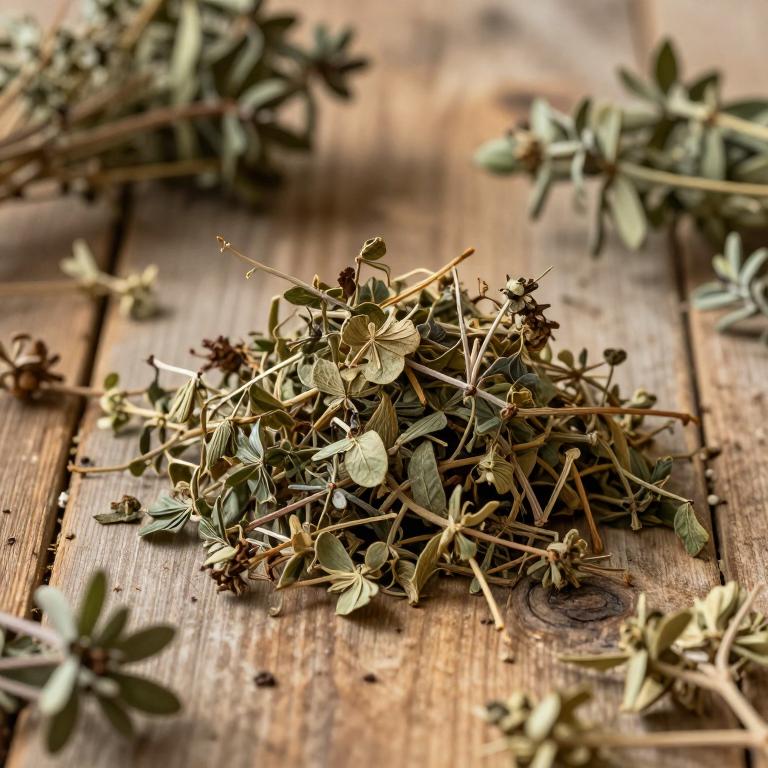
Names and Synonyms
Scientific Names
Accepted name
Rhododendron afghanicumSources: Wikidata
Taxonomical Classification
This plant belongs to the kingdom Plantae and the phylum Streptophyta within the class Equisetopsida. It is further classified under the subclass Magnoliidae and the order Ericales. Finally, it falls under the family Ericaceae and the genus Rhododendron.
| Rank | Classification |
|---|---|
| Kingdom | Plantae |
| Phylum | Streptophyta |
| Class | Equisetopsida |
| Subclass | Magnoliidae |
| Order | Ericales |
| Family | Ericaceae |
| Genus | Rhododendron |
Sources: The World Checklist of Vascular Plants (WCVP)
Distribution
This plant exhibits a specific distribution across parts of Western and South Asia. Within the region of Western Asia, it can be found growing in Afghanistan. Its range extends further east into the Indian Subcontinent. Specifically, the species is documented to inhabit the mountainous areas of Pakistan. Consequently, its geographical presence is concentrated within these two distinct neighboring territories.
| Region | Area |
|---|---|
| Western Asia | Afghanistan |
| Indian Subcontinent | Pakistan |
Sources: The World Checklist of Vascular Plants (WCVP)
Botanical Identification
Ecology
The ecology of Rhododendron afghanicum is defined by its preference for high-altitude montane environments, where it occupies a specific niche within the alpine and subalpine zones. It thrives within a distinct elevational range, typically found at altitudes starting from 2100 m AMSL and extending up to a maximum of 2700 m AMSL. This vertical distribution suggests an adaptation to the cooler temperatures, increased UV exposure, and specific moisture regimes characteristic of these high-elevation habitats. By inhabiting this specific altitudinal belt, the species plays a vital role in its local ecosystem, contributing to the structural complexity of mountain vegetation and interacting with specialized pollinators and soil microbiota adapted to these rugged, high-altitude conditions.
- Elevational range max:
- 2700 m AMSL
- Elevational range min:
- 2100 m AMSL
Sources: Global Inventory of Floras and Traits (GIFT)
Plant Parts
Rhododendron afghanicum has 2 reported plant parts identified across 2 scientific publications and several other databases that are studied for medicinal purposes. The most consistently reported plant part include leaf, stem.
| Plant part | Supporting sources | Consensus |
|---|---|---|
| Leaf | 1 supporting sources | ★☆☆☆☆ |
| Stem | 1 supporting sources | ★☆☆☆☆ |
Leaf
- Chemistry & biodiversity
Stem
- Chemistry & biodiversity
Chemicals
Rhododendron afghanicum has 3 reported phytochemicals identified across 2 scientific publications and several other databases. The most consistently reported chemicals include Flavonoids, Glycosides, Tannins.
| Chemical | Supporting sources | Consensus |
|---|---|---|
| Flavonoids | 1 supporting sources | ★☆☆☆☆ |
| Glycosides | 1 supporting sources | ★☆☆☆☆ |
| Tannins | 1 supporting sources | ★☆☆☆☆ |
Flavonoids
- Chemistry & biodiversity
Glycosides
- Chemistry & biodiversity
Tannins
- Chemistry & biodiversity
Activities
Rhododendron afghanicum has 2 reported activities identified across 2 scientific publications and several other databases. The most consistently reported activities include Cytotoxic, Spasmolytic.
| Activity | Supporting sources | Consensus |
|---|---|---|
| Cytotoxic | 1 supporting sources | ★☆☆☆☆ |
| Spasmolytic | 1 supporting sources | ★☆☆☆☆ |
Cytotoxic
- Chemistry & biodiversity
Spasmolytic
- Chemistry & biodiversity