Rhodiola tibetica
Rhodiola tibetica · Accepted scientific name
Scientific literature: Very Sparse (3 studies) · ★☆☆☆☆
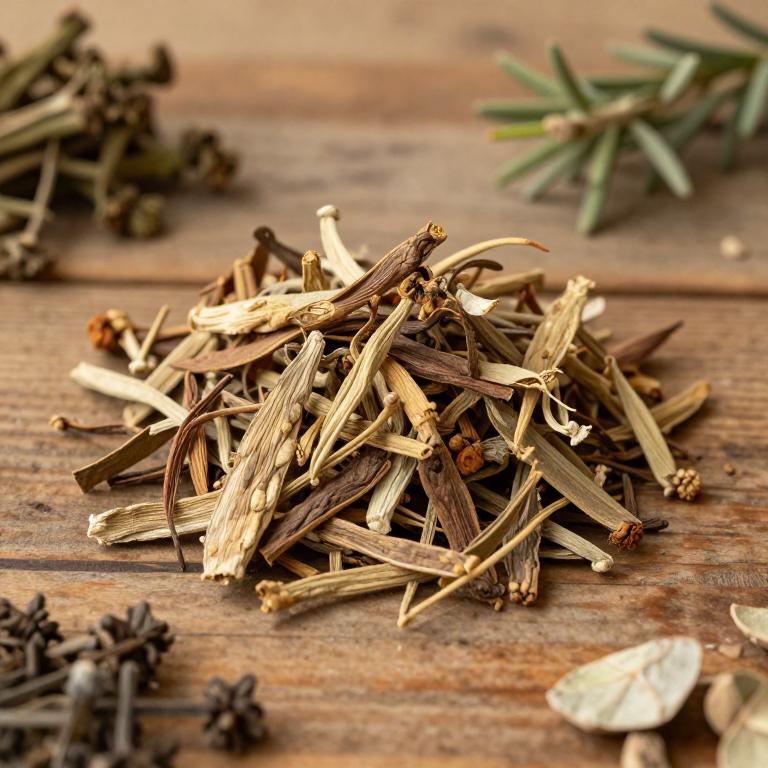
Rhodiola tibetica, scientifically known as Rhodiola tibetica, is a potent medicinal herb native to the high-altitude Himalayan regions. Renowned for its adaptogenic properties, it is traditionally used in Tibetan medicine to enhance vitality, combat fatigue, and support mental clarity, offering significant therapeutic benefits for physical and emotional resilience.
- Family
- Crassulaceae
- Native range
- Asia-Temperate
- Parts used
- Not available
- Common names
- Not available
- Scientific synonyms
- Sedum Tibeticum · Sedum Stracheyi · 4 more
Names and Synonyms
Scientific Names
Accepted name
Rhodiola tibeticaSynonyms
- Sedum tibeticum
- Sedum stracheyi
- Sedum quadrifidum var. tibeticum
- Sedum tibeticum var. stracheyi
- Chamaerhodiola stracheyi
- Chamaerhodiola tibetica
Sources: Wikidata, Catalogue of Life
Taxonomical Classification
This plant belongs to the kingdom Plantae and the phylum Streptophyta, specifically classified under the class Equisetopsida and subclass Magnoliidae. Within the order Saxifragales, it is a member of the family Crassulaceae. It is further categorized under the genus Rhodiola, with the specific species being Rhodiola tibetica.
| Rank | Classification |
|---|---|
| Kingdom | Plantae |
| Phylum | Streptophyta |
| Class | Equisetopsida |
| Subclass | Magnoliidae |
| Order | Saxifragales |
| Family | Crassulaceae |
| Genus | Rhodiola |
Sources: The World Checklist of Vascular Plants (WCVP)
Distribution
This plant is primarily found in the high-altitude regions of Western Asia, specifically within the borders of Afghanistan. In the East, its distribution extends significantly into the Tibet region of China. The species is also widely scattered across the Indian Subcontinent, including the mountainous terrain of Nepal. Additionally, it can be located throughout the various landscapes of Pakistan. Finally, its geographical range encompasses the rugged elevations of the West Himalaya.
| Region | Area |
|---|---|
| Western Asia | Afghanistan |
| China | Tibet |
| Indian Subcontinent | Nepal |
| Indian Subcontinent | Pakistan |
| Indian Subcontinent | West Himalaya |
Sources: The World Checklist of Vascular Plants (WCVP)
Botanical Identification
Morphology
The morphology of Rhodiola tibetica is characterized by its growth form as a herb, exhibiting a non-woody structure throughout its vegetative parts. Unlike climbing species, it lacks any climbing habit, functioning as a self-supporting organism that maintains its upright or spreading posture without the need for external support.
- Climber :
- self-supporting
- Growth form :
- herb
- Woodiness :
- non-woody
Sources: Global Inventory of Floras and Traits (GIFT)
Activities
Rhodiola tibetica has 1 reported activities identified across 0 scientific publications and several other databases. The most consistently reported activities include Neuroprotective.
| Activity | Supporting sources | Consensus |
|---|---|---|
| Neuroprotective | 1 supporting sources | ★☆☆☆☆ |
Neuroprotective
- Bioorganic chemistry
Conditions
Rhodiola tibetica has 2 reported investigations on conditions identified across 0 scientific publications and several other databases. The most consistently reported conditions include Ischemic stroke, neuroinflammation.
| Condition | Supporting sources | Consensus |
|---|---|---|
| Ischemic stroke | 1 supporting sources | ★☆☆☆☆ |
| Neuroinflammation | 1 supporting sources | ★☆☆☆☆ |
Ischemic stroke
- Bioorganic chemistry
Neuroinflammation
- Bioorganic chemistry
Preparations
Rhodiola tibetica has 1 reported preparations identified across 0 scientific publications and several other databases. The most consistently reported preparations include supercritical carbon dioxide extraction products.
| Preparation | Supporting sources | Consensus |
|---|---|---|
| Supercritical carbon dioxide extraction products | 1 supporting sources | ★☆☆☆☆ |
Supercritical carbon dioxide extraction products
- Zhongguo Zhong yao za zhi = Zhongguo zhongyao zazhi = China journal of Chinese materia medica