Corky stilt mangrove
Rhizophora apiculata · Accepted scientific name
Scientific literature: Very Sparse (18 studies) · ★☆☆☆☆
Corky stilt mangrove, scientifically known as Rhizophora apiculata, is a resilient coastal species vital to tropical marine ecosystems. Renowned for its specialized stilt roots, this plant offers medicinal potential through its bioactive compounds. It serves as a natural defense against erosion while providing therapeutic properties used in traditional healing.
- Family
- Rhizophoraceae
- Native range
- Asia-Temperate
- Parts used
- Leaf · Root
- Common names
- Corky Stilt Mangrove · Tall-Stilt Mangrove
- Scientific synonyms
- Rhizophora Candelaria
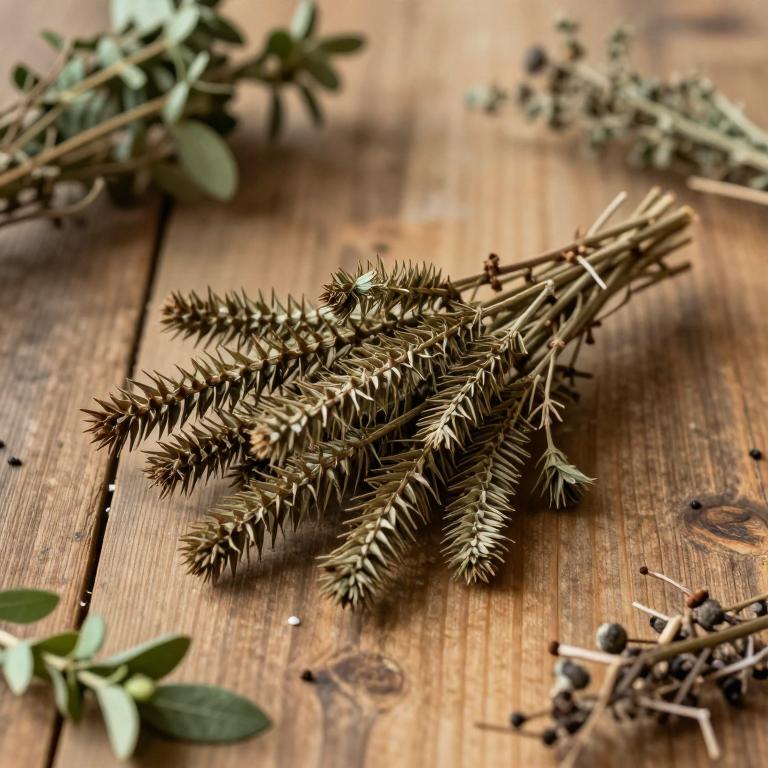
Names and Synonyms
Common Names
- Corky stilt mangrove
- Tall-stilt Mangrove
Scientific Names
Accepted name
Rhizophora apiculataSynonyms
- Rhizophora candelaria
Sources: Wikidata, Catalogue of Life
Taxonomical Classification
This plant belongs to the kingdom Plantae and the phylum Streptophyta within the class Equisetopsida. As a member of the subclass Magnoliidae and the order Malpighiales, it is classified under the family Rhizophoraceae. Finally, it is categorized under the genus Rhizophora as the species Rhizophora apiculata.
| Rank | Classification |
|---|---|
| Kingdom | Plantae |
| Phylum | Streptophyta |
| Class | Equisetopsida |
| Subclass | Magnoliidae |
| Order | Malpighiales |
| Family | Rhizophoraceae |
| Genus | Rhizophora |
Sources: The World Checklist of Vascular Plants (WCVP)
Distribution
This plant exhibits a diverse geographical distribution spanning across several key regions in Asia. Within China, its presence is noted in the Hainan province as well as throughout China Southeast. Moving toward the Indian Subcontinent, the species can be found growing in Bangladesh. It also maintains a significant population within the borders of India. Furthermore, its range extends to include the territory of Pakistan.
| Region | Area |
|---|---|
| China | Hainan |
| China | China Southeast |
| Indian Subcontinent | Bangladesh |
| Indian Subcontinent | India |
| Indian Subcontinent | Pakistan |
| Indian Subcontinent | Sri Lanka |
| Indo-China | Andaman Is. |
| Indo-China | Cambodia |
| Indo-China | Myanmar |
| Indo-China | Nicobar Is. |
Sources: The World Checklist of Vascular Plants (WCVP)
Botanical Identification
Ecology
The ecology of Rhizophora apiculata is intrinsically linked to its existence within halophytic vegetation, where it plays a critical role in the structural complexity of coastal ecosystems. As a specialized component of these salt-tolerant plant communities, it thrives in intertidal zones characterized by fluctuating salinity levels, periodic tidal inundation, and anaerobic, waterlogged soils. This plant is adapted to the harsh physicochemical conditions of saline environments, utilizing specific physiological mechanisms to manage salt stress and maintain osmotic balance. By colonizing these dynamic habitats, Rhizophora apiculata contributes to the stabilization of coastal substrates and provides essential niche spaces that support diverse assemblages of marine and terrestrial organisms within the halophytic landscape.
- Habitat :
- halophytic vegetation
Life history
The life history of Rhizophora apiculaata is characterized by its status as a perennial organism, ensuring its long-term presence within its ecological niche. As a perennial, the plant does not complete its life cycle within a single growing season but instead undergoes continuous development over many years, establishing a permanent structural presence in its environment. Its life cycle involves complex developmental stages, including specialized reproductive strategies typical of its genus, which facilitate survival in shifting coastal or aquatic habitats. Through its sustained growth patterns, the plant maintains its biological functions and reproductive capacity across multiple annual cycles, contributing to the stability of its ecosystem over an extended temporal scale.
- Lifecycle :
- perennial
Morphology
The morphology of Rhizophora apiculaata is characterized by its growth form as a woody tree that functions as an independent organism, neither acting as a parasite nor an epiphyte, as it maintains a terrestrial existence. This self-supporting species exhibits significant variation in stature, with plant heights ranging from a minimum of 2 meters to a maximum of 30 meters, maintaining a mean height of approximately 3 meters. As a non-climbing, self-supporting tree, its structural integrity is defined by its woody nature and terrestrial habitat.
- Aquatic :
- terrestrial
- Climber :
- self-supporting
- Epiphyte :
- terrestrial
- Growth form :
- tree
- Parasite :
- independent
- Plant height max:
- 30 m
- Plant height mean:
- 3 m
- Plant height min:
- 2 m
- Woodiness :
- woody
Physiology
The physiology of Rhizophora apiculaata is characterized by a specialized carbon fixation process utilizing the C3 photosynthetic pathway, which is typical for many mangrove species adapted to coastal environments. The plant's leaf morphology plays a critical role in its metabolic efficiency and gas exchange, exhibiting significant dimensional variability. The leaves typically range in length from a minimum of 7 cm to a maximum of 12 cm, with a calculated mean leaf length of 9.5 cm. Complementing this longitudinal variation, the leaf width fluctuates between a minimum of 3 cm and a maximum of 6 cm. These morphological traits facilitate the structural integrity and surface area necessary to support its C3 photosynthetic functions within its specific ecological niche.
- Leaf length max:
- 12 cm
- Leaf length mean:
- 9.5 cm
- Leaf length min:
- 7 cm
- Leaf width max:
- 6 cm
- Leaf width min:
- 3 cm
- Photosynthetic pathway :
- C3
Reproduction
The reproduction of Rhizophora apiculaata is characterized by a specific set of morphological fruit traits and a specialized dispersal strategy. The fruits produced by this species exhibit measurable variations in size, with lengths ranging from a minimum of 2 cm to a maximum of 2.5 cm, maintaining an average length of 2.25 cm. Similarly, the fruit width varies from a minimum of 1.2 cm to a maximum of 1.5 cm, with a mean width of 1.35 cm. In terms of propagation and movement, the plant utilizes a hydrochorous dispersal syndrome, relying on water currents to transport its propagules to new habitats.
- Dispersal syndrome :
- hydrochorous
- Fruit length max:
- 2.5 cm
- Fruit length mean:
- 2.25 cm
- Fruit length min:
- 2 cm
- Fruit width max:
- 1.5 cm
- Fruit width mean:
- 1.35 cm
- Fruit width min:
- 1.2 cm
Sources: Global Inventory of Floras and Traits (GIFT)
Plant Parts
Rhizophora apiculata has 2 reported plant parts identified across 2 scientific publications and several other databases that are studied for medicinal purposes. The most consistently reported plant part include leaf, root.
| Plant part | Supporting sources | Consensus |
|---|---|---|
| Leaf | 1 supporting sources | ★☆☆☆☆ |
| Root | 1 supporting sources | ★☆☆☆☆ |
Leaf
- Indian journal of pharmaceutical sciences
Root
- Natural product research
Chemicals
Rhizophora apiculata has 14 reported phytochemicals identified across 2 scientific publications and several other databases. The most consistently reported chemicals include Antioxidants, BETA-SITOSTEROL, Esters, Fatty acids, Glycosides.
| Chemical | Supporting sources | Consensus |
|---|---|---|
| Antioxidants | 1 supporting sources | ★☆☆☆☆ |
| BETA-SITOSTEROL | 1 supporting sources | ★☆☆☆☆ |
| Esters | 1 supporting sources | ★☆☆☆☆ |
| Fatty acids | 1 supporting sources | ★☆☆☆☆ |
| Glycosides | 1 supporting sources | ★☆☆☆☆ |
| Lupeol | 1 supporting sources | ★☆☆☆☆ |
| OLEANOLIC ACID | 1 supporting sources | ★☆☆☆☆ |
| Phenols | 1 supporting sources | ★☆☆☆☆ |
| Pinitol | 1 supporting sources | ★☆☆☆☆ |
| Saponins | 1 supporting sources | ★☆☆☆☆ |
Antioxidants
- Natural product research
BETA-SITOSTEROL
- Natural product research
Esters
- Natural product research
Fatty acids
- Natural product research
Glycosides
- Natural product research
Lupeol
- Natural product research
OLEANOLIC ACID
- Natural product research
Phenols
- Natural product research
Pinitol
- Natural product research
Saponins
- Natural product research
Conditions
Rhizophora apiculata has 1 reported investigations on conditions identified across 2 scientific publications and several other databases. The most consistently reported conditions include Staphylococcus aureus.
| Condition | Supporting sources | Consensus |
|---|---|---|
| Staphylococcus aureus | 1 supporting sources | ★☆☆☆☆ |
Staphylococcus aureus
- Indian journal of pharmaceutical sciences
Preparations
Rhizophora apiculata has 6 reported preparations identified across 2 scientific publications and several other databases. The most consistently reported preparations include ethanolic extract, aqueous fraction, bark, chloroform fraction, ethanolic extract of the roots.
| Preparation | Supporting sources | Consensus |
|---|---|---|
| Ethanolic extract | 2 supporting sources | ★☆☆☆☆ |
| Aqueous fraction | 1 supporting sources | ★☆☆☆☆ |
| Bark | 1 supporting sources | ★☆☆☆☆ |
| Chloroform fraction | 1 supporting sources | ★☆☆☆☆ |
| Ethanolic extract of the roots | 1 supporting sources | ★☆☆☆☆ |
| Leaves | 1 supporting sources | ★☆☆☆☆ |
Ethanolic extract
- Natural product research
- Phytomedicine : international journal of phytotherapy and phytopharmacology
Aqueous fraction
- Natural product research
Bark
- Indian journal of pharmaceutical sciences
Chloroform fraction
- Natural product research
Ethanolic extract of the roots
- Natural product research
Leaves
- Indian journal of pharmaceutical sciences