Harmal
Rhazya stricta · Accepted scientific name
Scientific literature: Sparse (74 studies) · ★★☆☆☆
Harmal, scientifically known as Rhazya stricta, is a perennial shrub native to parts of Africa and Asia. Renowned in traditional medicine, it contains unique alkaloids used to treat various ailments. This plant is highly valued for its pharmacological potential, particularly in managing neurological conditions and addressing certain inflammatory processes.
- Family
- Apocynaceae
- Native range
- Asia-Temperate
- Parts used
- Leaf · Root
- Common names
- Harmal
- Scientific synonyms
- Not available
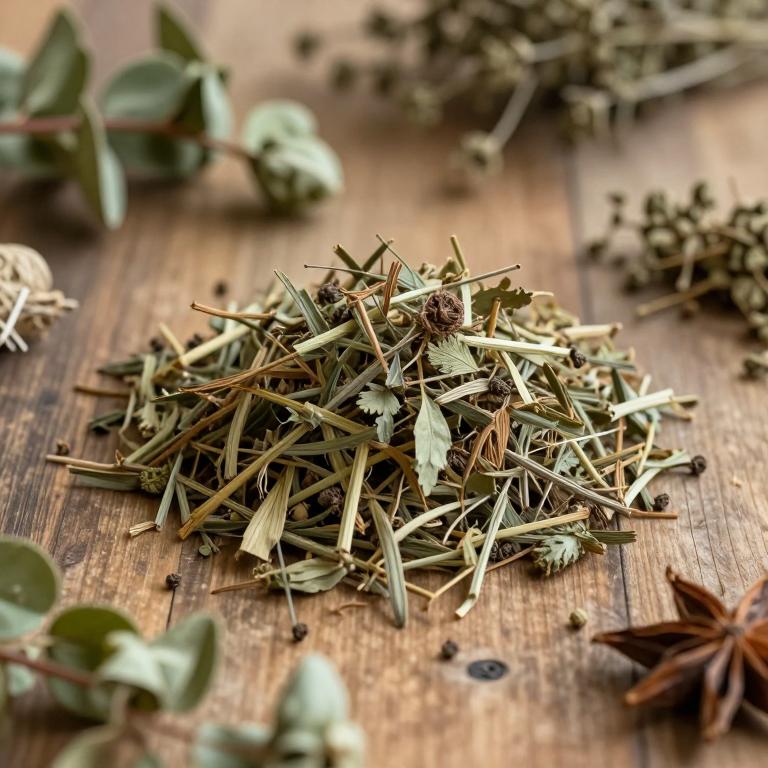
Names and Synonyms
Common Names
- Harmal
Scientific Names
Accepted name
Rhazya strictaSources: Wikidata, Catalogue of Life
Taxonomical Classification
This plant belongs to the kingdom Plantae and the phylum Streptophyta, falling under the class Equisetopsida and subclass Magnoliidae. Within the order Gentianaales, it is classified under the family Apocynaceae. Finally, it is identified by the genus Rhazya, specifically as the species Rhazya stricta.
| Rank | Classification |
|---|---|
| Kingdom | Plantae |
| Phylum | Streptophyta |
| Class | Equisetopsida |
| Subclass | Magnoliidae |
| Order | Gentianales |
| Family | Apocynaceae |
| Genus | Rhazya |
Sources: The World Checklist of Vascular Plants (WCVP)
Distribution
This plant exhibits a specific geographical distribution primarily focused within the arid regions of Western Asia and the Arabian Peninsula. In Western Asia, its presence is documented across Afghanistan, Iran, and Iraq. Moving toward the Arabian Peninsula, the species can be found throughout the various Gulf States. Additionally, its habitat extends to the country of Oman. Collectively, these locations define the natural range where this medicinal species thrives.
| Region | Area |
|---|---|
| Western Asia | Afghanistan |
| Western Asia | Iran |
| Western Asia | Iraq |
| Arabian Peninsula | Gulf States |
| Arabian Peninsula | Oman |
| Arabian Peninsula | Saudi Arabia |
| Arabian Peninsula | Yemen |
| Indian Subcontinent | India |
| Indian Subcontinent | Pakistan |
| Indian Subcontinent | West Himalaya |
Sources: The World Checklist of Vascular Plants (WCVP)
Botanical Identification
Ecology
The ecology of Rhazyya stricta is characterized by its presence within specific altitudinal gradients, typically flourishing in montane or sub-montane habitats. This species is predominantly found at elevations ranging from a minimum of 500 m AMSL to a maximum of 1300 m AMSL. Within this vertical distribution, the plant occupies niche environments that provide the necessary climatic conditions required for its growth and survival, often associating with specific soil compositions and moisture levels found at these mid-range altitudes.
- Elevational range max:
- 1300 m AMSL
- Elevational range min:
- 500 m AMSL
Life history
The life history of Rhazyia stricta is characterized by its specific growth habit and survival strategy, classified primarily as a chamaephyte. In the context of its ecological life forms, it functions as a chamaephyte, meaning its perennating buds are located close to the soil surface, allowing it to withstand varying environmental conditions. Within the broader spectrum of plant life forms—including phanerophytes, hemicryptophytes, cryptophytes, and therophytes—this species maintains its perennial nature through this low-growing structure. This classification highlights its ability to persist in its natural habitat by keeping its vital regenerative organs protected near or just above the ground level, distinguishing its life cycle from taller phanerophytes or ephemeral therophytes.
- Life form :
- chamaephyte
Morphology
The morphology of Rhazyia stricta is characterized by its growth form as a woody shrub, exhibiting a robust and self-supporting structural habit. As a terrestrial species, it does not occupy aquatic or semiaquatic habitats, nor does it function as an epiphyte. The plant maintains an independent lifestyle, functioning as a non-parasitic organism without reliance on a host for nutrition. Its development is defined by a woody constitution, providing the necessary stability for its shrubby architecture.
- Aquatic :
- terrestrial
- Climber :
- self-supporting
- Epiphyte :
- terrestrial
- Growth form :
- shrub
- Parasite :
- independent
- Woodiness :
- woody
Reproduction
The reproduction of Rhazyia stricta is characterized by the production of specialized seeds that exhibit specific physical dimensions essential to its dispersal and germination processes. The seed mass within this species shows a measurable degree of variability, with a calculated mean seed mass of 0.005543333 g. This distribution ranges from a minimum seed mass of 0.0037 g to a maximum seed mass of 0.00733 g, reflecting the natural biological fluctuations present during the reproductive cycle of the plant.
- Seed mass max:
- 0.00733 g
- Seed mass mean:
- 0.005543333 g
- Seed mass min:
- 0.0037 g
Sources: Global Inventory of Floras and Traits (GIFT)
Plant Parts
Rhazya stricta has 3 reported plant parts identified across 16 scientific publications and several other databases that are studied for medicinal purposes. The most consistently reported plant part include leaf, root, fruit.
| Plant part | Supporting sources | Consensus |
|---|---|---|
| Leaf | 11 supporting sources | ★★★★★ |
| Root | 3 supporting sources | ★★☆☆☆ |
| Fruit | 2 supporting sources | ★☆☆☆☆ |
Leaf
- Plant disease
- Integrative cancer therapies
- Pharmacological research
- Clinical and experimental pharmacology & physiology
- Molecules (Basel, Switzerland)
View 6 additional sources
- BMC complementary and alternative medicine
- Journal of ethnopharmacology
- Tropical biomedicine
- Journal of natural products
- Phytomedicine : international journal of phytotherapy and phytopharmacology
- Veterinary and human toxicology
Root
- BMC complementary medicine and therapies
- Journal of natural products
- Plants (Basel, Switzerland)
Fruit
- Molecules (Basel, Switzerland)
- Natural product research
Chemicals
Rhazya stricta has 19 reported phytochemicals identified across 16 scientific publications and several other databases. The most consistently reported chemicals include Flavonoids, 12-Hydroxy-3-keto-bisnor-4-cholenic acid, 24-Methyldesmosterol, 5-O-Caffeoylquinic acid, BETA-SITOSTEROL.
| Chemical | Supporting sources | Consensus |
|---|---|---|
| Flavonoids | 3 supporting sources | ★★☆☆☆ |
| 12-Hydroxy-3-keto-bisnor-4-cholenic acid | 1 supporting sources | ★☆☆☆☆ |
| 24-Methyldesmosterol | 1 supporting sources | ★☆☆☆☆ |
| 5-O-Caffeoylquinic acid | 1 supporting sources | ★☆☆☆☆ |
| BETA-SITOSTEROL | 1 supporting sources | ★☆☆☆☆ |
| Bipolarisenol | 1 supporting sources | ★☆☆☆☆ |
| Corynan-17-ol | 1 supporting sources | ★☆☆☆☆ |
| Fucosterol | 1 supporting sources | ★☆☆☆☆ |
| Quebrachamine | 1 supporting sources | ★☆☆☆☆ |
| Quinol | 1 supporting sources | ★☆☆☆☆ |
Flavonoids
- Saudi journal of biological sciences
- Molecules (Basel, Switzerland)
- Chemistry Central journal
12-Hydroxy-3-keto-bisnor-4-cholenic acid
- Saudi pharmaceutical journal : SPJ : the official publication of the Saudi Pharmaceutical Society
24-Methyldesmosterol
- Saudi pharmaceutical journal : SPJ : the official publication of the Saudi Pharmaceutical Society
5-O-Caffeoylquinic acid
- Saudi pharmaceutical journal : SPJ : the official publication of the Saudi Pharmaceutical Society
BETA-SITOSTEROL
- Saudi pharmaceutical journal : SPJ : the official publication of the Saudi Pharmaceutical Society
Bipolarisenol
- Molecules (Basel, Switzerland)
Corynan-17-ol
- Computers in biology and medicine
Fucosterol
- Saudi pharmaceutical journal : SPJ : the official publication of the Saudi Pharmaceutical Society
Quebrachamine
- Computers in biology and medicine
Quinol
- Molecules (Basel, Switzerland)
Activities
Rhazya stricta has 13 reported activities identified across 16 scientific publications and several other databases. The most consistently reported activities include Cytotoxic, Antibacterial, Anticancer, Antidepressant, Antidiabetic.
| Activity | Supporting sources | Consensus |
|---|---|---|
| Cytotoxic | 2 supporting sources | ★☆☆☆☆ |
| Antibacterial | 1 supporting sources | ★☆☆☆☆ |
| Anticancer | 1 supporting sources | ★☆☆☆☆ |
| Antidepressant | 1 supporting sources | ★☆☆☆☆ |
| Antidiabetic | 1 supporting sources | ★☆☆☆☆ |
| Antihypertensive | 1 supporting sources | ★☆☆☆☆ |
| Antimicrobial | 1 supporting sources | ★☆☆☆☆ |
| Antioxidant | 1 supporting sources | ★☆☆☆☆ |
| Genotoxic | 1 supporting sources | ★☆☆☆☆ |
| Hepatoprotective | 1 supporting sources | ★☆☆☆☆ |
Cytotoxic
- Molecules (Basel, Switzerland)
- Plants (Basel, Switzerland)
Antibacterial
- Molecules (Basel, Switzerland)
Anticancer
- Plants (Basel, Switzerland)
Antidepressant
- Pharmacology, biochemistry, and behavior
Antidiabetic
- Plants (Basel, Switzerland)
Antihypertensive
- Plants (Basel, Switzerland)
Antimicrobial
- Plants (Basel, Switzerland)
Antioxidant
- Plants (Basel, Switzerland)
Genotoxic
- Plants (Basel, Switzerland)
Hepatoprotective
- Phytotherapy research : PTR
Conditions
Rhazya stricta has 14 reported investigations on conditions identified across 16 scientific publications and several other databases. The most consistently reported conditions include antidepressant, antidiabetic, antihypertensive, antioxidant, breast cancer.
| Condition | Supporting sources | Consensus |
|---|---|---|
| Antidepressant | 1 supporting sources | ★☆☆☆☆ |
| Antidiabetic | 1 supporting sources | ★☆☆☆☆ |
| Antihypertensive | 1 supporting sources | ★☆☆☆☆ |
| Antioxidant | 1 supporting sources | ★☆☆☆☆ |
| Breast cancer | 1 supporting sources | ★☆☆☆☆ |
| Cancer | 1 supporting sources | ★☆☆☆☆ |
| Clear cell renal cell carcinoma | 1 supporting sources | ★☆☆☆☆ |
| Depression | 1 supporting sources | ★☆☆☆☆ |
| Leishmaniasis | 1 supporting sources | ★☆☆☆☆ |
| Lung cancer | 1 supporting sources | ★☆☆☆☆ |
Antidepressant
- Pharmacology, biochemistry, and behavior
Antidiabetic
- Plants (Basel, Switzerland)
Antihypertensive
- Plants (Basel, Switzerland)
Antioxidant
- Plants (Basel, Switzerland)
Breast cancer
- Integrative cancer therapies
Cancer
- Integrative cancer therapies
Clear cell renal cell carcinoma
- Computers in biology and medicine
Depression
- Pharmacology, biochemistry, and behavior
Leishmaniasis
- Tropical biomedicine
Lung cancer
- Genetics and molecular biology
Preparations
Rhazya stricta has 36 reported preparations identified across 16 scientific publications and several other databases. The most consistently reported preparations include dried powder, extract, hairy root cultures, methanolic extracts, A lyophilized extract.
| Preparation | Supporting sources | Consensus |
|---|---|---|
| Dried powder | 2 supporting sources | ★☆☆☆☆ |
| Extract | 2 supporting sources | ★☆☆☆☆ |
| Hairy root cultures | 2 supporting sources | ★☆☆☆☆ |
| Methanolic extracts | 2 supporting sources | ★☆☆☆☆ |
| A lyophilized extract | 1 supporting sources | ★☆☆☆☆ |
| Aqueous extract of leaves | 1 supporting sources | ★☆☆☆☆ |
| Crude alkaloid extract | 1 supporting sources | ★☆☆☆☆ |
| Rhazya stricta extract | 1 supporting sources | ★☆☆☆☆ |
| Rhazya stricta leaf extract | 1 supporting sources | ★☆☆☆☆ |
| Various fractions of rhazya stricta obtained through column chromatography | 1 supporting sources | ★☆☆☆☆ |
Dried powder
- Plant disease
- Pharmaceutical medicine
Extract
- Plants (Basel, Switzerland)
- Clinical and experimental pharmacology & physiology
Hairy root cultures
- Plants (Basel, Switzerland)
- Phytochemical analysis : PCA
Methanolic extracts
- Tropical biomedicine
- Plants (Basel, Switzerland)
A lyophilized extract
- Reproductive toxicology (Elmsford, N.Y.)
Aqueous extract of leaves
- Plant disease
Crude alkaloid extract
- Genetics and molecular biology
Rhazya stricta extract
- The Journal of pharmacy and pharmacology
Rhazya stricta leaf extract
- Molecules (Basel, Switzerland)
Various fractions of rhazya stricta obtained through column chromatography
- BMC complementary medicine and therapies