Rhanterium suaveolens
Rhanterium suaveolens · Accepted scientific name
Scientific literature: Very Sparse (13 studies) · ★☆☆☆☆
, scientifically known as Rhanterium suaveolents, is a remarkable medicinal shrub prized for its therapeutic properties. Often found in arid regions, this plant is traditionally used to treat various ailments, including inflammation and digestive issues. Its bioactive compounds offer significant potential for developing natural remedies in modern pharmacology.
- Family
- Asteraceae
- Native range
- Africa
- Parts used
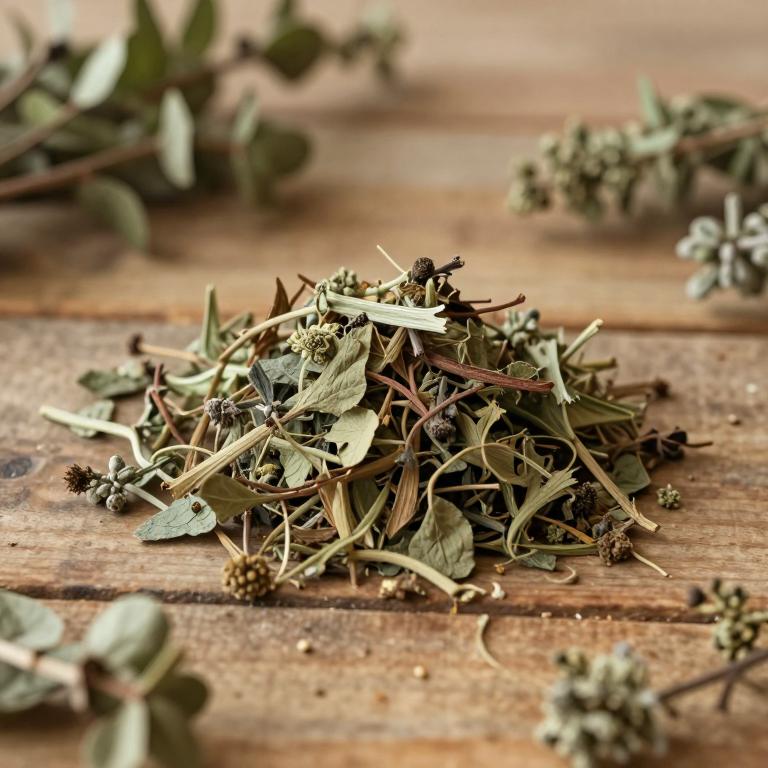
- Flower · Leaf
- Common names
- Not available
- Scientific synonyms
- Not available
Names and Synonyms
Scientific Names
Accepted name
Rhanterium suaveolensSources: Wikidata
Taxonomical Classification
This plant belongs to the kingdom Plantae and is classified under the phylum Streptophyta and class Equisetopsida. Within the subclass Magnoliidae, it is placed in the order Asterales and the family Asteraceae. Finally, its specific taxonomic designation falls under the genus Rhanterium.
| Rank | Classification |
|---|---|
| Kingdom | Plantae |
| Phylum | Streptophyta |
| Class | Equisetopsida |
| Subclass | Magnoliidae |
| Order | Asterales |
| Family | Asteraceae |
| Genus | Rhanterium |
Sources: The World Checklist of Vascular Plants (WCVP)
Distribution
This plant exhibits a specific geographical distribution localized within the North African region. It can be found growing naturally in the country of Algeria. Additionally, its presence is documented across the territory of Libya. The species also extends its range into Tunisia. These findings indicate that the plant is native to these particular Mediterranean areas.
| Region | Area |
|---|---|
| Northern Africa | Algeria |
| Northern Africa | Libya |
| Northern Africa | Tunisia |
Sources: The World Checklist of Vascular Plants (WCVP)
Botanical Identification
Life history
The life history of Rhanterium suaveolens is characterized by a perennial lifecycle, allowing the plant to persist through multiple growing seasons. As a hardy species, it establishes itself through a developmental process that enables long-term survival in its native habitats. Throughout its life, the plant undergoes various stages of growth, transitioning from initial establishment to a mature state where it can repeatedly contribute to the population through successive reproductive cycles. This perennial nature ensures stability within its ecosystem, as the plant does not rely on a single seasonal event to complete its biological objectives but rather maintains a continuous presence in the landscape.
- Lifecycle :
- perennial
Morphology
The morphology of Rhanterium suaveolens is characterized by a growth form categorized as a shrub, exhibiting a distinctly woody structure. This plant is non-parasitic, functioning as an independent organism within its ecosystem. In terms of its ecological habit and substrate preference, it is classified as a terrestrial species, rather than possessing aquatic or semiaquatic adaptations. Furthermore, it does not exhibit climbing tendencies, instead maintaining a self-supporting structural habit.
- Aquatic :
- terrestrial
- Climber :
- self-supporting
- Growth form :
- shrub
- Parasite :
- independent
- Woodiness :
- woody
Sources: Global Inventory of Floras and Traits (GIFT)
Plant Parts
Rhanterium suaveolens has 3 reported plant parts identified across 3 scientific publications and several other databases that are studied for medicinal purposes. The most consistently reported plant part include flower, leaf, stem.
| Plant part | Supporting sources | Consensus |
|---|---|---|
| Flower | 1 supporting sources | ★☆☆☆☆ |
| Leaf | 1 supporting sources | ★☆☆☆☆ |
| Stem | 1 supporting sources | ★☆☆☆☆ |
Flower
- Chemistry & biodiversity
Leaf
- Chemistry & biodiversity
Stem
- Chemistry & biodiversity
Chemicals
Rhanterium suaveolens has 2 reported phytochemicals identified across 3 scientific publications and several other databases. The most consistently reported chemicals include Hydroxycinnamic Acids, flavonols.
| Chemical | Supporting sources | Consensus |
|---|---|---|
| Hydroxycinnamic Acids | 1 supporting sources | ★☆☆☆☆ |
| flavonols | 1 supporting sources | ★☆☆☆☆ |
Hydroxycinnamic Acids
- Chemistry & biodiversity
flavonols
- Chemistry & biodiversity
Activities
Rhanterium suaveolens has 2 reported activities identified across 3 scientific publications and several other databases. The most consistently reported activities include Antioxidant, Free-Radical Scavenging.
| Activity | Supporting sources | Consensus |
|---|---|---|
| Antioxidant | 1 supporting sources | ★☆☆☆☆ |
| Free-Radical Scavenging | 1 supporting sources | ★☆☆☆☆ |
Antioxidant
- Chemistry & biodiversity
Free-Radical Scavenging
- Chemistry & biodiversity
Conditions
Rhanterium suaveolens has 2 reported investigations on conditions identified across 3 scientific publications and several other databases. The most consistently reported conditions include inflammation, oxidative stress.
| Condition | Supporting sources | Consensus |
|---|---|---|
| Inflammation | 1 supporting sources | ★☆☆☆☆ |
| Oxidative stress | 1 supporting sources | ★☆☆☆☆ |
Inflammation
- Chemistry & biodiversity
Oxidative stress
- Chemistry & biodiversity