Rhamnus staddo
Rhamnus staddo · Accepted scientific name
Scientific literature: Very Sparse (6 studies) · ★☆☆☆☆
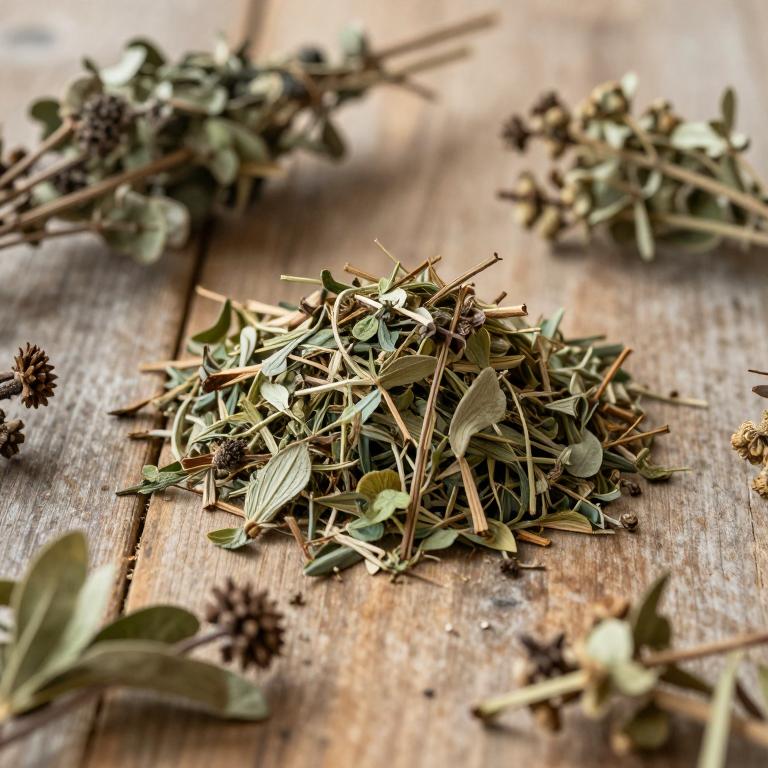
Rhamnus staddo, scientifically known as Rhamnus staddo, is a remarkable medicinal plant valued for its therapeutic potential. Renowned for its bioactive compounds, it is traditionally used to support digestive health and reduce inflammation. Exploring its botanical properties offers fascinating insights into natural healing and the diverse power of herbal medicine.
- Family
- Not available
- Native range
- Africa
- Parts used
- Leaf · Root
- Common names
- Not available
- Scientific synonyms
- Not available
Names and Synonyms
Scientific Names
Accepted name
Rhamnus staddoDistribution
This plant exhibits a specific geographical distribution concentrated within the tropical regions of the African continent. In West-Central Tropical Africa, it can be found growing in Burundi, Rwanda, and the Democratic Republic of the Congo. Its range also extends into Northeast Tropical Africa, where it inhabits certain areas of Djibouti. Additionally, the species is documented to grow within the borders of Eritrea. Consequently, these locations define the known natural habitats for this particular medicinal species.
| Region | Area |
|---|---|
| West-Central Tropical Africa | Burundi |
| West-Central Tropical Africa | Rwanda |
| West-Central Tropical Africa | DR Congo |
| Northeast Tropical Africa | Djibouti |
| Northeast Tropical Africa | Eritrea |
| Northeast Tropical Africa | Ethiopia |
| Northeast Tropical Africa | Somalia |
| East Tropical Africa | Kenya |
| East Tropical Africa | Tanzania |
| East Tropical Africa | Uganda |
Sources: The World Checklist of Vascular Plants (WCVP)
Botanical Identification
Life history
The life history of Rhamnus staddo is characterized by its nature as a perennial organism, allowing it to persist through multiple growing seasons rather than completing its cycle in a single year. As a long-lived woody species, its developmental trajectory involves an initial establishment phase followed by years of sustained vegetative growth and periodic reproductive cycles. This perennial lifecycle ensures the plant can withstand seasonal fluctuations and accumulate sufficient biomass to support the production of flowers and fruits over an extended lifespan.
- Lifecycle :
- perennial
Morphology
The morphology of Rhamnus staddo is characterized by its woody structure, manifesting primarily in the growth forms of both tree and shrub. As a terrestrial species, it does not function as an epiphyte or an aquatic plant, and it grows as an independent organism without parasitic tendencies. The plant is self-supporting rather than a climber, with a height that varies significantly depending on its developmental stage and environment; it can be as short as 0.5 m, though it reaches an average height of approximately 7 m.
- Aquatic :
- terrestrial
- Climber :
- self-supporting
- Epiphyte :
- terrestrial
- Growth form :
- tree
- Growth form :
- shrub
- Parasite :
- independent
- Plant height mean:
- 7 m
- Plant height min:
- 0.5 m
- Woodiness :
- woody
Physiology
The physiology of Rhamnus staddo is characterized by a metabolic framework governed by the C3 photosynthetic pathway, which dictates its carbon fixation processes and water-use efficiency. As a C3 plant, it utilizes the enzyme Rubisco to directly fix atmospheric carbon dioxide into a three-carbon compound during the Calvin cycle, a process most efficient under temperate environmental conditions where photorespiration remains relatively low. This metabolic pathway influences its transpiration rates and stomatal conductance, as the plant must balance the intake of CO2 for glucose production with the unavoidable loss of water vapor through its leaf tissues. The physiological performance of its photosynthetic apparatus is closely tied to its ability to maintain enzymatic activity and light-harvesting efficiency within its specific ecological niche, ensuring steady biomass accumulation through standard aerobic respiration and carbohydrate synthesis.
- Photosynthetic pathway :
- C3
Reproduction
The reproduction of Rhamnus stadda is characterized by the production of small, specialized seeds that play a critical role in its dispersal and propagation cycle. Quantitative analysis of its seed characteristics reveals a highly consistent profile, with a seed mass mean of 0.00643 g. This uniformity is reflected in the extreme narrowness of its mass distribution, as both the maximum and minimum recorded seed mass values are identical at 0.00643 g. Such precise measurements indicate a standardized seed development process, ensuring that each unit produced for regeneration maintains a consistent weight and biological investment.
- Seed mass mean:
- 0.00643 g
Sources: Global Inventory of Floras and Traits (GIFT)
Plant Parts
Rhamnus staddo has 2 reported plant parts identified across 2 scientific publications and several other databases that are studied for medicinal purposes. The most consistently reported plant part include leaf, root.
| Plant part | Supporting sources | Consensus |
|---|---|---|
| Leaf | 1 supporting sources | ★☆☆☆☆ |
| Root | 1 supporting sources | ★☆☆☆☆ |
Leaf
- Phytotherapy research : PTR
Root
- Phytotherapy research : PTR
Conditions
Rhamnus staddo has 1 reported investigations on conditions identified across 2 scientific publications and several other databases. The most consistently reported conditions include malaria.
| Condition | Supporting sources | Consensus |
|---|---|---|
| Malaria | 1 supporting sources | ★☆☆☆☆ |
Malaria
- Journal of ethnopharmacology
Preparations
Rhamnus staddo has 3 reported preparations identified across 2 scientific publications and several other databases. The most consistently reported preparations include L/RB, RB, root bark and/or leaf extracts.
| Preparation | Supporting sources | Consensus |
|---|---|---|
| L/rb | 1 supporting sources | ★☆☆☆☆ |
| Rb | 1 supporting sources | ★☆☆☆☆ |
| Root bark and/or leaf extracts | 1 supporting sources | ★☆☆☆☆ |
L/rb
- Journal of ethnopharmacology
Rb
- Journal of ethnopharmacology
Root bark and/or leaf extracts
- Phytotherapy research : PTR