Rhamnus purpurea
Rhamnus purpurea · Accepted scientific name
Scientific literature: Very Sparse (14 studies) · ★☆☆☆☆
Rhamnus purpurea, scientifically known as Rhamnus purpurea, is a deciduous shrub native to the Mediterranean region. Renowned for its medicinal properties, its bark contains anthraquinone glycosides, traditionally used as a potent stimulant laxative. This versatile plant plays a significant role in both traditional herbalism and modern pharmacological studies.
- Family
- Rhamnaceae
- Native range
- Asia-Tropical
- Parts used
- Leaf
- Common names
- Not available
- Scientific synonyms
- Not available
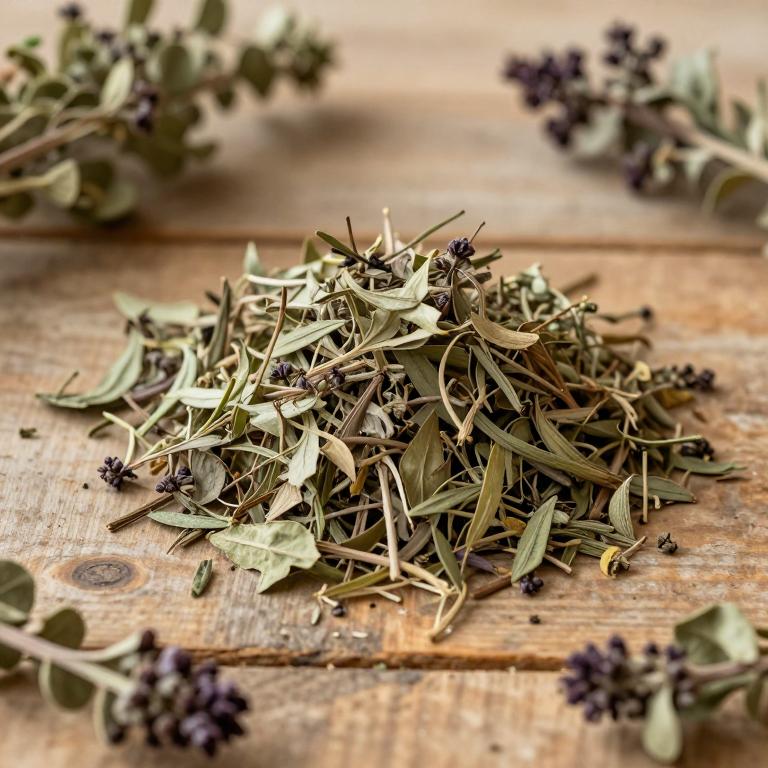
Names and Synonyms
Scientific Names
Accepted name
Rhamnus purpureaRegional and Traditional Names
Spanish:
- Rhamnus purpureus
German:
- Rhamnus purpureus
French:
- Rhamnus purpureus
Sources: Wikidata
Taxonomical Classification
This plant belongs to the kingdom Plantae within the phylum Streptophyta and the class Equisetopsida. Classified under the subclass Magnoliidae and the order Rosales, it is a member of the Rhamnaceae family. It is further identified by its genus, Rhamnus.
| Rank | Classification |
|---|---|
| Kingdom | Plantae |
| Phylum | Streptophyta |
| Class | Equisetopsida |
| Subclass | Magnoliidae |
| Order | Rosales |
| Family | Rhamnaceae |
| Genus | Rhamnus |
Sources: The World Checklist of Vascular Plants (WCVP)
Distribution
This plant exhibits a specific distribution pattern across the vast landscape of the Indian Subcontinent. It is primarily found inhabiting the rugged terrains of the East Himalaya. Furthermore, its presence is well-documented throughout the diverse elevations of Nepal. The species also extends its range into the mountainous regions of Pakistan. Finally, it can be located within the distinct ecological zones of the West Himalaya.
| Region | Area |
|---|---|
| Indian Subcontinent | East Himalaya |
| Indian Subcontinent | Nepal |
| Indian Subcontinent | Pakistan |
| Indian Subcontinent | West Himalaya |
Sources: The World Checklist of Vascular Plants (WCVP)
Botanical Identification
Ecology
The ecology of Rhamnus purpurea is characterized by its specific adaptation to high-altitude montane environments, where it thrives within a specialized altitudinal niche. This species is primarily found in mountainous regions, occupying an elevational range that begins at 2100 m AMSL and extends up to a maximum of 2900 m AMSL. This distribution suggests an ecological preference for subalpine or alpine zones, where the plant must withstand the unique climatic pressures associated with high-elevation habitats, such as lower temperatures, increased ultraviolet radiation, and potentially thinner soils. Its presence within this precise vertical gradient indicates a highly specialized environmental requirement, likely tied to specific temperature regimes and moisture availability found within these upper montane belts.
- Elevational range max:
- 2900 m AMSL
- Elevational range min:
- 2100 m AMSL
Sources: Global Inventory of Floras and Traits (GIFT)
Plant Parts
Rhamnus purpurea has 1 reported plant parts identified across 1 scientific publications and several other databases that are studied for medicinal purposes. The most consistently reported plant part include leaf.
| Plant part | Supporting sources | Consensus |
|---|---|---|
| Leaf | 1 supporting sources | ★☆☆☆☆ |
Leaf
- ACS omega
Chemicals
Rhamnus purpurea has 5 reported phytochemicals identified across 1 scientific publications and several other databases. The most consistently reported chemicals include Flavonoids, Glycosides, Phenols, Saponins, Tannins.
| Chemical | Supporting sources | Consensus |
|---|---|---|
| Flavonoids | 1 supporting sources | ★☆☆☆☆ |
| Glycosides | 1 supporting sources | ★☆☆☆☆ |
| Phenols | 1 supporting sources | ★☆☆☆☆ |
| Saponins | 1 supporting sources | ★☆☆☆☆ |
| Tannins | 1 supporting sources | ★☆☆☆☆ |
Flavonoids
- ACS omega
Glycosides
- ACS omega
Phenols
- ACS omega
Saponins
- ACS omega
Tannins
- ACS omega
Activities
Rhamnus purpurea has 3 reported activities identified across 1 scientific publications and several other databases. The most consistently reported activities include Antimicrobial, Antioxidant, Cytotoxic.
| Activity | Supporting sources | Consensus |
|---|---|---|
| Antimicrobial | 1 supporting sources | ★☆☆☆☆ |
| Antioxidant | 1 supporting sources | ★☆☆☆☆ |
| Cytotoxic | 1 supporting sources | ★☆☆☆☆ |
Antimicrobial
- ACS omega
Antioxidant
- ACS omega
Cytotoxic
- ACS omega
Conditions
Rhamnus purpurea has 2 reported investigations on conditions identified across 1 scientific publications and several other databases. The most consistently reported conditions include cancer, infectious diseases.
| Condition | Supporting sources | Consensus |
|---|---|---|
| Cancer | 1 supporting sources | ★☆☆☆☆ |
| Infectious diseases | 1 supporting sources | ★☆☆☆☆ |
Cancer
- ACS omega
Infectious diseases
- ACS omega