Rhamnus petiolaris
Rhamnus petiolaris · Accepted scientific name
Scientific literature: Very Sparse (6 studies) · ★☆☆☆☆
Rhamnus petiolaris, scientifically known as Rhamnus petiolaris, is a deciduous shrub native to Eurasia. Renowned in traditional herbalism, its bark contains anthraquinone glycosides, which act as potent stimulant laxatives. While valued for treating constipation, careful application is essential due to its strong physiological effects on the digestive system.
- Family
- Rhamnaceae
- Native range
- Asia-Temperate
- Parts used
- Fruit
- Common names
- Not available
- Scientific synonyms
- Not available
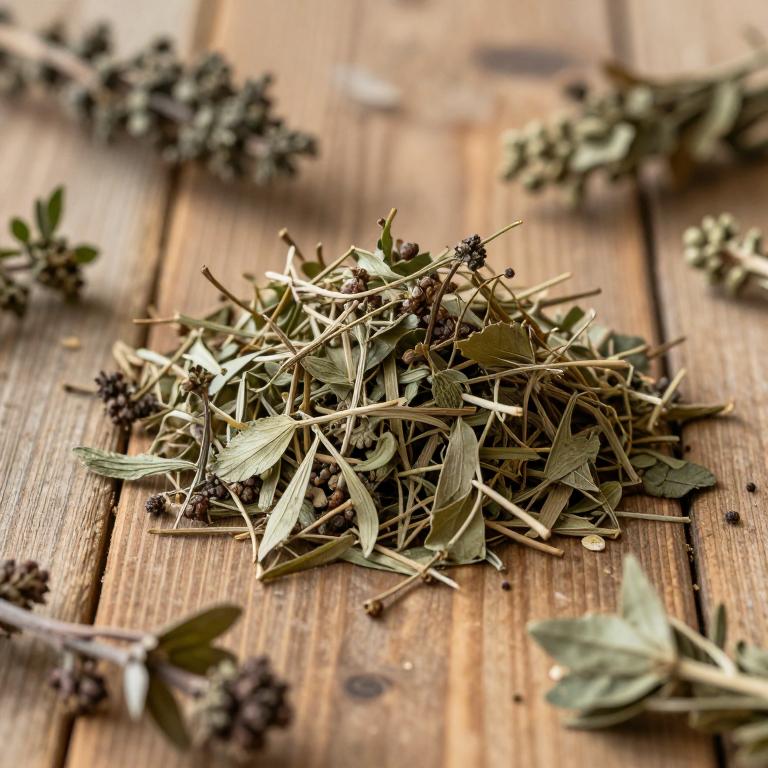
Names and Synonyms
Scientific Names
Accepted name
Rhamnus petiolarisSources: Wikidata
Taxonomical Classification
This plant belongs to the kingdom Plantae and is classified within the phylum Streptophyta and the class Equisetopsida. Further taxonomic details place it in the subclass Magnoliidae and the order Rosales. Finally, it is a member of the family Rhamnaceae and is categorized under the genus Rhamnus.
| Rank | Classification |
|---|---|
| Kingdom | Plantae |
| Phylum | Streptophyta |
| Class | Equisetopsida |
| Subclass | Magnoliidae |
| Order | Rosales |
| Family | Rhamnaceae |
| Genus | Rhamnus |
Sources: The World Checklist of Vascular Plants (WCVP)
Distribution
This plant exhibits a specific geographical distribution concentrated within the Western Asia region. It can be found growing naturally across the diverse landscapes of Türkiye. Additionally, the species is documented to inhabit the territories of Lebanon and Syria. Its presence also extends into the country of Iraq, marking its regional range. Consequently, these three areas define the primary natural habitat for Rhamnus petiolaris.
| Region | Area |
|---|---|
| Western Asia | Iraq |
| Western Asia | Lebanon-Syria |
| Western Asia | Türkiye |
Sources: The World Checklist of Vascular Plants (WCVP)
Plant Parts
Rhamnus petiolaris has 1 reported plant parts identified across 1 scientific publications and several other databases that are studied for medicinal purposes. The most consistently reported plant part include fruit.
| Plant part | Supporting sources | Consensus |
|---|---|---|
| Fruit | 1 supporting sources | ★☆☆☆☆ |
Fruit
- Phytochemistry
Chemicals
Rhamnus petiolaris has 5 reported phytochemicals identified across 1 scientific publications and several other databases. The most consistently reported chemicals include Quercetin 3-rhamnoside, Rhamnazin, Rhamnetin, kaempferol-3-rhamnoside, quercetin.
| Chemical | Supporting sources | Consensus |
|---|---|---|
| Quercetin 3-rhamnoside | 1 supporting sources | ★☆☆☆☆ |
| Rhamnazin | 1 supporting sources | ★☆☆☆☆ |
| Rhamnetin | 1 supporting sources | ★☆☆☆☆ |
| kaempferol-3-rhamnoside | 1 supporting sources | ★☆☆☆☆ |
| quercetin | 1 supporting sources | ★☆☆☆☆ |
Quercetin 3-rhamnoside
- Phytochemistry
Rhamnazin
- Phytochemistry
Rhamnetin
- Phytochemistry
kaempferol-3-rhamnoside
- Phytochemistry
quercetin
- Phytochemistry