retem
Retama raetam · Accepted scientific name
Scientific literature: Very Sparse (27 studies) · ★☆☆☆☆
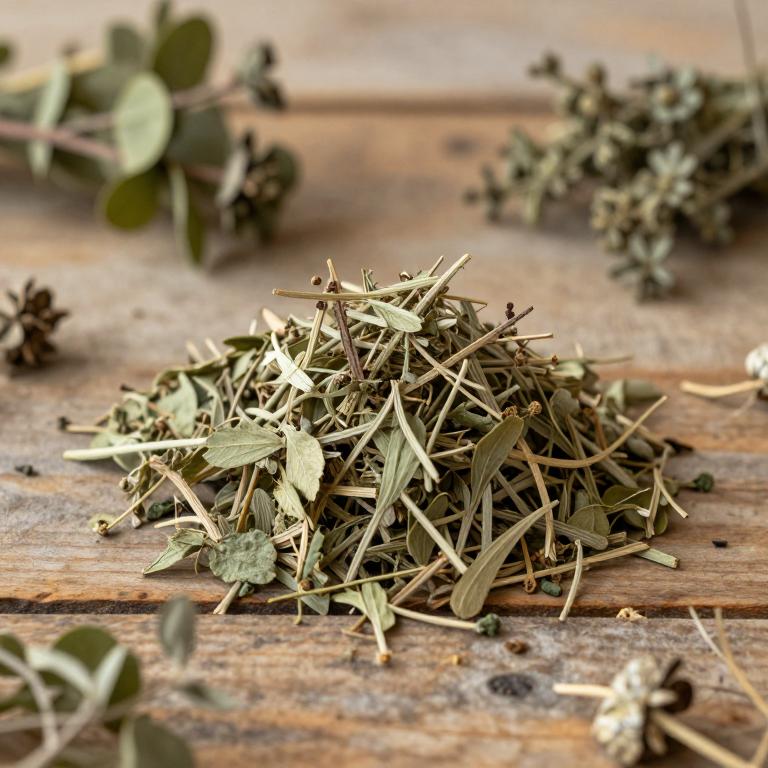
Retem, scientifically known as Retama raetam, is a resilient perennial shrub native to the Mediterranean region. Renowned for its ability to thrive in arid landscapes, this plant is highly valued in traditional medicine for its diverse therapeutic properties, offering significant potential in treating various inflammatory and metabolic conditions.
Names and Synonyms
Common Names
- retem
- white weeping-broom
- White weeping broom
Scientific Names
Accepted name
Retama raetamSynonyms
- Spartium raetam
- Lygos raetam
- Genista raetam
Regional and Traditional Names
Spanish:
- Retama moruna
- Lygos raetam
- Retama duriaei
- Genista raetam
- retama moruna
Sources: Wikidata, Catalogue of Life
Taxonomical Classification
This plant, known scientifically as Retama raetam, belongs to the kingdom Plantae and the phylum Streptophyta. Within the class Equisetopsida and subclass Magnoliidae, it is classified under the order Fabales and the family Fabaceae. Finally, its taxonomic position is completed within the genus Retama.
| Rank | Classification |
|---|---|
| Kingdom | Plantae |
| Phylum | Streptophyta |
| Class | Equisetopsida |
| Subclass | Magnoliidae |
| Order | Fabales |
| Family | Fabaceae |
| Genus | Retama |
Sources: The World Checklist of Vascular Plants (WCVP)
Distribution
This plant exhibits a wide geographical distribution across several Mediterranean regions. In Southeastern Europe, it can be found growing in Greece and Sicilia. Its range extends significantly into Northern Africa as well. Specifically, the species is documented in Algeria and Libya. Finally, it is also widely distributed throughout Egypt.
| Region | Area |
|---|---|
| Southeastern Europe | Greece |
| Southeastern Europe | Sicilia |
| Northern Africa | Algeria |
| Northern Africa | Egypt |
| Northern Africa | Libya |
| Northern Africa | Morocco |
| Northern Africa | Tunisia |
| Northern Africa | Western Sahara |
| Northeast Tropical Africa | Sudan-South Sudan |
| Western Asia | Lebanon-Syria |
Sources: The World Checklist of Vascular Plants (WCVP)
Botanical Identification
Life history
The life history of Retama raetam is characterized by its status as a perennial organism, allowing it to persist in its habitat through multiple growing seasons. Regarding its structural growth and survival strategy, the species exhibits a complex life form profile that includes characteristics of both phanerophytes, where the permanent shoots extend above the ground level, and nanophanerophytes, which typically maintain a more compact, low-growing stature. This combination of life forms enables the plant to adapt effectively to its environmental conditions over its extended lifecycle.
- Life form :
- nanophanerophyte
- Life form :
- phanerophyte
- Lifecycle :
- perennial
Morphology
The morphology of Retama raetam is characterized by its growth form as a woody shrub, functioning as a self-supporting plant that does not exhibit any climbing or parasitic behavior. It is an independent organism that thrives in terrestrial environments, rather than aquatic or semiaquatic habitats. Structurally, the plant is defined by its woody nature and can reach a maximum plant height of approximately 3 m.
- Aquatic :
- terrestrial
- Climber :
- self-supporting
- Growth form :
- shrub
- Parasite :
- independent
- Plant height max:
- 3 m
- Woodiness :
- woody
Physiology
The physiology of Retama raetam is characterized by several specialized adaptations that allow it to thrive in arid and semi-arid Mediterranean environments. A fundamental aspect of its metabolic function is its photosynthetic pathway, which follows the C3 mechanism, involving the direct fixation of carbon dioxide by the enzyme RuBisCO. To mitigate the physiological stress associated with high temperatures and limited water availability typical of its habitat, the plant exhibits significant morphological and physiological plasticity, often utilizing its green, photosynthetic stems to supplement carbon fixation and reduce transpirational water loss through leaf reduction. Its water relations are managed through highly efficient stomatal control and a robust root system designed for rapid moisture uptake, supporting its overall metabolic processes despite the inherent limitations of the C3 pathway in water-scarce conditions.
- Photosynthetic pathway :
- C3
Reproduction
Reproduction in Retama raetam is primarily driven by the production of seeds contained within its seed pods, which exhibit specific morphological characteristics essential for its life cycle. The reproductive output is characterized by variation in seed size and weight, which plays a crucial role in the plant's ability to colonize arid environments. Detailed quantitative analysis of the seeds reveals a mean seed mass of 0.08304 g. The distribution of these masses shows a measurable range, with the smallest recorded seed mass being 0.05986 g and the largest reaching a maximum of 0.10316 g. This variability in seed mass contributes to the species' reproductive strategy, potentially influencing seedling vigor and survival rates during germination in its natural habitat.
- Seed mass max:
- 0.10316 g
- Seed mass mean:
- 0.08304 g
- Seed mass min:
- 0.05986 g
Sources: Global Inventory of Floras and Traits (GIFT)
Chemicals
Retama raetam has 15 reported phytochemicals identified across 0 scientific publications and several other databases. The most consistently reported chemicals include 2-Decen-1-ol, Carotenoids, Erysubin A, Erysubin B, Flavonoid.
| Chemical | Supporting sources | Consensus |
|---|---|---|
| 2-Decen-1-ol | 1 supporting sources | ★☆☆☆☆ |
| Carotenoids | 1 supporting sources | ★☆☆☆☆ |
| Erysubin A | 1 supporting sources | ★☆☆☆☆ |
| Erysubin B | 1 supporting sources | ★☆☆☆☆ |
| Flavonoid | 1 supporting sources | ★☆☆☆☆ |
| Isoflavones | 1 supporting sources | ★☆☆☆☆ |
| Isoflavonoids | 1 supporting sources | ★☆☆☆☆ |
| LIMONENE | 1 supporting sources | ★☆☆☆☆ |
| Polyunsaturated Fatty Acids | 1 supporting sources | ★☆☆☆☆ |
| Sparteine | 1 supporting sources | ★☆☆☆☆ |
2-Decen-1-ol
- Natural product research
Carotenoids
- Molecules (Basel, Switzerland)
Erysubin A
- Bioorganic chemistry
Erysubin B
- Bioorganic chemistry
Flavonoid
- Cellular and molecular biology (Noisy-le-Grand, France)
Isoflavones
- Organic & biomolecular chemistry
Isoflavonoids
- Molecules (Basel, Switzerland)
LIMONENE
- Natural product research
Polyunsaturated Fatty Acids
- Molecules (Basel, Switzerland)
Sparteine
- Brazilian journal of microbiology : [publication of the Brazilian Society for Microbiology]
Activities
Retama raetam has 4 reported activities identified across 0 scientific publications and several other databases. The most consistently reported activities include Antioxidant, Antibacterial, Antimicrobial, Antiseptic.
| Activity | Supporting sources | Consensus |
|---|---|---|
| Antioxidant | 2 supporting sources | ★☆☆☆☆ |
| Antibacterial | 1 supporting sources | ★☆☆☆☆ |
| Antimicrobial | 1 supporting sources | ★☆☆☆☆ |
| Antiseptic | 1 supporting sources | ★☆☆☆☆ |
Antioxidant
- Cellular and molecular biology (Noisy-le-Grand, France)
- Brazilian journal of microbiology : [publication of the Brazilian Society for Microbiology]
Antibacterial
- Brazilian journal of microbiology : [publication of the Brazilian Society for Microbiology]
Antimicrobial
- Cellular and molecular biology (Noisy-le-Grand, France)
Antiseptic
- Natural product research
Conditions
Retama raetam has 7 reported investigations on conditions identified across 0 scientific publications and several other databases. The most consistently reported conditions include Pseudomonas aeruginosa, diabetes mellitus, hypertension, inflammation, pruritus.
| Condition | Supporting sources | Consensus |
|---|---|---|
| Pseudomonas aeruginosa | 1 supporting sources | ★☆☆☆☆ |
| Diabetes mellitus | 1 supporting sources | ★☆☆☆☆ |
| Hypertension | 1 supporting sources | ★☆☆☆☆ |
| Inflammation | 1 supporting sources | ★☆☆☆☆ |
| Pruritus | 1 supporting sources | ★☆☆☆☆ |
| Skin rash | 1 supporting sources | ★☆☆☆☆ |
| Wounds | 1 supporting sources | ★☆☆☆☆ |
Pseudomonas aeruginosa
- Brazilian journal of microbiology : [publication of the Brazilian Society for Microbiology]
Diabetes mellitus
- Bioorganic chemistry
Hypertension
- Bioorganic chemistry
Inflammation
- Cellular and molecular biology (Noisy-le-Grand, France)
Pruritus
- Natural product research
Skin rash
- Natural product research
Wounds
- Natural product research
Preparations
Retama raetam has 6 reported preparations identified across 0 scientific publications and several other databases. The most consistently reported preparations include Methanolic extracts, Retama raetam extract/colistin, ethanolic extract, ethanolic extracts, extracts.
| Preparation | Supporting sources | Consensus |
|---|---|---|
| Methanolic extracts | 1 supporting sources | ★☆☆☆☆ |
| Retama raetam extract/colistin | 1 supporting sources | ★☆☆☆☆ |
| Ethanolic extract | 1 supporting sources | ★☆☆☆☆ |
| Ethanolic extracts | 1 supporting sources | ★☆☆☆☆ |
| Extracts | 1 supporting sources | ★☆☆☆☆ |
| Nano-phytosome | 1 supporting sources | ★☆☆☆☆ |
Methanolic extracts
- Toxicology mechanisms and methods
Retama raetam extract/colistin
- Brazilian journal of microbiology : [publication of the Brazilian Society for Microbiology]
Ethanolic extract
- Brazilian journal of microbiology : [publication of the Brazilian Society for Microbiology]
Ethanolic extracts
- Cellular and molecular biology (Noisy-le-Grand, France)
Extracts
- Archiv fur experimentelle Veterinarmedizin
Nano-phytosome
- Brazilian journal of microbiology : [publication of the Brazilian Society for Microbiology]