bridal veil broom
Retama monosperma · Accepted scientific name
Scientific literature: Sparse (87 studies) · ★★☆☆☆
Bridal veil broom, scientifically known as Retama monospermma, is a resilient shrub native to the Mediterranean. Renowned for its delicate, white flowering displays, this plant holds significant ethnobotanical value. It is traditionally utilized in various cultures for its unique phytochemical properties and medicinal potential in treating diverse ailments.
- Family
- Fabaceae
- Native range
- Europe
- Parts used
- Flower · Seed
- Common names
- Bridal Veil Broom · Bridal Broom
- Scientific synonyms
- Lygos Monosperma · Spartium Clusii · 4 more
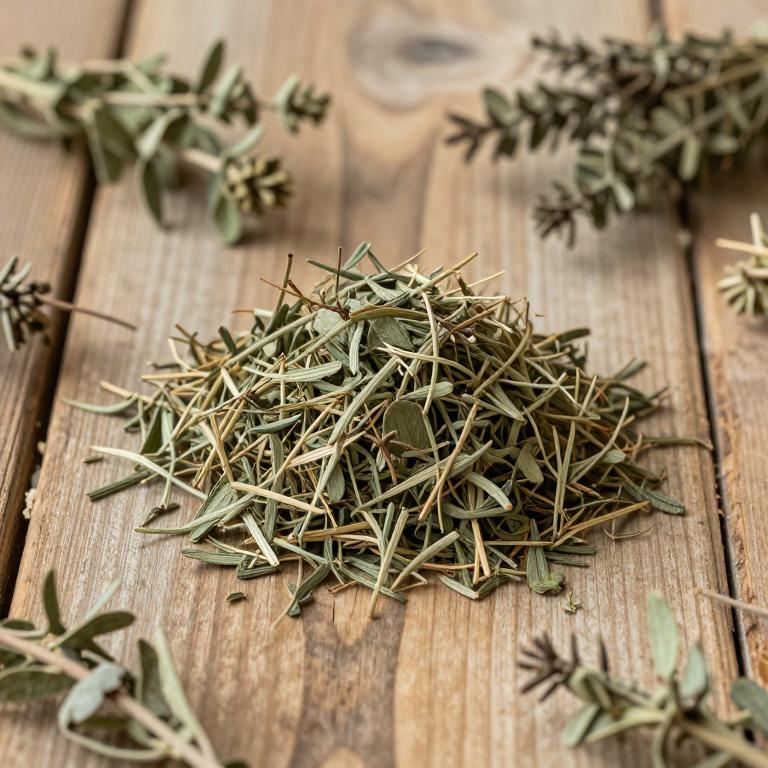
Names and Synonyms
Common Names
- bridal veil broom
- bridal broom
Scientific Names
Accepted name
Retama monospermaSynonyms
- Lygos monosperma
- Spartium clusii
- Spartium dubium
- Spartium webbii
- Spartium semperflorens
- Genista defoliata
Regional and Traditional Names
Spanish:
- retama de flor blanca
German:
- Einsamige Retama
Sources: Wikidata, Catalogue of Life
Taxonomical Classification
This plant belongs to the kingdom Plantae and the phylum Streptophyta, falling under the class Equisetopsida and subclass Magnoliidae. Within the order Fabales, it is a member of the Fabaceae family. It is specifically classified under the genus Retama as Retama monosperma.
| Rank | Classification |
|---|---|
| Kingdom | Plantae |
| Phylum | Streptophyta |
| Class | Equisetopsida |
| Subclass | Magnoliidae |
| Order | Fabales |
| Family | Fabaceae |
| Genus | Retama |
Sources: The World Checklist of Vascular Plants (WCVP)
Distribution
This plant exhibits a diverse geographical range across several distinct regions. In Southwestern Europe, its presence is noted within the territories of both Portugal and Spain. Moving toward Southeastern Europe, the species can also be found growing in Greece. Its distribution extends into Northern Africa, specifically within the borders of Morocco. Finally, the plant reaches into Western Asia, where it inhabits the East Aegean Islands.
| Region | Area |
|---|---|
| Southwestern Europe | Portugal |
| Southwestern Europe | Spain |
| Southeastern Europe | Greece |
| Northern Africa | Morocco |
| Western Asia | East Aegean Is. |
| Western South America | Ecuador |
| Southern South America | Argentina Northeast |
| Southern South America | Chile Central |
| Southern South America | Uruguay |
Sources: The World Checklist of Vascular Plants (WCVP)
Botanical Identification
Life history
The life history of Retama monosperma is characterized by a perennial lifecycle, allowing the plant to establish a long-term presence within its ecological niche. As a phanerophyte, its regenerative buds are located high above the ground on aerial shoots, a structural strategy that contributes to its overall life form as a phanerophyte. This growth habit enables the species to persist through various seasonal cycles, maintaining its stature and reproductive capabilities over multiple years.
- Life form :
- phanerophyte
- Lifecycle :
- perennial
Morphology
The morphology of Retama monosperma is characterized by its growth form as a woody shrub, which functions as a self-supporting structure rather than a climber or liana. As a terrestrial species, it does not exhibit aquatic, semiaquatic, or epiphytic lifestyles, such as being a holoepiphyte or hemiepiphyte; instead, it grows independently in its environment without being an obligatory or facultative parasite. The plant's structural integrity is defined by its permanent woodiness, distinguishing it from herbaceous or non-woody forms, and it maintains a stable, upright habit as a self-supporting shrub.
- Aquatic :
- terrestrial
- Climber :
- self-supporting
- Epiphyte :
- terrestrial
- Growth form :
- shrub
- Parasite :
- independent
- Woodiness :
- woody
Physiology
The physiology of Retama monosperma is characterized by its specialized adaptations to arid and semi-arid Mediterranean environments, primarily driven by its efficient management of water and carbon assimilation. The plant utilizes a C3 photosynthetic pathway, which involves the direct fixation of atmospheric carbon dioxide through the enzyme RuBisCO during the light-independent reactions. To mitigate the physiological stress imposed by high temperatures and limited water availability typical of its habitat, Retama monosperma employs xerophytic strategies, such as reducing leaf surface area and utilizing green, photosynthetic stems (cladodes) to facilitate gas exchange while minimizing transpirational water loss. This metabolic framework allows the species to maintain carbon fixation cycles even under fluctuating environmental conditions, balancing the energetic costs of photorespiration with the necessity of survival in nutrient-poor, drought-prone soils.
- Photosynthetic pathway :
- C3
Reproduction
The reproduction of Retama monosperma is characterized by the production of fruit that exhibits a dry consistency rather than a fleshy one. The seeds produced through this process vary in mass, with a minimum weight of 0.08991 g and a maximum of 0.2024 g, resulting in an average seed mass of 0.1139133335 g. Regarding their physical dimensions, the seeds maintain a highly consistent volume, with both the minimum and maximum recorded values, as well as the mean volume, standing at 140 mm³.
- Fruit dryness :
- dry
- Seed mass max:
- 0.2024 g
- Seed mass mean:
- 0.1139133335 g
- Seed mass min:
- 0.08991 g
- Seed volume max:
- 140 mm³
Sources: Global Inventory of Floras and Traits (GIFT)
Plant Parts
Retama monosperma has 3 reported plant parts identified across 3 scientific publications and several other databases that are studied for medicinal purposes. The most consistently reported plant part include flower, seed, stem.
| Plant part | Supporting sources | Consensus |
|---|---|---|
| Flower | 1 supporting sources | ★☆☆☆☆ |
| Seed | 1 supporting sources | ★☆☆☆☆ |
| Stem | 1 supporting sources | ★☆☆☆☆ |
Flower
- Molecules (Basel, Switzerland)
Seed
- Molecules (Basel, Switzerland)
Stem
- Molecules (Basel, Switzerland)
Chemicals
Retama monosperma has 3 reported phytochemicals identified across 3 scientific publications and several other databases. The most consistently reported chemicals include Flavonoids, genistein, polyphenols.
| Chemical | Supporting sources | Consensus |
|---|---|---|
| Flavonoids | 1 supporting sources | ★☆☆☆☆ |
| genistein | 1 supporting sources | ★☆☆☆☆ |
| polyphenols | 1 supporting sources | ★☆☆☆☆ |
Flavonoids
- Molecules (Basel, Switzerland)
genistein
- Dr. Duke
polyphenols
- Molecules (Basel, Switzerland)
Activities
Retama monosperma has 76 reported activities identified across 3 scientific publications and several other databases. The most consistently reported activities include Antioxidant, Antiproliferative, Abortifacient, Aldose-Reductase-Inhibitor, Alpha-Reductase-Inhibitor.
| Activity | Supporting sources | Consensus |
|---|---|---|
| Antioxidant | 2 supporting sources | ★☆☆☆☆ |
| Antiproliferative | 2 supporting sources | ★☆☆☆☆ |
| Abortifacient | 1 supporting sources | ★☆☆☆☆ |
| Aldose-Reductase-Inhibitor | 1 supporting sources | ★☆☆☆☆ |
| Alpha-Reductase-Inhibitor | 1 supporting sources | ★☆☆☆☆ |
| Antiaggregant | 1 supporting sources | ★☆☆☆☆ |
| Antiangiogenic | 1 supporting sources | ★☆☆☆☆ |
| Antiatherosclerotic | 1 supporting sources | ★☆☆☆☆ |
| Anticancer (Breast) | 1 supporting sources | ★☆☆☆☆ |
| Anticarcinomic (Breast) | 1 supporting sources | ★☆☆☆☆ |
Antioxidant
- Dr. Duke
- Molecules (Basel, Switzerland)
Antiproliferative
- Dr. Duke
- Molecules (Basel, Switzerland)
Abortifacient
- Dr. Duke
Aldose-Reductase-Inhibitor
- Dr. Duke
Alpha-Reductase-Inhibitor
- Dr. Duke
Antiaggregant
- Dr. Duke
Antiangiogenic
- Dr. Duke
Antiatherosclerotic
- Dr. Duke
Anticancer (Breast)
- Dr. Duke
Anticarcinomic (Breast)
- Dr. Duke
Conditions
Retama monosperma has 3 reported investigations on conditions identified across 3 scientific publications and several other databases. The most consistently reported conditions include bacterial infections, fungal infections, viral infections.
| Condition | Supporting sources | Consensus |
|---|---|---|
| Bacterial infections | 1 supporting sources | ★☆☆☆☆ |
| Fungal infections | 1 supporting sources | ★☆☆☆☆ |
| Viral infections | 1 supporting sources | ★☆☆☆☆ |
Bacterial infections
- Molecules (Basel, Switzerland)
Fungal infections
- Molecules (Basel, Switzerland)
Viral infections
- Molecules (Basel, Switzerland)
Preparations
Retama monosperma has 3 reported preparations identified across 3 scientific publications and several other databases. The most consistently reported preparations include flowers, seeds extracts, stems.
| Preparation | Supporting sources | Consensus |
|---|---|---|
| Flowers | 1 supporting sources | ★☆☆☆☆ |
| Seeds extracts | 1 supporting sources | ★☆☆☆☆ |
| Stems | 1 supporting sources | ★☆☆☆☆ |
Flowers
- Molecules (Basel, Switzerland)
Seeds extracts
- Molecules (Basel, Switzerland)
Stems
- Molecules (Basel, Switzerland)