white cut-leaved mignonette
Reseda alba · Accepted scientific name
Scientific literature: Very Sparse (6 studies) · ★☆☆☆☆
White cut-leaved mignonette, scientifically known as Reseda alba, is a versatile perennial herb celebrated for its delicate, fragrant white blossoms. Renowned in traditional medicine, it possesses significant therapeutic properties, including anti-inflammatory and antimicrobial effects. This resilient plant serves as a valuable botanical resource for both herbalists and gardeners.
- Family
- Resedaceae
- Native range
- Europe
- Parts used
- Not available
- Common names
- White Cut-Leaved Mignonette · White Mignonette · 2 more
- Scientific synonyms
- Eresda Alba
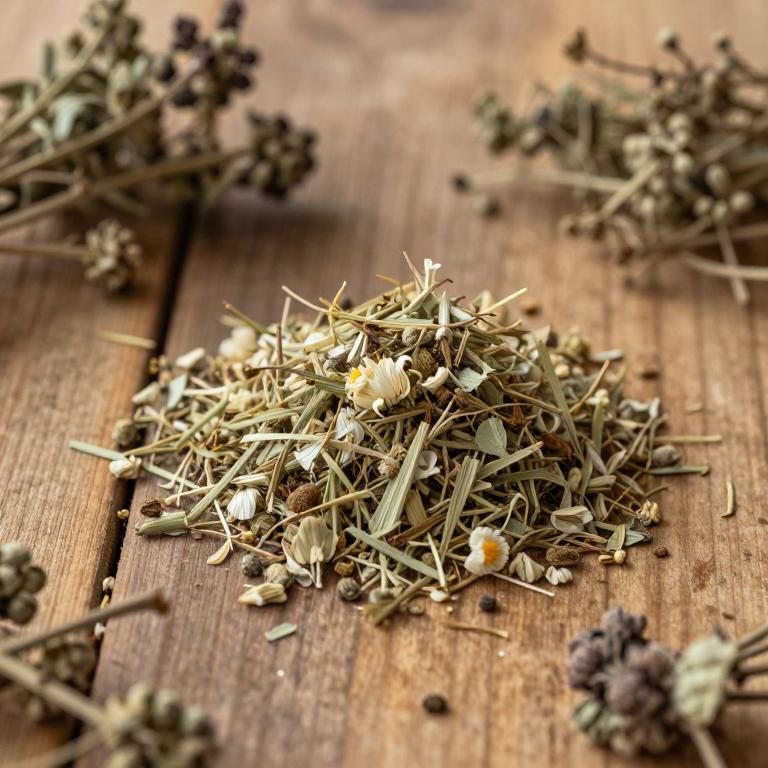
Names and Synonyms
Common Names
- white cut-leaved mignonette
- white mignonette
- white upright mignonette
- Upright Mignonette
Scientific Names
Accepted name
Reseda albaSynonyms
- Eresda alba
Regional and Traditional Names
Spanish:
- Pimentonera
- Reseda propinqua
- Tereianthes fruticosa
- Tereianthes undata
- Reseda alba subsp. paui
- Reseda myriophylla
- Reseda blanca
- Reseda suffruticulosa
- Tereianthus suffruticulosus
- Reseda fruticulosa
- Eresda alba
- Reseda hookeri
- Tereianthes alba
German:
- Weißer Wau
- Weiße Resede
- Weiße Resede
- Weißer Wau
French:
- mignonnette blanche
- réséda blanc
Sources: Wikidata, Catalogue of Life
Taxonomical Classification
This plant belongs to the kingdom Plantae and is classified under the phylum Streptophyta and the class Equisetopsida. Within the subclass Magnoliidae, it falls under the order Brassicales and the family Resedaceae. Finally, its taxonomic identity is defined by the genus Reseda, specifically the species Reseda alba.
| Rank | Classification |
|---|---|
| Kingdom | Plantae |
| Phylum | Streptophyta |
| Class | Equisetopsida |
| Subclass | Magnoliidae |
| Order | Brassicales |
| Family | Resedaceae |
| Genus | Reseda |
Sources: The World Checklist of Vascular Plants (WCVP)
Distribution
This plant exhibits a diverse presence across several key regions of the European continent. In Northern Europe, its range extends through the territories of Great Britain and Ireland. Moving toward Middle Europe, the species can be found growing within the borders of Belgium. It also maintains a steady distribution throughout the Czechia-Slovakia region. Finally, the plant is widely documented across the landscapes of Germany.
| Region | Area |
|---|---|
| Northern Europe | Great Britain |
| Northern Europe | Ireland |
| Middle Europe | Belgium |
| Middle Europe | Czechia-Slovakia |
| Middle Europe | Germany |
| Southwestern Europe | Baleares |
| Southwestern Europe | Corse |
| Southwestern Europe | France |
| Southwestern Europe | Portugal |
| Southwestern Europe | Sardegna |
Sources: The World Checklist of Vascular Plants (WCVP)
Botanical Identification
Ecology
The ecology of Reseda alba is fundamentally defined by its preference for coastal environments, where it thrives in specialized niches shaped by maritime influences. This species is typically found in saline-rich habitats, often colonizing sandy shores, coastal dunes, and rocky littoral zones where it must contend with high salt spray and shifting substrates. Its presence in these coastal ecosystems indicates a high tolerance for physiological drought and soil salinity, allowing it to occupy open, sun-exposed areas that are often too harsh for less resilient vegetation. By stabilizing loose coastal soils and participating in the unique nutrient cycling of seaside margins, Reseda alba plays a functional role within the specialized plant communities of maritime landscapes.
- Habitat :
- Coastal
Life history
The life history of Reseda alba is characterized by its classification as an annual plant, meaning it completes its entire developmental cycle—from germination to seed production—within a single growing season. As a therophyte, its survival strategy relies on the production of seeds that persist in the soil to endure unfavorable environmental conditions, while the vegetative body remains ephemeral. This life cycle allows the species to rapidly exploit seasonal resources, utilizing its brief period of growth to establish a robust presence before transitioning into reproductive maturity and subsequent senescence.
- Life form :
- therophyte
- Lifecycle :
- annual
Morphology
The morphology of Reseda alba is characterized by its growth form as a non-woody herb and forb. This terrestrial plant is self-supporting rather than being a climber or a liana, and it functions as an independent organism without parasitic behavior. In terms of stature, it is a relatively low-growing species with a plant height that ranges from a minimum of 0.15 m to a maximum of 0.9 m, maintaining an average height of approximately 0.52 m.
- Aquatic :
- terrestrial
- Climber :
- self-supporting
- Epiphyte :
- terrestrial
- Growth form :
- herb
- Growth form :
- forb
- Parasite :
- independent
- Plant height max:
- 0.9 m
- Plant height mean:
- 0.516666666666667 m
- Plant height min:
- 0.15 m
- Woodiness :
- non-woody
Physiology
The physiology of Reseda alba is characterized by a C3 photosynthetic pathway and a non-carnivorous nutritional strategy. The leaf morphology exhibits specific dimensions, with a mean leaf width of 3.5 cm, which remains consistent across its minimum and maximum recorded values of 3.5 cm. The leaves reach a maximum length of 7 cm, contributing to a mean leaf size of approximately 16.92625 cm². Furthermore, the plant demonstrates an average Specific Leaf Area (SLA) of 232.4 cm²/g, reflecting its resource allocation and leaf thickness characteristics.
- Carnivory :
- non-carnivorous
- Leaf length max:
- 7 cm
- Leaf size mean:
- 16.92625 cm²
- Leaf width mean:
- 3.5 cm
- Photosynthetic pathway :
- C3
- Specific Leaf Area (SLA) mean:
- 232.4 cm²/g
Reproduction
The reproduction of Reseda alba is driven by sexual processes, as asexual reproduction is notably absent. The flowering cycle is quite extensive and variable, typically beginning in December and concluding in October. This reproductive phase relies on a biotic pollination syndrome, specifically utilizing insects, with bees playing a significant role in the pollination process. Following successful fertilization, the plant develops a capsule-type fruit. These fruits vary in size, with a mean length of 1.075 cm (ranging from a minimum of 0.8 cm to a maximum of 1.5 cm) and a mean width of 0.3 cm. The fruit is characterized as dehiscence, meaning it opens at maturity to release its contents. The seeds produced are quite small, maintaining a consistent length of approximately 1.3 mm. In terms of mass, the seeds have a mean weight of 0.000407333333333333 g, with individual seeds ranging from a minimum of 0.00012 g to a maximum of 0.00049 g. Finally, the dispersal of these seeds is categorized as anthropochorous, suggesting that human activity plays a role in their movement and distribution.
- Dehiscence :
- dehiscent
- Dispersal syndrome :
- anthropochorous
- Flowering time :
- Dec
- Flowering time :
- Oct
- Fruit length max:
- 1.5 cm
- Fruit length mean:
- 1.075 cm
- Fruit length min:
- 0.8 cm
- Fruit type :
- capsule
- Fruit width mean:
- 0.3 cm
- Pollination syndrome :
- insect
- Pollination syndrome :
- bee
- Pollination syndrome :
- biotic
- Reproduction asexual :
- absent
- Seed length mean:
- 1.3 mm
- Seed mass max:
- 0.00049 g
- Seed mass mean:
- 0.000407333333333333 g
- Seed mass min:
- 0.00012 g
Sources: Global Inventory of Floras and Traits (GIFT)
Chemicals
Reseda alba has 1 reported phytochemicals identified across 0 scientific publications and several other databases. The most consistently reported chemicals include rosmarinic acid.
| Chemical | Supporting sources | Consensus |
|---|---|---|
| rosmarinic acid | 1 supporting sources | ★☆☆☆☆ |
rosmarinic acid
- Frontiers in nutrition
Activities
Reseda alba has 1 reported activities identified across 0 scientific publications and several other databases. The most consistently reported activities include Antioxidant.
| Activity | Supporting sources | Consensus |
|---|---|---|
| Antioxidant | 1 supporting sources | ★☆☆☆☆ |
Antioxidant
- Frontiers in nutrition
Conditions
Reseda alba has 4 reported investigations on conditions identified across 0 scientific publications and several other databases. The most consistently reported conditions include Alzheimer's disease, bacterial infections, neurodegenerative diseases, neurodegenerative disorders.
| Condition | Supporting sources | Consensus |
|---|---|---|
| Alzheimer's disease | 1 supporting sources | ★☆☆☆☆ |
| Bacterial infections | 1 supporting sources | ★☆☆☆☆ |
| Neurodegenerative diseases | 1 supporting sources | ★☆☆☆☆ |
| Neurodegenerative disorders | 1 supporting sources | ★☆☆☆☆ |
Alzheimer's disease
- Frontiers in nutrition
Bacterial infections
- Frontiers in nutrition
Neurodegenerative diseases
- Frontiers in nutrition
Neurodegenerative disorders
- Frontiers in nutrition
Preparations
Reseda alba has 1 reported preparations identified across 0 scientific publications and several other databases. The most consistently reported preparations include ethyl acetate extract.
| Preparation | Supporting sources | Consensus |
|---|---|---|
| Ethyl acetate extract | 1 supporting sources | ★☆☆☆☆ |
Ethyl acetate extract
- Frontiers in nutrition