Renealmia thyrsoidea
Renealmia thyrsoidea · Accepted scientific name
Scientific literature: Very Sparse (4 studies) · ★☆☆☆☆
, scientifically known as Renealmia thyrsoidea, is a remarkable medicinal plant valued for its diverse therapeutic properties. Indigenous to tropical regions, this species is frequently utilized in traditional medicine to treat various ailments. Exploring its phytochemical profile offers promising insights into developing natural treatments for modern healthcare challenges.
- Family
- Zingiberaceae
- Native range
- Southern America
- Parts used
- Not available
- Common names
- Not available
- Scientific synonyms
- Ethanium Thyrsodeum · Amomum Thyrsoideum · 1 more
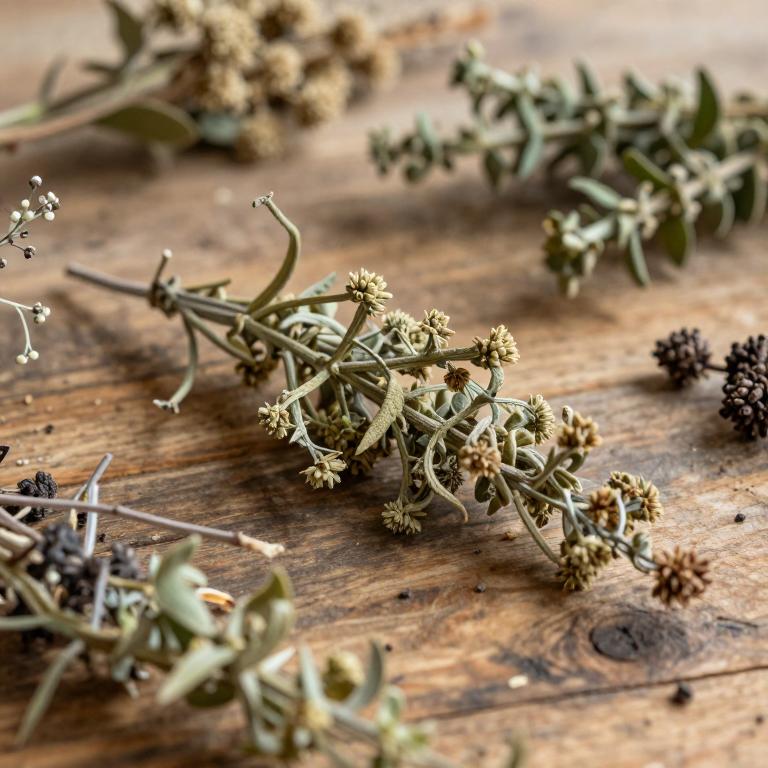
Names and Synonyms
Scientific Names
Accepted name
Renealmia thyrsoideaSynonyms
- Ethanium thyrsodeum
- Amomum thyrsoideum
- Alpinia thyrsoidea
Sources: Wikidata, Catalogue of Life
Taxonomical Classification
This plant, Renealmia thyrsoidea, belongs to the kingdom Plantae and the phylum Streptophyta. It is classified under the class Equisetopsida and subclass Magnoliidae within the order Zingiberales. Furthermore, it is a member of the Zingiberaceae family and falls under the genus Renealmia.
| Rank | Classification |
|---|---|
| Kingdom | Plantae |
| Phylum | Streptophyta |
| Class | Equisetopsida |
| Subclass | Magnoliidae |
| Order | Zingiberales |
| Family | Zingiberaceae |
| Genus | Renealmia |
Sources: The World Checklist of Vascular Plants (WCVP)
Distribution
This plant exhibits a specific geographical range that spans across parts of Central America and the Caribbean. In Central America, its distribution includes the countries of Costa Rica and Panamá. Moving into the Caribbean region, it can be found in Trinidad and Tobago. The species also extends into Northern South America, where it inhabits Guyana. Finally, its presence is documented within the borders of Suriname.
| Region | Area |
|---|---|
| Central America | Costa Rica |
| Central America | Panamá |
| Caribbean | Trinidad-Tobago |
| Northern South America | Guyana |
| Northern South America | Suriname |
| Northern South America | Venezuela |
| Western South America | Bolivia |
| Western South America | Colombia |
| Western South America | Ecuador |
| Western South America | Peru |
Sources: The World Checklist of Vascular Plants (WCVP)
Botanical Identification
Ecology
The ecology of Renealmia thyrsoidea is characterized by its presence within the Floresta de Terra Firme, where it thrives in stable, non-flooded forest environments. This species exhibits a broad altitudinal distribution, occurring at elevations ranging from sea level (0 m AMSL) up to a maximum of 2250 m AMSL. While it can inhabit high-altitude terrain, its distribution is centered around a mean elevation of 325 m AMSL, reflecting its primary ecological niche within the lowland tropical forest structures.
- Elevational range max:
- 2250 m AMSL
- Elevational range mean:
- 325 m AMSL
- Elevational range min:
- 0 m AMSL
- Habitat :
- Floresta de Terra Firme
Life history
The life history of Renealmia thyrsidea is characterized by a perennial lifecycle, allowing the plant to persist through multiple growing seasons rather than completing its cycle in a single year. In terms of its structural habit and survival strategy, it functions as a geophyte, meaning it relies on specialized underground storage organs to endure unfavorable environmental conditions and facilitate regrowth during subsequent seasons.
- Life form :
- geophyte
- Lifecycle :
- perennial
Morphology
The morphology of Renealmia thyrsoidea is characterized by its growth form as a non-woody herb. This terrestrial species exhibits a self-supporting structure, functioning as a self-supporting plant rather than a liana or vine. It is an independent organism, lacking any parasitic tendencies, and does not exhibit epiphytic behavior, remaining strictly terrestrial. In terms of stature, the plant reaches a maximum height of 2 meters, with an average height of approximately 3 meters.
- Aquatic :
- terrestrial
- Climber :
- self-supporting
- Epiphyte :
- terrestrial
- Growth form :
- herb
- Parasite :
- independent
- Plant height max:
- 2 m
- Plant height mean:
- 3 m
- Woodiness :
- non-woody
Physiology
The physiology of Renealmia thyrsioidea is characterized by a standard C3 photosynthetic pathway, meaning its carbon fixation process relies on the enzyme Rubisco to incorporate atmospheric carbon dioxide into three-carbon organic compounds during the Calvin cycle. This metabolic strategy indicates that the plant undergoes photorespiration under conditions of high temperature or water stress, a typical trait of plants utilizing the C3 pathway rather than C4 or CAM mechanisms. Furthermore, the plant does not function as a nitrogen fixer, lacking the specialized symbiotic relationships with diazotrophic bacteria or internal mechanisms required to convert atmospheric nitrogen into bioavailable forms.
- Nitrogen fixer :
- no
- Photosynthetic pathway :
- C3
Reproduction
The reproduction of Renealmia thyrsoidea is characterized by a biotic pollination syndrome, indicating a reliance on living organisms to facilitate the transfer of pollen. Specifically, the plant exhibits specialized pollination syndromes centered around birds, which serve as the primary vectors for reproductive success. This avian-mediated process is a fundamental component of its biological cycle, distinguishing its reproductive strategy from abiotic methods such as wind or water. By utilizing birds as pollinators, the plant ensures targeted pollen dispersal through these biotic interactions, which is essential for its continued propagation in its natural habitat.
- Pollination syndrome :
- bird
- Pollination syndrome :
- biotic
Sources: Global Inventory of Floras and Traits (GIFT)
Chemicals
Renealmia thyrsoidea has 3 reported phytochemicals identified across 0 scientific publications and several other databases. The most consistently reported chemicals include COMPOUND 6, Compound 7, compound 11.
| Chemical | Supporting sources | Consensus |
|---|---|---|
| COMPOUND 6 | 1 supporting sources | ★☆☆☆☆ |
| Compound 7 | 1 supporting sources | ★☆☆☆☆ |
| compound 11 | 1 supporting sources | ★☆☆☆☆ |
COMPOUND 6
- Journal of ethnopharmacology
Compound 7
- Journal of ethnopharmacology
compound 11
- Journal of ethnopharmacology
Conditions
Renealmia thyrsoidea has 1 reported investigations on conditions identified across 0 scientific publications and several other databases. The most consistently reported conditions include fever.
| Condition | Supporting sources | Consensus |
|---|---|---|
| Fever | 1 supporting sources | ★☆☆☆☆ |
Fever
- Journal of ethnopharmacology