Reaumuria vermiculata
Reaumuria vermiculata · Accepted scientific name
Scientific literature: Very Sparse (4 studies) · ★☆☆☆☆
Reaumuria vermiculata, scientifically known as Reaumuria vermiculata, is a versatile medicinal shrub valued in traditional herbal practices. Often found in tropical regions, this plant is recognized for its therapeutic properties, particularly in treating skin ailments and inflammatory conditions, offering a natural approach to holistic wellness and healing.
- Family
- Tamaricaceae
- Native range
- Europe
- Parts used
- Not available
- Common names
- Not available
- Scientific synonyms
- Reaumuria Mucronata · Reaumuria Stenophylla
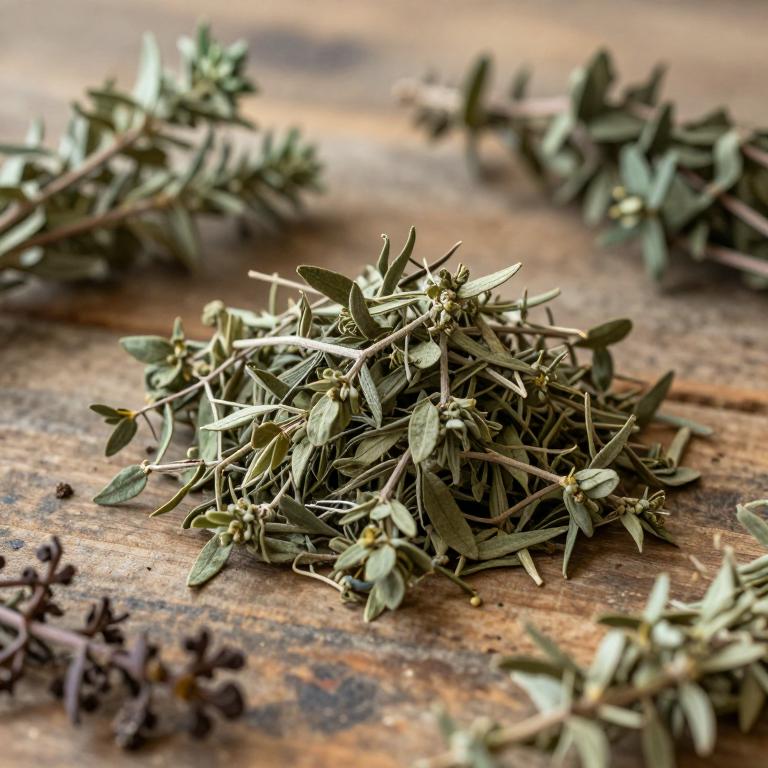
Names and Synonyms
Scientific Names
Accepted name
Reaumuria vermiculataSynonyms
- Reaumuria mucronata
- Reaumuria stenophylla
Sources: Wikidata
Taxonomical Classification
This plant belongs to the kingdom Plantae and is classified within the phylum Streptophyta and the class Equisetopsida. It is further categorized under the subclass Magnoliidae and the order Caryophyllales, falling into the family Tamaricaceae. Finally, its taxonomic identity is defined by the genus Reaumuria, specifically the species Reaumuria vermiculata.
| Rank | Classification |
|---|---|
| Kingdom | Plantae |
| Phylum | Streptophyta |
| Class | Equisetopsida |
| Subclass | Magnoliidae |
| Order | Caryophyllales |
| Family | Tamaricaceae |
| Genus | Reaumuria |
Sources: The World Checklist of Vascular Plants (WCVP)
Distribution
This plant exhibits a specific geographical distribution across the Mediterranean region. In Southeastern Europe, its presence is noted within the territory of Sicilia. Its range extends significantly into Northern Africa, where it can be found in Algeria. Additionally, the species is distributed throughout the North African nations of Egypt and Libya. Finally, its habitat includes the coastal and inland areas of Tunisia.
| Region | Area |
|---|---|
| Southeastern Europe | Sicilia |
| Northern Africa | Algeria |
| Northern Africa | Egypt |
| Northern Africa | Libya |
| Northern Africa | Tunisia |
| Western Asia | Sinai |
Sources: The World Checklist of Vascular Plants (WCVP)
Botanical Identification
Life history
The life history of Reaumuria vermiculata is characterized by its nature as a perennial plant, meaning it lives for several years and undergoes multiple reproductive cycles throughout its existence. As a long-lived species, it establishes a persistent presence in its habitat, often developing woody structures that allow it to survive through various seasonal shifts. The developmental progression of the plant involves an initial vegetative growth phase where it establishes a robust root system and foliage, followed by periodic flowering stages that facilitate sexual reproduction. Because it is perennial, it does not die back after a single seeding event like annuals; instead, it maintains its biological functions over an extended duration, potentially exhibiting variable growth rates depending on environmental stability and resource availability.
- Lifecycle :
- perennial
Morphology
The morphology of Reaumuria vermiculata is characterized by a growth form classified as a herb, exhibiting a non-woody structure throughout its development. As a terrestrial organism, it thrives in land-based environments rather than aquatic or semiaquatic habitats. The plant functions as an independent species, lacking any parasitic relationship with host organisms. In terms of its structural habit, it is a self-supporting plant, maintaining its physical form without the need for external climbing structures or obligatory support.
- Aquatic :
- terrestrial
- Climber :
- self-supporting
- Growth form :
- herb
- Parasite :
- independent
- Woodiness :
- non-woody
Sources: Global Inventory of Floras and Traits (GIFT)
Chemicals
Reaumuria vermiculata has 1 reported phytochemicals identified across 0 scientific publications and several other databases. The most consistently reported chemicals include myricetin.
| Chemical | Supporting sources | Consensus |
|---|---|---|
| myricetin | 1 supporting sources | ★☆☆☆☆ |
myricetin
- EXCLI journal
Activities
Reaumuria vermiculata has 2 reported activities identified across 0 scientific publications and several other databases. The most consistently reported activities include Anticancer, Antioxidant.
| Activity | Supporting sources | Consensus |
|---|---|---|
| Anticancer | 1 supporting sources | ★☆☆☆☆ |
| Antioxidant | 1 supporting sources | ★☆☆☆☆ |
Anticancer
- EXCLI journal
Antioxidant
- EXCLI journal
Preparations
Reaumuria vermiculata has 7 reported preparations identified across 0 scientific publications and several other databases. The most consistently reported preparations include dichloromethane, dichloromethane extract, hexane, methanol, methanol extract.
| Preparation | Supporting sources | Consensus |
|---|---|---|
| Dichloromethane | 1 supporting sources | ★☆☆☆☆ |
| Dichloromethane extract | 1 supporting sources | ★☆☆☆☆ |
| Hexane | 1 supporting sources | ★☆☆☆☆ |
| Methanol | 1 supporting sources | ★☆☆☆☆ |
| Methanol extract | 1 supporting sources | ★☆☆☆☆ |
| Shoot extracts | 1 supporting sources | ★☆☆☆☆ |
| Water | 1 supporting sources | ★☆☆☆☆ |
Dichloromethane
- EXCLI journal
Dichloromethane extract
- EXCLI journal
Hexane
- EXCLI journal
Methanol
- EXCLI journal
Methanol extract
- EXCLI journal
Shoot extracts
- EXCLI journal
Water
- EXCLI journal