upright prairie coneflower
Ratibida columnifera · Accepted scientific name
Scientific literature: Very Sparse (5 studies) · ★☆☆☆☆
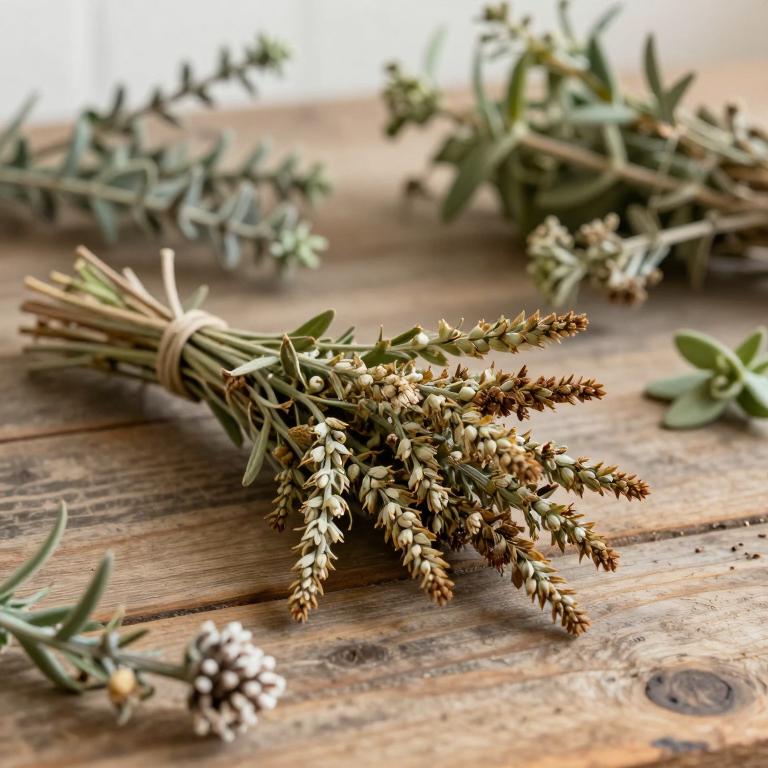
Upright prairie coneflower, scientifically known as Ratibida columnifera, is a resilient perennial native to North American grasslands. Renowned for its striking, cone-shaped blooms and sturdy stalks, this plant serves as a vital nectar source for pollinators. It is valued in traditional herbalism for its diverse medicinal properties and ecological importance.
Names and Synonyms
Common Names
- long-headed coneflower
- prairie coneflower
- red-spike Mexican-hat
- yellow prairie coneflower
- Mexican-hat
- longhead-coneflower
- prairie-coneflower
- redspike Mexican-hat
- thimble-flower
- upright prairie-coneflower
- Mexican hat
- yellow coneflower
Scientific Names
Accepted name
Ratibida columniferaSynonyms
- Obeliscaria drummondii
- Lepachys columnaris
- Rudbeckia drummondii
- Ratibida columnifera f. denudata
- Ratibida columnifera var. breviradiata
- Ratibida sulcata
- Ratibida columnifera var. incisa
- Rudbeckia columnaris
- Rudbeckia columnifera
- Ratibida columnifera var. tubularis
- Ratibida columnaris f. denudata
- Obeliscaria pulcherrima
- Ratibida columnaris var. pulcherrima
- Lepachys columnifera var. pulcherrima
- Lepachys pulcherrima
- Obeliscaria columnaris
- Ratibida columnaris
- Ratibida columnifera var. pulcherrima
- Lepachys columnifera f. pulcherrima
- Rudbeckia columnaris var. pulcherrima
- Ratibida columnaris f. pulcherrima
- Ratibida columnifera f. pulcherrima
- Lepachys columnifera
- Ratibida columnifera var. appendiculata
Regional and Traditional Names
Spanish:
- Sombrero mexicano
- conito de campo
German:
- länglicher Präriesonnenhut
French:
- Ratibida columnaris
- Rudbeckia columnarisi
- Rudbeckia columnifera
- ratibida en colonne
Sources: Wikidata, Catalogue of Life
Taxonomical Classification
This plant, known scientifically as Ratibida columnifera, belongs to the kingdom Plantae and the phylum Streptophyta. Within the class Equisetopsida and subclass Magnoliidae, it is classified under the order Asterales. Finally, it is a member of the family Asteraceae and the genus Ratibida.
| Rank | Classification |
|---|---|
| Kingdom | Plantae |
| Phylum | Streptophyta |
| Class | Equisetopsida |
| Subclass | Magnoliidae |
| Order | Asterales |
| Family | Asteraceae |
| Genus | Ratibida |
Sources: The World Checklist of Vascular Plants (WCVP)
Distribution
This plant exhibits a wide-ranging geographical distribution across several different continents. In Northern Europe, its presence is specifically noted within Great Britain. Moving to the Malesian region, the species can be found in Jawa. Its reach also extends to Western Canada, where it inhabits the provinces of Alberta, British Columbia, and Manitoba. Consequently, the plant thrives in diverse environments ranging from European landscapes to North American and Southeast Asian territories.
| Region | Area |
|---|---|
| Northern Europe | Great Britain |
| Malesia | Jawa |
| Western Canada | Alberta |
| Western Canada | British Columbia |
| Western Canada | Manitoba |
| Western Canada | Saskatchewan |
| Eastern Canada | Ontario |
| Northwestern U.S.A. | Colorado |
| Northwestern U.S.A. | Montana |
| Northwestern U.S.A. | Wyoming |
Sources: The World Checklist of Vascular Plants (WCVP)
Botanical Identification
Ecology
The ecology of Ratibida columnifera is characterized by its distribution across low-lying landscapes, specifically occupying an elevational range that begins at 0 m AMSL and extends up to a maximum of 100 m AMSL. This narrow altitudinal belt suggests that the species is specialized for coastal, lowland, or riparian environments where sea level or near-sea level conditions prevail. Such an ecological niche typically implies an adaptation to humid, tropical, or subtropical climates, where the plant must navigate the specific soil compositions and moisture levels found within these low-elevation zones.
- Elevational range max:
- 100 m AMSL
- Elevational range min:
- 0 m AMSL
Life history
The life history of Ratibida columnifera is characterized by its status as a perennial species, meaning it persists through multiple growing seasons rather than completing its cycle in a single year. As a perennial, the plant establishes a long-term presence in its environment, often developing robust structural components that allow it to survive dormant periods and re-emerge annually. This extended lifecycle enables the plant to invest more energy into complex growth patterns and reproductive stability over time, contributing to its ability to inhabit specific ecological niches across several years.
- Lifecycle :
- perennial
Morphology
The morphology of Ratibida columnifera is characterized by a growth form categorized as both a herb and a forb, reaching an average plant height of approximately 0.9 m. This species is non-woody in structure and functions as a self-supporting plant, rather than acting as a liana or vine. It is an independent organism, not exhibiting parasitic behavior, and is classified as a terrestrial plant, which also applies to its status regarding epiphytic tendencies.
- Aquatic :
- terrestrial
- Climber :
- self-supporting
- Epiphyte :
- terrestrial
- Growth form :
- herb
- Growth form :
- forb
- Parasite :
- independent
- Plant height mean:
- 0.9 m
- Woodiness :
- non-woody
Physiology
The physiology of Ratibida columnifera is characterized by its metabolic processes, specifically utilizing the C3 photosynthetic pathway to facilitate carbon fixation. In this pathway, the plant captures atmospheric carbon dioxide through stomata, where it is directly incorporated into a three-carbon molecule, such as 3-phosphoglycerate, via the enzyme RuBisCO during the Calvin cycle. This metabolic strategy dictates the plant's resource management, influencing its transpiration rates, water-use efficiency, and overall energy production patterns in response to its environmental conditions.
- Photosynthetic pathway :
- C3
Reproduction
The reproduction of Ratibida columnifera is characterized by a specific seasonal flowering window and the production of minute seeds. The plant's flowering period typically commences in July and concludes in August, though the timing can be variable depending on environmental conditions. Following successful pollination, the plant produces seeds with a highly lightweight profile; the seed mass is minimal, ranging from a minimum of 0.0001 g to a maximum of 0.00101 g, with an average seed mass of approximately 0.000692222333333333 g.
- Flowering time :
- Jul
- Flowering time :
- Aug
- Seed mass max:
- 0.00101 g
- Seed mass mean:
- 0.000692222333333333 g
- Seed mass min:
- 1e-04 g
Sources: Global Inventory of Floras and Traits (GIFT)
Plant Parts
Ratibida columnifera has 2 reported plant parts identified across 2 scientific publications and several other databases that are studied for medicinal purposes. The most consistently reported plant part include flower, leaf.
| Plant part | Supporting sources | Consensus |
|---|---|---|
| Flower | 1 supporting sources | ★☆☆☆☆ |
| Leaf | 1 supporting sources | ★☆☆☆☆ |
Flower
- Journal of natural products
Leaf
- Journal of natural products
Chemicals
Ratibida columnifera has 1 reported phytochemicals identified across 2 scientific publications and several other databases. The most consistently reported chemicals include Hispidulin.
| Chemical | Supporting sources | Consensus |
|---|---|---|
| Hispidulin | 1 supporting sources | ★☆☆☆☆ |
Hispidulin
- Journal of natural products
Activities
Ratibida columnifera has 1 reported activities identified across 2 scientific publications and several other databases. The most consistently reported activities include Cytotoxic.
| Activity | Supporting sources | Consensus |
|---|---|---|
| Cytotoxic | 1 supporting sources | ★☆☆☆☆ |
Cytotoxic
- Journal of natural products