Raphanus raphanistrum subsp. sativus
Raphanus raphanistrum subsp. sativus · Accepted scientific name
Scientific literature: Very Extensive (662 studies) · ★★★★★
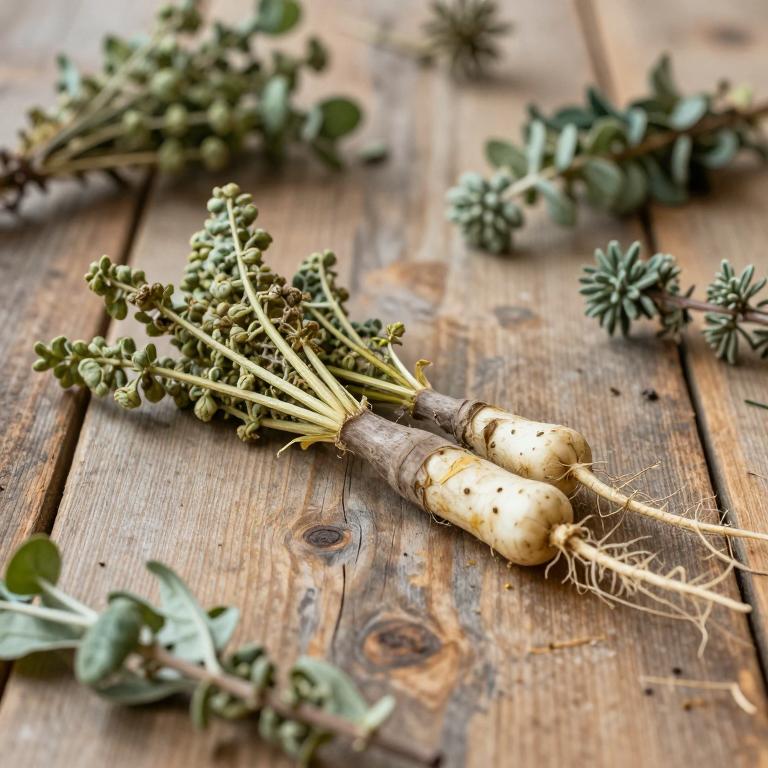
, scientifically known as Raphanus raphanistrum subsp. sativus, is the cultivated radish, a versatile plant valued for both nutrition and traditional healing. Rich in antioxidants and vitamins, it is used in various cultures to support digestive health, reduce inflammation, and promote detoxification, offering significant therapeutic potential in holistic medicine.
- Family
- Brassicaceae
- Native range
- Europe
- Parts used
- Leaf · Root
- Common names
- Not available
- Scientific synonyms
- Raphanus Sativus Var. Napiformis · Raphanus Sativus Var. Oleiformis · 91 more
Names and Synonyms
Scientific Names
Accepted name
Raphanus raphanistrum subsp. sativusSynonyms
- Raphanus sativus var. napiformis
- Raphanus sativus var. oleiformis
- Raphanus sativus var. radicula
- Raphanus sativus var. hortensis
- Raphanus sativus convar. esculentus
- Raphanus sativus var. albus
- Raphanus sativus var. brunneus
- Raphanus sativus var. leucoplax
- Raphanus sativus var. melanoplax
- Raphanus sativus var. augustanus
- Raphanus sativus var. tristis
- Raphanus sativus var. crininus
- Raphanus sativus var. chloris
- Raphanus sativus var. autumnalis
- Raphanus sativus var. melanops
- Raphanus sativus var. vitreus
- Raphanus sativus var. scarlatinosus
- Raphanus sativus var. vulgaris
- Raphanus sativus var. purpureus
- Raphanus raphanistrum subvar. niger
- Raphanus sativus var. griseus
- Raphanus sativus var. fusiformis
- Raphanus sativus var. praecox
- Raphanus sativus subsp. esculentus
- Raphanus sativus var. julianus
- Raphanus sativus var. rotundus
- Raphanus sativus var. salmoneus
- Raphanus sativus var. violaceus
- Raphanus sativus var. minor
- Raphanus sativus var. parvipinnatus
- Raphanus indicus
- Raphanus latourettianus
- Raphanus acanthiformis
- Raphanus raphanistrum var. niger
- Raphanus raphanistrum var. radicula
- Raphanus sativus subf. sylvestris
- Raphanus acanthiformis var. spontaneus
- Raphanus stenocarpus
- Raphanus orbicularis
- Raphanus sativus var. syrengeus
- Raphanus sativus var. virens
- Raphanus sativus convar. hybernus
- Raphanus sativus var. incarnatus
- Raphanus sativus var. lobo
- Raphanus sativus convar. minowase
- Raphanus sativus subsp. sinensis
- Raphanus sativus var. roseus
- Raphanus sativus subsp. acanthiformis
- Raphanus sativus convar. radicula
- Raphanus sativus subf. niger
- Raphanus gayanus
- Raphanus raphanistrum subsp. caudatus
- Raphanus niger var. albus
- Raphanus radicula var. rotundus
- Raphanus sativus var. caudatus
- Raphanus sativus var. niger
- Raphanus sativus subsp. oleiferus
- Raphanus sativus subsp. radicula
- Raphanus sativus subsp. niger
- Raphanus radicula
- Raphanus sativus f. albescens
- Raphanus acanthiformis var. raphanistroides
- Raphanus sativus var. raphanistroides
- Raphanus sativus f. exsuccus
- Raphanus raphanistrum var. sativus
- Raphanus sativus f. esculentus
- Raphanus radicula var. oleifera
- Raphanus sativus var. chinensis
- Raphanus sativus subf. albescens
- Raphanus raphanistrum var. exsuccus
- Raphanus sativus subsp. hybernus
- Raphanus sativus var. sylvestris
- Raphanus sativus var. gayanus
- Raphanus sativus var. oblongus
- Raphanus radicula var. oblongus
- Raphanus caudatus
- Raphanus macropodus var. spontaneus
- Raphanus sativus f. raphanistroides
- Raphanus sativus var. mougri
- Raphanus sativus var. radicula
- Raphanus taquetii
- Raphanus sativus var. rubidus
- Raphanus caudatus
- Raphanus macropodus
- Raphanistrum gayanum
- Raphanus rotundus
- Raphanus sativus
- Raphanus niger
- Raphanus sativus var. aka-daikon
- Raphanus sativus var. longipinnatus
- Raphanus sativus var. nonpinnatus
- Raphanus sativus var. oleiferus
- Raphanus sativus var. carneus
Sources: Wikidata
Taxonomical Classification
This plant belongs to the kingdom Plantae and is classified under the phylum Streptophyta and class Equisetopsida. Within the subclass Magnoliidae, it is organized under the order Brassicales and the family Brassicaceae. Finally, it is identified by the genus Raphanus, specifically as the subspecies sativus.
| Rank | Classification |
|---|---|
| Kingdom | Plantae |
| Phylum | Streptophyta |
| Class | Equisetopsida |
| Subclass | Magnoliidae |
| Order | Brassicales |
| Family | Brassicaceae |
| Genus | Raphanus |
Sources: The World Checklist of Vascular Plants (WCVP)
Distribution
This plant exhibits a specific geographical distribution across several regions of Europe. In Northern Europe, its presence is documented in both Great Britain and Ireland. Moving toward Middle Europe, the species can be found within the borders of Belgium. It is also widely distributed throughout Germany. Finally, its range extends further into Middle Europe to include Switzerland.
| Region | Area |
|---|---|
| Northern Europe | Great Britain |
| Northern Europe | Ireland |
| Middle Europe | Belgium |
| Middle Europe | Germany |
| Middle Europe | Switzerland |
| Southwestern Europe | Baleares |
| Southwestern Europe | Corse |
| Southwestern Europe | Portugal |
| Southwestern Europe | Sardegna |
| Southwestern Europe | Spain |
Sources: The World Checklist of Vascular Plants (WCVP)
Plant Parts
Raphanus raphanistrum subsp. sativus has 3 reported plant parts identified across 5 scientific publications and several other databases that are studied for medicinal purposes. The most consistently reported plant part include leaf, root, seed.
| Plant part | Supporting sources | Consensus |
|---|---|---|
| Leaf | 3 supporting sources | ★★☆☆☆ |
| Root | 1 supporting sources | ★☆☆☆☆ |
| Seed | 1 supporting sources | ★☆☆☆☆ |
Leaf
- PloS one
- Journal of tropical medicine
- Phytotherapy research : PTR
Root
- Pharmaceutical biology
Seed
- Pakistan journal of biological sciences : PJBS
Chemicals
Raphanus raphanistrum subsp. sativus has 105 reported phytochemicals identified across 5 scientific publications and several other databases. The most consistently reported chemicals include GLUTAMIC ACID, Glucobrassicin, Glucosinolates, Isoleucine, Isothiocyanates.
| Chemical | Supporting sources | Consensus |
|---|---|---|
| GLUTAMIC ACID | 2 supporting sources | ★☆☆☆☆ |
| Glucobrassicin | 2 supporting sources | ★☆☆☆☆ |
| Glucosinolates | 2 supporting sources | ★☆☆☆☆ |
| Isoleucine | 2 supporting sources | ★☆☆☆☆ |
| Isothiocyanates | 2 supporting sources | ★☆☆☆☆ |
| Saponins | 2 supporting sources | ★☆☆☆☆ |
| Sulforaphene | 2 supporting sources | ★☆☆☆☆ |
| aspartic acid | 2 supporting sources | ★☆☆☆☆ |
| caffeic acid | 2 supporting sources | ★☆☆☆☆ |
| glycine | 2 supporting sources | ★☆☆☆☆ |
GLUTAMIC ACID
- Dr. Duke
- Foods (Basel, Switzerland)
Glucobrassicin
- Dr. Duke
- Plants (Basel, Switzerland)
Glucosinolates
- Metabolites
- Nutrients
Isoleucine
- Dr. Duke
- Foods (Basel, Switzerland)
Isothiocyanates
- Cancers
- Nutrients
Saponins
- Journal of tropical medicine
- Phytotherapy research : PTR
Sulforaphene
- Fitoterapia
- Cancers
aspartic acid
- Dr. Duke
- Foods (Basel, Switzerland)
caffeic acid
- Dr. Duke
- Scientific reports
glycine
- Dr. Duke
- Foods (Basel, Switzerland)
Activities
Raphanus raphanistrum subsp. sativus has 493 reported activities identified across 5 scientific publications and several other databases. The most consistently reported activities include Antiarthritic, Antidiabetic, Antioxidant, Laxative, 5-Alpha-Reductase-Inhibitor.
| Activity | Supporting sources | Consensus |
|---|---|---|
| Antiarthritic | 2 supporting sources | ★☆☆☆☆ |
| Antidiabetic | 2 supporting sources | ★☆☆☆☆ |
| Antioxidant | 2 supporting sources | ★☆☆☆☆ |
| Laxative | 2 supporting sources | ★☆☆☆☆ |
| 5-Alpha-Reductase-Inhibitor | 1 supporting sources | ★☆☆☆☆ |
| ACE-Inhibitor | 1 supporting sources | ★☆☆☆☆ |
| AP-1-Inhibitor | 1 supporting sources | ★☆☆☆☆ |
| Abortifacient | 1 supporting sources | ★☆☆☆☆ |
| Acaricide | 1 supporting sources | ★☆☆☆☆ |
| Acarifuge | 1 supporting sources | ★☆☆☆☆ |
Antiarthritic
- Dr. Duke
- Journal of tropical medicine
Antidiabetic
- Dr. Duke
- Scientific reports
Antioxidant
- Dr. Duke
- Biomedicine & pharmacotherapy = Biomedecine & pharmacotherapie
Laxative
- Dr. Duke
- Phytotherapy research : PTR
5-Alpha-Reductase-Inhibitor
- Dr. Duke
ACE-Inhibitor
- Dr. Duke
AP-1-Inhibitor
- Dr. Duke
Abortifacient
- Phytotherapy research : PTR
Acaricide
- Dr. Duke
Acarifuge
- Dr. Duke
Preparations
Raphanus raphanistrum subsp. sativus has 4 reported preparations identified across 5 scientific publications and several other databases. The most consistently reported preparations include Extracts prepared from the aerial and underground parts of radishes, Rs.Cr, leaf extracts, water extract.
| Preparation | Supporting sources | Consensus |
|---|---|---|
| Extracts prepared from the aerial and underground parts of radishes | 1 supporting sources | ★☆☆☆☆ |
| Rs.cr | 1 supporting sources | ★☆☆☆☆ |
| Leaf extracts | 1 supporting sources | ★☆☆☆☆ |
| Water extract | 1 supporting sources | ★☆☆☆☆ |
Extracts prepared from the aerial and underground parts of radishes
- Nutrients
Rs.cr
- Journal of complementary & integrative medicine
Leaf extracts
- Journal of tropical medicine
Water extract
- Revue roumaine de virologie (Bucharest, Romania : 1990)