catclaw buttercup
Ranunculus ternatus · Accepted scientific name
Scientific literature: Very Sparse (23 studies) · ★☆☆☆☆
Catclaw buttercup, scientifically known as Ranunculus ternatus, is a distinctive perennial herb native to New Zealand. Often found in damp, shady environments, this plant is characterized by its deeply lobed, kidney-shaped leaves and bright yellow blooms. It holds significant cultural importance within traditional Māori herbal medicine practices.
- Family
- Ranunculaceae
- Native range
- Asia-Temperate
- Parts used
- Root
- Common names
- Catclaw Buttercup
- Scientific synonyms
- Not available
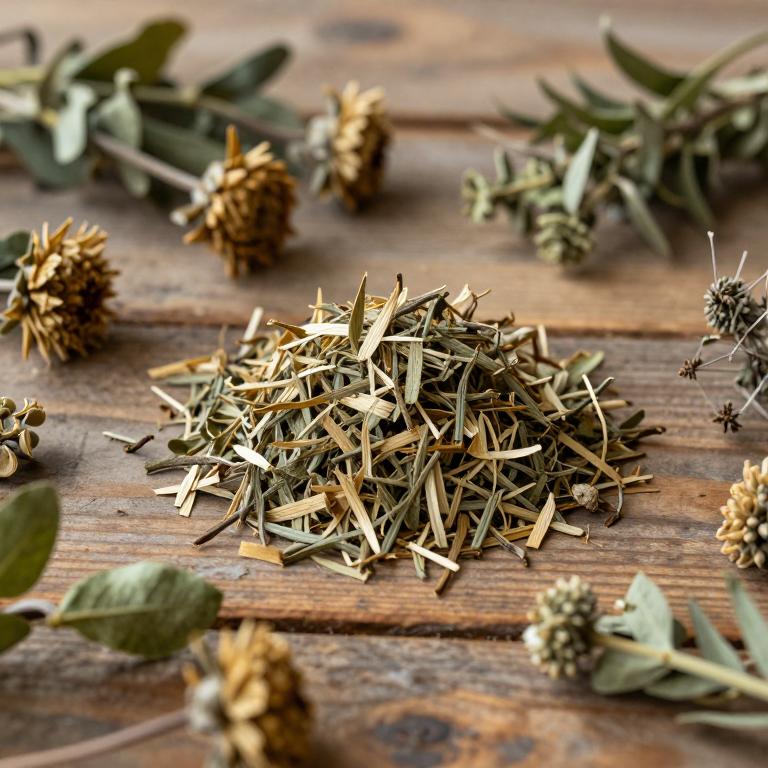
Names and Synonyms
Common Names
- catclaw buttercup
Scientific Names
Accepted name
Ranunculus ternatusSources: Wikidata, Catalogue of Life
Taxonomical Classification
This plant belongs to the kingdom Plantae and the phylum Streptophyta, falling under the class Equisetopsida and subclass Magnoliidae. Within the order Ranunculales, it is classified under the family Ranunculaceae. Finally, it is identified by its genus, Ranunculus.
| Rank | Classification |
|---|---|
| Kingdom | Plantae |
| Phylum | Streptophyta |
| Class | Equisetopsida |
| Subclass | Magnoliidae |
| Order | Ranunculales |
| Family | Ranunculaceae |
| Genus | Ranunculus |
Sources: The World Checklist of Vascular Plants (WCVP)
Distribution
This plant is primarily found across various regions of Eastern Asia. Its distribution includes specific areas within Japan, such as the Nansei-shoto islands. It also inhabits the Korean peninsula and other parts of Eastern Asia. Within China, the species can be located in both the South-Central and Southeast regions. Consequently, its range spans a diverse set of locations across these East Asian territories.
| Region | Area |
|---|---|
| China | China South-Central |
| China | China Southeast |
| Eastern Asia | Japan |
| Eastern Asia | Korea |
| Eastern Asia | Nansei-shoto |
| Eastern Asia | Taiwan |
Sources: The World Checklist of Vascular Plants (WCVP)
Botanical Identification
Life history
The life history of Ranunculus ternatus is characterized by its classification as an annual plant, meaning it completes its entire developmental cycle—from germination to seed production and death—within a single growing season. The life cycle begins with the germination of seeds in suitable moist habitats, followed by a period of vegetative growth where the plant establishes its characteristic foliage. As the season progresses, the individual undergoes a transition from vegetative development to a reproductive phase, culminating in the production of flowers and the subsequent maturation of seeds. Once the seeds are successfully dispersed to ensure the next generation, the parent plant reaches the end of its biological life cycle.
- Lifecycle :
- annual
Morphology
The morphology of Ranunculus ternatus is characterized by its growth form as a herb, specifically categorized as a forb. It exhibits a non-woody structure, lacking any significant lignified tissues throughout its development. In terms of its structural habit, the plant functions as a self-supporting climber, utilizing its growth pattern to maintain position without the need for external hosts, though it maintains the primary physical characteristics of a herbaceous plant.
- Climber :
- self-supporting
- Growth form :
- herb
- Woodiness :
- non-woody
Reproduction
The reproduction of Ranunculus ternatus is characterized by the development of specialized fruit structures that follow a highly consistent morphological pattern. The resulting fruits exhibit extreme uniformity in size, with a measured fruit length that remains constant across all observed specimens. Specifically, the fruit length displays a mean value of 0.15 cm, which is identical to both the minimum and maximum recorded dimensions. This lack of variance, with a fixed length of 0.15 cm, indicates a highly stabilized reproductive output during the fruiting stage of its life cycle.
- Fruit length max:
- 0.15 cm
Sources: Global Inventory of Floras and Traits (GIFT)
Plant Parts
Ranunculus ternatus has 1 reported plant parts identified across 1 scientific publications and several other databases that are studied for medicinal purposes. The most consistently reported plant part include root.
| Plant part | Supporting sources | Consensus |
|---|---|---|
| Root | 1 supporting sources | ★☆☆☆☆ |
Root
- Organic letters
Chemicals
Ranunculus ternatus has 12 reported phytochemicals identified across 1 scientific publications and several other databases. The most consistently reported chemicals include 5-HYDROXYMETHYL-FURFURAL, Daucosterol, Esters, Flavonoids, Glycosides.
| Chemical | Supporting sources | Consensus |
|---|---|---|
| 5-HYDROXYMETHYL-FURFURAL | 1 supporting sources | ★☆☆☆☆ |
| Daucosterol | 1 supporting sources | ★☆☆☆☆ |
| Esters | 1 supporting sources | ★☆☆☆☆ |
| Flavonoids | 1 supporting sources | ★☆☆☆☆ |
| Glycosides | 1 supporting sources | ★☆☆☆☆ |
| PHILLYGENIN | 1 supporting sources | ★☆☆☆☆ |
| STIGMASTEROL | 1 supporting sources | ★☆☆☆☆ |
| Sitosterol | 1 supporting sources | ★☆☆☆☆ |
| Sterols | 1 supporting sources | ★☆☆☆☆ |
| Ternatusine A | 1 supporting sources | ★☆☆☆☆ |
5-HYDROXYMETHYL-FURFURAL
- Zhong yao cai = Zhongyaocai = Journal of Chinese medicinal materials
Daucosterol
- Zhong yao cai = Zhongyaocai = Journal of Chinese medicinal materials
Esters
- The Journal of pharmacy and pharmacology
Flavonoids
- The Journal of pharmacy and pharmacology
Glycosides
- The Journal of pharmacy and pharmacology
PHILLYGENIN
- Zhong yao cai = Zhongyaocai = Journal of Chinese medicinal materials
STIGMASTEROL
- Zhong yao cai = Zhongyaocai = Journal of Chinese medicinal materials
Sitosterol
- Zhong yao cai = Zhongyaocai = Journal of Chinese medicinal materials
Sterols
- The Journal of pharmacy and pharmacology
Ternatusine A
- Organic letters
Activities
Ranunculus ternatus has 5 reported activities identified across 1 scientific publications and several other databases. The most consistently reported activities include Antibacterial, Antioxidant, Anticarcinogenic, Antiprotozoal, Hepatoprotective.
| Activity | Supporting sources | Consensus |
|---|---|---|
| Antibacterial | 2 supporting sources | ★☆☆☆☆ |
| Antioxidant | 2 supporting sources | ★☆☆☆☆ |
| Anticarcinogenic | 1 supporting sources | ★☆☆☆☆ |
| Antiprotozoal | 1 supporting sources | ★☆☆☆☆ |
| Hepatoprotective | 1 supporting sources | ★☆☆☆☆ |
Antibacterial
- Plants (Basel, Switzerland)
- The Journal of pharmacy and pharmacology
Antioxidant
- Plants (Basel, Switzerland)
- The Journal of pharmacy and pharmacology
Anticarcinogenic
- Plants (Basel, Switzerland)
Antiprotozoal
- Plants (Basel, Switzerland)
Hepatoprotective
- The Journal of pharmacy and pharmacology
Conditions
Ranunculus ternatus has 3 reported investigations on conditions identified across 1 scientific publications and several other databases. The most consistently reported conditions include cancer, mycobacterium tuberculosis infections, tuberculosis.
| Condition | Supporting sources | Consensus |
|---|---|---|
| Cancer | 1 supporting sources | ★☆☆☆☆ |
| Mycobacterium tuberculosis infections | 1 supporting sources | ★☆☆☆☆ |
| Tuberculosis | 1 supporting sources | ★☆☆☆☆ |
Cancer
- The Journal of pharmacy and pharmacology
Mycobacterium tuberculosis infections
- Sarcoidosis, vasculitis, and diffuse lung diseases : official journal of WASOG
Tuberculosis
- The Journal of pharmacy and pharmacology