Randia echinocarpa
Randia echinocarpa · Accepted scientific name
Scientific literature: Very Sparse (18 studies) · ★☆☆☆☆
, scientifically known as Randia echinocarpa, is a significant medicinal shrub native to tropical regions. Often utilized in traditional healing practices, this plant possesses unique bioactive properties. It is frequently studied for its potential therapeutic applications, particularly in managing inflammation and supporting overall wellness through its diverse phytochemical constituents.
- Family
- Rubiaceae
- Native range
- Northern America
- Parts used
- Fruit · Leaf
- Common names
- Not available
- Scientific synonyms
- Basanacantha Echinocarpa · Solena Echinocarpa · 1 more
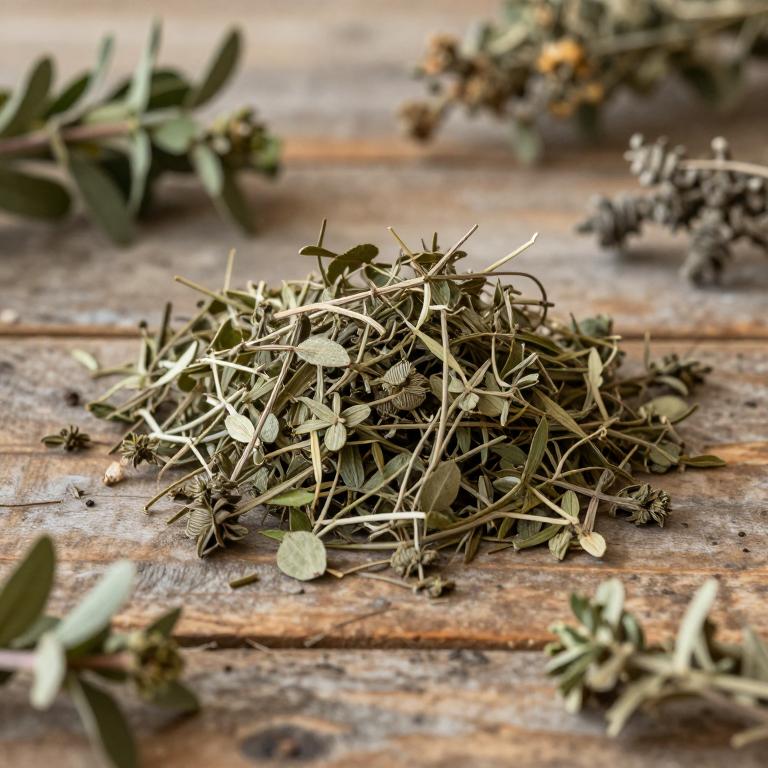
Names and Synonyms
Scientific Names
Accepted name
Randia echinocarpaSynonyms
- Basanacantha echinocarpa
- Solena echinocarpa
- Genipa echinocarpa
Regional and Traditional Names
Spanish:
- Chanona
- Mapache
- Shacua
- Tsats mbaj
- Papache
- crucillo chino
Sources: Wikidata, Catalogue of Life
Taxonomical Classification
This plant belongs to the kingdom Plantae and is classified within the phylum Streptophyta and the class Equisetopsida. It falls under the subclass Magnoliidae and the order Gentianales, specifically within the family Rubiaceae. Ultimately, its taxonomic identity is defined by the genus Randia.
| Rank | Classification |
|---|---|
| Kingdom | Plantae |
| Phylum | Streptophyta |
| Class | Equisetopsida |
| Subclass | Magnoliidae |
| Order | Gentianales |
| Family | Rubiaceae |
| Genus | Randia |
Sources: The World Checklist of Vascular Plants (WCVP)
Distribution
This plant exhibits a wide presence across several distinct regions within the country of Mexico. Its distribution begins in the central parts of the nation, covering the area known as Mexico Central. Moving toward the coastlines and arid regions, it is also found throughout Mexico Northeast and Mexico Gulf. Furthermore, the species extends its range into the western territories of Mexico Northwest. Finally, its geographical footprint is completed by its occurrence within Mexico Southwest.
| Region | Area |
|---|---|
| Mexico | Mexico Central |
| Mexico | Mexico Northeast |
| Mexico | Mexico Gulf |
| Mexico | Mexico Northwest |
| Mexico | Mexico Southwest |
| Central America | Honduras |
Sources: The World Checklist of Vascular Plants (WCVP)
Botanical Identification
Life history
The life history of Randia echinocarpus is characterized by its status as a perennial species, allowing it to persist in its environment over multiple growing seasons. In terms of its structural growth and survival strategies, the plant exhibits life forms categorized as both phanerophyte and nanophanerophyte, indicating its ability to maintain woody stems that extend above the ground level to facilitate long-term development and reproductive success.
- Life form :
- nanophanerophyte
- Life form :
- phanerophyte
- Lifecycle :
- perennial
Morphology
The morphology of Randia echinocarpus is characterized by a woody growth form, primarily manifesting as a shrub. This plant typically reaches an average height of approximately 4 meters. In terms of its structural habit, it functions as a self-supporting climber and does not exhibit parasitic behavior, growing as an independent organism. Furthermore, it is a terrestrial species rather than an epiphyte, maintaining its presence within the soil substrate.
- Climber :
- self-supporting
- Epiphyte :
- terrestrial
- Growth form :
- shrub
- Parasite :
- independent
- Plant height mean:
- 4 m
- Woodiness :
- woody
Physiology
The physiology of Randia echinocarpa is characterized by its metabolic processes and nutrient acquisition strategies, which are essential for its survival in its native habitat. As a woody shrub, its physiological functions include complex photosynthetic pathways to convert solar energy into chemical energy, supporting the development of its characteristic spiny structure and leaf morphology. Regarding its nutrient cycling capabilities, the plant does not engage in symbiotic associations with diazotrophic bacteria for the purpose of atmospheric nitrogen assimilation; therefore, it is not a nitrogen fixer. This lack of nitrogen fixation means the plant relies entirely on the uptake of nitrates and ammonium from the soil through its root system to meet its physiological nitrogen requirements for protein synthesis and chlorophyll production.
- Nitrogen fixer :
- no
Sources: Global Inventory of Floras and Traits (GIFT)
Plant Parts
Randia echinocarpa has 2 reported plant parts identified across 2 scientific publications and several other databases that are studied for medicinal purposes. The most consistently reported plant part include fruit, leaf.
| Plant part | Supporting sources | Consensus |
|---|---|---|
| Fruit | 1 supporting sources | ★☆☆☆☆ |
| Leaf | 1 supporting sources | ★☆☆☆☆ |
Fruit
- Plants (Basel, Switzerland)
Leaf
- Plants (Basel, Switzerland)
Chemicals
Randia echinocarpa has 5 reported phytochemicals identified across 2 scientific publications and several other databases. The most consistently reported chemicals include CHLOROGENIC ACID, Flavonoids, RUTIN, Tannins, ellagic acid.
| Chemical | Supporting sources | Consensus |
|---|---|---|
| CHLOROGENIC ACID | 1 supporting sources | ★☆☆☆☆ |
| Flavonoids | 1 supporting sources | ★☆☆☆☆ |
| RUTIN | 1 supporting sources | ★☆☆☆☆ |
| Tannins | 1 supporting sources | ★☆☆☆☆ |
| ellagic acid | 1 supporting sources | ★☆☆☆☆ |
CHLOROGENIC ACID
- Plants (Basel, Switzerland)
Flavonoids
- Plants (Basel, Switzerland)
RUTIN
- Plants (Basel, Switzerland)
Tannins
- Plants (Basel, Switzerland)
ellagic acid
- Plants (Basel, Switzerland)