the oak genus
Quercus · Accepted scientific name
Scientific literature: Very Sparse (26 studies) · ★☆☆☆☆
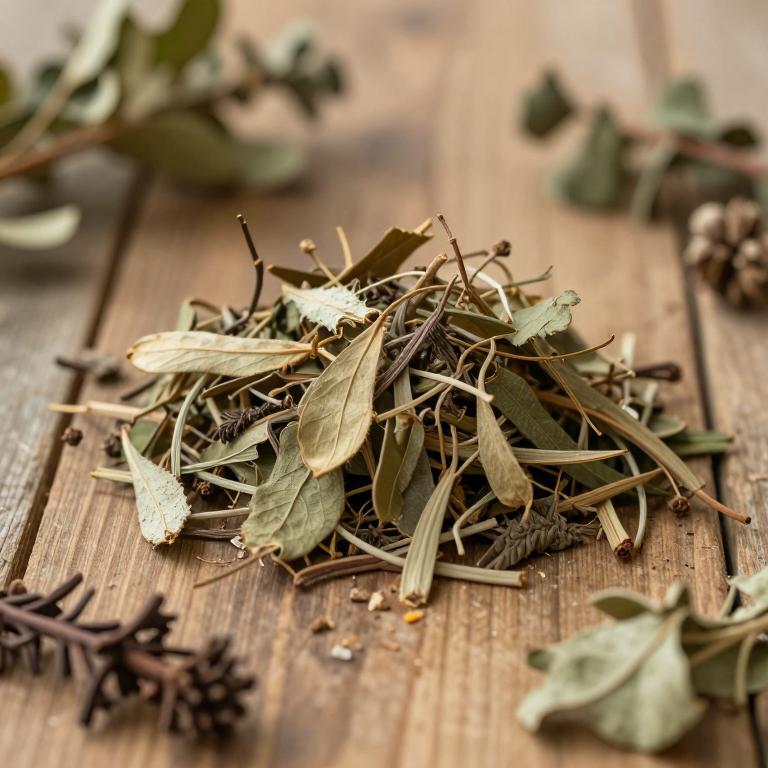
The oak genus, scientifically known as Quercus, is a cornerstone of traditional medicine. Renowned for its high tannin content, the bark and acorns offer potent astringent, anti-inflammatory, and antimicrobial properties. Historically used to treat skin ailments, digestive issues, and oral health, these sturdy trees remain vital medicinal resources.
Names and Synonyms
Common Names
- Acorn
- Oak Tree
- oaks
Scientific Names
Accepted name
QuercusSynonyms
- Cyclobalanopsis
- Cerris
- Perytis
- Scolodrys
- Dryopsila
- Balanaulax
- Eriodrys
- Erythrobalanus
- Macrobalanus
Regional and Traditional Names
Spanish:
- Roble
- Encinos o robles
- quercíneas
- Roble
German:
- Eichen
- Eiche
- Eichen
French:
- chêne
- Chêne
- chênes
- chênes
- Chêne
Sources: Wikidata, Catalogue of Life
Taxonomical Classification
This plant belongs to the kingdom Plantae and the phylum Streptophyta, falling under the class Equisetopsida and subclass Magnoliidae. Within the order Fagales and the family Fagaceae, it is classified under the genus Quercus.
| Rank | Classification |
|---|---|
| Kingdom | Plantae |
| Phylum | Streptophyta |
| Class | Equisetopsida |
| Subclass | Magnoliidae |
| Order | Fagales |
| Family | Fagaceae |
| Genus | Quercus |
Sources: The World Checklist of Vascular Plants (WCVP)
Distribution
This plant, known as Quercus, is widely distributed across several regions within Northern Europe. It can be found growing in the natural landscapes of Denmark. Additionally, its presence extends to the northern territories of Finland. The species is also well-established throughout the islands of Great Britain and Ireland. Finally, it maintains a significant geographical footprint within the forests of Norway.
| Region | Area |
|---|---|
| Northern Europe | Denmark |
| Northern Europe | Finland |
| Northern Europe | Great Britain |
| Northern Europe | Ireland |
| Northern Europe | Norway |
| Northern Europe | Sweden |
| Middle Europe | Austria |
| Middle Europe | Belgium |
| Middle Europe | Czechia-Slovakia |
| Middle Europe | Germany |
Sources: The World Checklist of Vascular Plants (WCVP)
Chemicals
Quercus has 5 reported phytochemicals identified across 0 scientific publications and several other databases. The most consistently reported chemicals include Gallic acid, PIPERONYLIC ACID, RAFFINOSE, glucose, sucrose.
| Chemical | Supporting sources | Consensus |
|---|---|---|
| Gallic acid | 2 supporting sources | ★☆☆☆☆ |
| PIPERONYLIC ACID | 1 supporting sources | ★☆☆☆☆ |
| RAFFINOSE | 1 supporting sources | ★☆☆☆☆ |
| glucose | 1 supporting sources | ★☆☆☆☆ |
| sucrose | 1 supporting sources | ★☆☆☆☆ |
Gallic acid
- Food and chemical toxicology : an international journal published for the British Industrial Biological Research Association
- Medical oncology (Northwood, London, England)
PIPERONYLIC ACID
- Archives internationales de pharmacodynamie et de therapie
RAFFINOSE
- Phytochemical analysis : PCA
glucose
- Phytochemical analysis : PCA
sucrose
- Phytochemical analysis : PCA
Activities
Quercus has 5 reported activities identified across 0 scientific publications and several other databases. The most consistently reported activities include Antibacterial, Anticancer, Antidiabetic, Antioxidant, Gastroprotective.
| Activity | Supporting sources | Consensus |
|---|---|---|
| Antibacterial | 1 supporting sources | ★☆☆☆☆ |
| Anticancer | 1 supporting sources | ★☆☆☆☆ |
| Antidiabetic | 1 supporting sources | ★☆☆☆☆ |
| Antioxidant | 1 supporting sources | ★☆☆☆☆ |
| Gastroprotective | 1 supporting sources | ★☆☆☆☆ |
Antibacterial
- Scientific reports
Anticancer
- Scientific reports
Antidiabetic
- Scientific reports
Antioxidant
- Scientific reports
Gastroprotective
- Scientific reports
Conditions
Quercus has 10 reported investigations on conditions identified across 0 scientific publications and several other databases. The most consistently reported conditions include cancer, anaphylactic shock, bacterial vaginosis, bronchoconstriction, dyspareunia.
| Condition | Supporting sources | Consensus |
|---|---|---|
| Cancer | 2 supporting sources | ★☆☆☆☆ |
| Anaphylactic shock | 1 supporting sources | ★☆☆☆☆ |
| Bacterial vaginosis | 1 supporting sources | ★☆☆☆☆ |
| Bronchoconstriction | 1 supporting sources | ★☆☆☆☆ |
| Dyspareunia | 1 supporting sources | ★☆☆☆☆ |
| Dysuria | 1 supporting sources | ★☆☆☆☆ |
| Hypotension | 1 supporting sources | ★☆☆☆☆ |
| Itching | 1 supporting sources | ★☆☆☆☆ |
| Odor | 1 supporting sources | ★☆☆☆☆ |
| Oxidative stress | 1 supporting sources | ★☆☆☆☆ |
Cancer
- Food and chemical toxicology : an international journal published for the British Industrial Biological Research Association
- Medical oncology (Northwood, London, England)
Anaphylactic shock
- Archives internationales de pharmacodynamie et de therapie
Bacterial vaginosis
- Complementary therapies in medicine
Bronchoconstriction
- Archives internationales de pharmacodynamie et de therapie
Dyspareunia
- Complementary therapies in medicine
Dysuria
- Complementary therapies in medicine
Hypotension
- Archives internationales de pharmacodynamie et de therapie
Itching
- Complementary therapies in medicine
Odor
- Complementary therapies in medicine
Oxidative stress
- Chemico-biological interactions
Preparations
Quercus has 2 reported preparations identified across 0 scientific publications and several other databases. The most consistently reported preparations include I-Q, microwave-assisted water extracts.
| Preparation | Supporting sources | Consensus |
|---|---|---|
| I-q | 1 supporting sources | ★☆☆☆☆ |
| Microwave-assisted water extracts | 1 supporting sources | ★☆☆☆☆ |
I-q
- Arzneimittel-Forschung
Microwave-assisted water extracts
- Phytochemical analysis : PCA