Quercus velutina
Quercus velutina · Accepted scientific name
Scientific literature: Very Extensive (364 studies) · ★★★★★
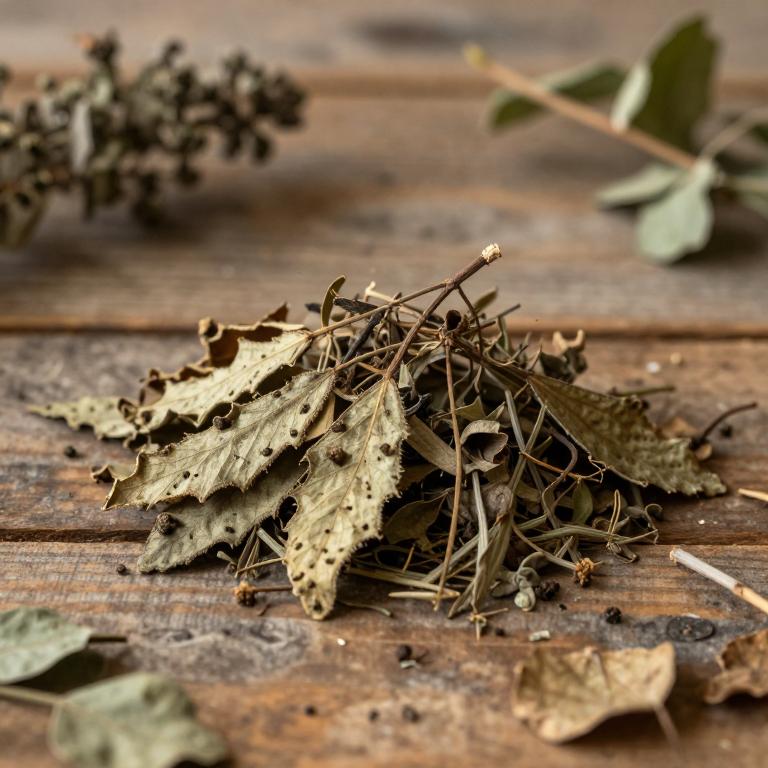
, scientifically known as Quercus velutina, is the Black Oak, a majestic deciduous tree native to North America. Renowned for its dark, deeply furrowed bark, it plays a vital role in forest ecosystems. Historically, its tannins and wood have been utilized in traditional medicinal practices and various industrial applications.
- Family
- Not available
- Native range
- Northern America
- Parts used
- Leaf
- Common names
- Not available
- Scientific synonyms
- Not available
Names and Synonyms
Scientific Names
Accepted name
Quercus velutinaDistribution
This plant exhibits a broad geographical range across several regions of North America. In Eastern Canada, its presence can be identified specifically within the province of Ontario. Moving into the North-Central United States, it is widely distributed across the state of Illinois. The species also inhabits large portions of Iowa and Kansas within this same central region. Finally, its range extends northward to include the state of Minnesota.
| Region | Area |
|---|---|
| Eastern Canada | Ontario |
| North-Central U.S.A. | Illinois |
| North-Central U.S.A. | Iowa |
| North-Central U.S.A. | Kansas |
| North-Central U.S.A. | Minnesota |
| North-Central U.S.A. | Missouri |
| North-Central U.S.A. | Nebraska |
| North-Central U.S.A. | Oklahoma |
| North-Central U.S.A. | Wisconsin |
| Northeastern U.S.A. | Connecticut |
Sources: The World Checklist of Vascular Plants (WCVP)
Botanical Identification
Life history
The life history of Quercus velutina is characterized by its status as a perennial species, ensuring its long-term presence and stability within its ecological niche. As a phanerophyte, the plant maintains its photosynthetic organs high above the ground on woody stems, a life form strategy that allows it to dominate the canopy layer and access significant light resources. This phanerophyte growth habit, categorized under both its structural and ecological classifications, facilitates its development from a seedling into a robust, long-lived tree, contributing to the complex architecture of its natural habitat over many successive growing seasons.
- Life form :
- phanerophyte
- Lifecycle :
- perennial
Morphology
The morphology of Quercus velutina is characterized by a woody growth form, specifically categorized as a tree. This species is a self-supporting plant that does not function as a climber or a liana, maintaining an independent existence as it is neither a parasite nor an epiphyte. It is a terrestrial organism, adapted to land rather than aquatic or semiaquatic environments. On average, the plant reaches a significant stature with a mean height of approximately 24.495 meters.
- Aquatic :
- terrestrial
- Climber :
- self-supporting
- Epiphyte :
- terrestrial
- Growth form :
- tree
- Parasite :
- independent
- Plant height mean:
- 24.495 m
- Woodiness :
- woody
Physiology
The physiology of Quercus velutina is characterized by a highly efficient metabolic framework adapted to temperate forest environments, primarily utilizing the C3 photosynthetic pathway. Within this pathway, carbon fixation occurs via the enzyme RuBisCO during the Calvin cycle, a process that allows the plant to thrive in environments where water availability is moderate and temperatures are not extreme. This C3 metabolism is supported by a robust vascular system capable of regulating transpiration rates and maintaining hydraulic conductance through its woody structure. Furthermore, the plant's physiological processes include complex secondary metabolic pathways, which result in the production of various tannins and phenolic compounds that serve as chemical defenses and contribute to its medicinal properties. Nutrient uptake and translocation are driven by active transport mechanisms within the root system, ensuring the steady distribution of minerals required to sustain its seasonal growth cycles and structural integrity.
- Photosynthetic pathway :
- C3
Reproduction
The reproduction of Quercus velutina is characterized by specific seed metrics and diverse dispersal strategies. The seeds produced by this species exhibit a very tight range of weight, with a minimum mass of 1.851 g and a maximum mass of 1.855 g, resulting in a mean seed mass of approximately 1.851821111 g. In terms of propagation and movement, the plant employs a complex dispersal syndrome that includes anemochorous, zoochorous, autochorous, hydrochorous, and unspecialized methods, with a notable emphasis on zoochorous dispersal.
- Dispersal syndrome :
- zoochorous
- Seed mass max:
- 1.855 g
- Seed mass mean:
- 1.851821111 g
- Seed mass min:
- 1.851 g
Sources: Global Inventory of Floras and Traits (GIFT)
Plant Parts
Quercus velutina has 1 reported plant parts identified across 1 scientific publications and several other databases that are studied for medicinal purposes. The most consistently reported plant part include leaf.
| Plant part | Supporting sources | Consensus |
|---|---|---|
| Leaf | 1 supporting sources | ★☆☆☆☆ |
Leaf
- Parasite epidemiology and control
Chemicals
Quercus velutina has 28 reported phytochemicals identified across 1 scientific publications and several other databases. The most consistently reported chemicals include ALUMINUM, Ash, BARIUM, BORON, CALCIUM.
| Chemical | Supporting sources | Consensus |
|---|---|---|
| ALUMINUM | 1 supporting sources | ★☆☆☆☆ |
| Ash | 1 supporting sources | ★☆☆☆☆ |
| BARIUM | 1 supporting sources | ★☆☆☆☆ |
| BORON | 1 supporting sources | ★☆☆☆☆ |
| CALCIUM | 1 supporting sources | ★☆☆☆☆ |
| CHROMIUM | 1 supporting sources | ★☆☆☆☆ |
| COBALT | 1 supporting sources | ★☆☆☆☆ |
| COPPER | 1 supporting sources | ★☆☆☆☆ |
| IRON | 1 supporting sources | ★☆☆☆☆ |
| LANTHANUM | 1 supporting sources | ★☆☆☆☆ |
ALUMINUM
- Dr. Duke
Ash
- Dr. Duke
BARIUM
- Dr. Duke
BORON
- Dr. Duke
CALCIUM
- Dr. Duke
CHROMIUM
- Dr. Duke
COBALT
- Dr. Duke
COPPER
- Dr. Duke
IRON
- Dr. Duke
LANTHANUM
- Dr. Duke
Activities
Quercus velutina has 333 reported activities identified across 1 scientific publications and several other databases. The most consistently reported activities include 11B-HSD-Inhibitor, 5-Lipoxygenase-Inhibitor, ACE-Inhibitor, ATPase-Inhibitor, Acnegenic.
| Activity | Supporting sources | Consensus |
|---|---|---|
| 11B-HSD-Inhibitor | 1 supporting sources | ★☆☆☆☆ |
| 5-Lipoxygenase-Inhibitor | 1 supporting sources | ★☆☆☆☆ |
| ACE-Inhibitor | 1 supporting sources | ★☆☆☆☆ |
| ATPase-Inhibitor | 1 supporting sources | ★☆☆☆☆ |
| Acnegenic | 1 supporting sources | ★☆☆☆☆ |
| Aldehyde-Oxidase-Inhibitor | 1 supporting sources | ★☆☆☆☆ |
| Aldose-Reductase-Inhibitor | 1 supporting sources | ★☆☆☆☆ |
| Allelochemic | 1 supporting sources | ★☆☆☆☆ |
| Allergenic | 1 supporting sources | ★☆☆☆☆ |
| Amphiglycemic? | 1 supporting sources | ★☆☆☆☆ |
11B-HSD-Inhibitor
- Dr. Duke
5-Lipoxygenase-Inhibitor
- Dr. Duke
ACE-Inhibitor
- Dr. Duke
ATPase-Inhibitor
- Dr. Duke
Acnegenic
- Dr. Duke
Aldehyde-Oxidase-Inhibitor
- Dr. Duke
Aldose-Reductase-Inhibitor
- Dr. Duke
Allelochemic
- Dr. Duke
Allergenic
- Dr. Duke
Amphiglycemic?
- Dr. Duke
Conditions
Quercus velutina has 2 reported investigations on conditions identified across 1 scientific publications and several other databases. The most consistently reported conditions include Leishmania tropica, leishmaniasis.
| Condition | Supporting sources | Consensus |
|---|---|---|
| Leishmania tropica | 1 supporting sources | ★☆☆☆☆ |
| Leishmaniasis | 1 supporting sources | ★☆☆☆☆ |
Leishmania tropica
- Parasite epidemiology and control
Leishmaniasis
- Parasite epidemiology and control
Preparations
Quercus velutina has 1 reported preparations identified across 1 scientific publications and several other databases. The most consistently reported preparations include leaf extracts.
| Preparation | Supporting sources | Consensus |
|---|---|---|
| Leaf extracts | 1 supporting sources | ★☆☆☆☆ |
Leaf extracts
- Parasite epidemiology and control