Taroko Oak
Quercus tarokoensis · Accepted scientific name
Scientific literature: Very Sparse (7 studies) · ★☆☆☆☆
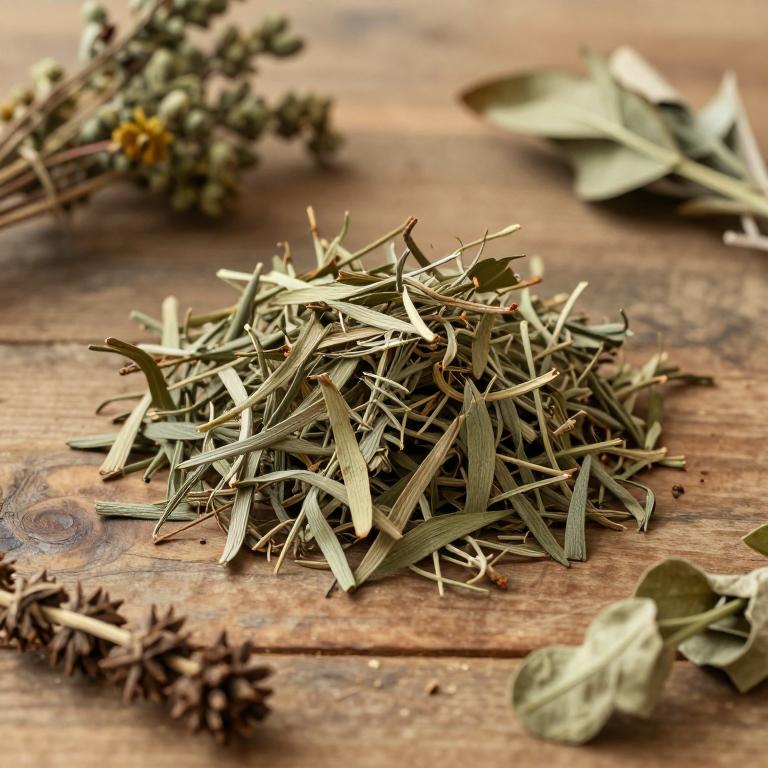
Taroko Oak, scientifically known as Quercus tarokoensis, is a rare medicinal plant endemic to the high-altitude forests of Taiwan. Renowned for its unique chemical properties, this resilient species is studied for its potential therapeutic applications, offering valuable insights into traditional herbal remedies and modern pharmacological advancements in biodiversity.
- Family
- Fagaceae
- Native range
- Asia-Temperate
- Parts used
- Leaf
- Common names
- Taroko Oak
- Scientific synonyms
- Quercus Spinosa F. Rugosa · Quercus Semicarpifolia F. Tarokoensis · 2 more
Names and Synonyms
Common Names
- Taroko Oak
Scientific Names
Accepted name
Quercus tarokoensisSynonyms
- Quercus spinosa f. rugosa
- Quercus semicarpifolia f. tarokoensis
- Quercus tarokoensis var. rugosa
- Quercus spinosa f. tarokoensis
Sources: Wikidata, Catalogue of Life
Taxonomical Classification
This plant belongs to the kingdom Plantae and the phylum Streptophyta, falling under the class Equisetopsida and subclass Magnoliidae. Within the order Fagales, it is classified under the family Fagaceae. Finally, its taxonomic placement concludes within the genus Quercus.
| Rank | Classification |
|---|---|
| Kingdom | Plantae |
| Phylum | Streptophyta |
| Class | Equisetopsida |
| Subclass | Magnoliidae |
| Order | Fagales |
| Family | Fagaceae |
| Genus | Quercus |
Sources: The World Checklist of Vascular Plants (WCVP)
Distribution
This plant is a specialized species found within a very specific geographic range. Its natural habitat is restricted to the island of Taiwan, located in Eastern Asia. Because of this limited presence, it is considered an endemic species to this particular region. Within the Taiwanese landscape, it thrives in specific ecological niches that support its growth. Consequently, its global distribution is entirely confined to this single East Asian territory.
| Region | Area |
|---|---|
| Eastern Asia | Taiwan |
Sources: The World Checklist of Vascular Plants (WCVP)
Botanical Identification
Ecology
The ecology of Quercus tarokoensis is closely defined by its specific altitudinal distribution within its native habitat. This species typically thrives within a distinct vertical gradient, occupying mid-elevation montane environments. Its elevational range begins at a minimum of 350 m AMSL and extends to a maximum altitude of 1250 m AMSL. Throughout its natural distribution, the species maintains a mean elevation of approximately 800 m AMSL, a positioning that suggests a preference for the specific climatic and soil conditions characteristic of these subtropical montane zones.
- Elevational range max:
- 1250 m AMSL
- Elevational range mean:
- 800 m AMSL
- Elevational range min:
- 350 m AMSL
Life history
The life history of Quercus tarokoensis is characterized by its classification as a phanerophyte, a growth form where the reproductive buds are borne on elevated branches well above the ground level. Within this structural category, it specifically exhibits traits consistent with being a phanerophyte and a nanophanerophyte, indicating its ability to maintain woody structures that elevate its canopy. This species maintains a consistent photosynthetic capacity throughout the year, as its deciduousness is classified as evergreen, meaning it retains its foliage through successive growing seasons rather than shedding it annually. As a phanerophyte, its life cycle is centered around the protection of its buds during unfavorable conditions, ensuring long-term survival and continuous vegetative presence within its ecological niche.
- Deciduousness :
- evergreen
- Life form :
- phanerophyte
Morphology
The morphology of Quercus tarokoensis is characterized by a robust growth form, as it develops as a perennial tree. It is a woody species, possessing a permanent and lignified structural framework. In terms of its ecological positioning, the plant is terrestrial, growing in soil rather than occupying aquatic or semiaquatic habitats. It functions as an independent organism, meaning it does not exhibit parasitic behavior toward other plants. Furthermore, it is a non-epiphytic species, maintaining a terrestrial life habit rather than growing upon the surfaces of other plants, and it is a self-supporting structure that does not require climbing or vining mechanisms to achieve its upright stature.
- Aquatic :
- terrestrial
- Climber :
- self-supporting
- Epiphyte :
- terrestrial
- Growth form :
- tree
- Parasite :
- independent
- Woodiness :
- woody
Physiology
The physiology of Quercus tarokoensis is characterized by a metabolic framework centered around a C3 photosynthetic pathway, which dictates its carbon fixation processes and energy acquisition strategies. As a C3 plant, it utilizes the enzyme Rubisco to directly fix atmospheric carbon dioxide into organic compounds during the Calvin cycle, a process most efficient under the moderate temperature and moisture regimes typical of its natural habitat. This metabolic classification implies that the plant experiences photorespiration when stomatal conductance decreases due to environmental stress, potentially limiting its photosynthetic efficiency in high-heat or low-water conditions. Furthermore, its physiological processes are closely linked to its water-use efficiency and transpiration rates, which are intrinsically tied to the mechanics of the C3 pathway and the regulation of stomatal apertures to balance gas exchange with moisture retention.
- Photosynthetic pathway :
- C3
Reproduction
The reproduction of Quercus tarokoensis is characterized by the development of specific fruit structures that exhibit highly consistent morphological dimensions. The fruit displays a uniform size profile, with both the mean and the minimum measurements recorded at a length of 0.8 cm, which also serves as the maximum recorded length. In terms of lateral dimensions, the fruit width remains equally constant, with a mean, minimum, and maximum value all measured at 1.2 cm. This lack of variance in the fruit's dimensions suggests a highly stabilized reproductive output in terms of fruit size, maintaining a consistent shape and volume throughout its development.
- Fruit length max:
- 0.8 cm
- Fruit width max:
- 1.2 cm
Sources: Global Inventory of Floras and Traits (GIFT)
Plant Parts
Quercus tarokoensis has 1 reported plant parts identified across 1 scientific publications and several other databases that are studied for medicinal purposes. The most consistently reported plant part include leaf.
| Plant part | Supporting sources | Consensus |
|---|---|---|
| Leaf | 1 supporting sources | ★☆☆☆☆ |
Leaf
- Plants (Basel, Switzerland)
Chemicals
Quercus tarokoensis has 6 reported phytochemicals identified across 1 scientific publications and several other databases. The most consistently reported chemicals include Kaempferol 3-O-glucoside, Kaempferol 3-O-sambubioside, Kaempferol 3-O-sophoroside, Luteolin 7-O-glucoside, Ursolic acid.
| Chemical | Supporting sources | Consensus |
|---|---|---|
| Kaempferol 3-O-glucoside | 1 supporting sources | ★☆☆☆☆ |
| Kaempferol 3-O-sambubioside | 1 supporting sources | ★☆☆☆☆ |
| Kaempferol 3-O-sophoroside | 1 supporting sources | ★☆☆☆☆ |
| Luteolin 7-O-glucoside | 1 supporting sources | ★☆☆☆☆ |
| Ursolic acid | 1 supporting sources | ★☆☆☆☆ |
| scopoletin | 1 supporting sources | ★☆☆☆☆ |
Kaempferol 3-O-glucoside
- Plants (Basel, Switzerland)
Kaempferol 3-O-sambubioside
- Plants (Basel, Switzerland)
Kaempferol 3-O-sophoroside
- Plants (Basel, Switzerland)
Luteolin 7-O-glucoside
- Plants (Basel, Switzerland)
Ursolic acid
- Plants (Basel, Switzerland)
scopoletin
- Plants (Basel, Switzerland)
Preparations
Quercus tarokoensis has 1 reported preparations identified across 1 scientific publications and several other databases. The most consistently reported preparations include acetonic extract.
| Preparation | Supporting sources | Consensus |
|---|---|---|
| Acetonic extract | 1 supporting sources | ★☆☆☆☆ |
Acetonic extract
- Plants (Basel, Switzerland)