Quercus phellos
Quercus phellos · Accepted scientific name
Scientific literature: Very Extensive (230 studies) · ★★★★★
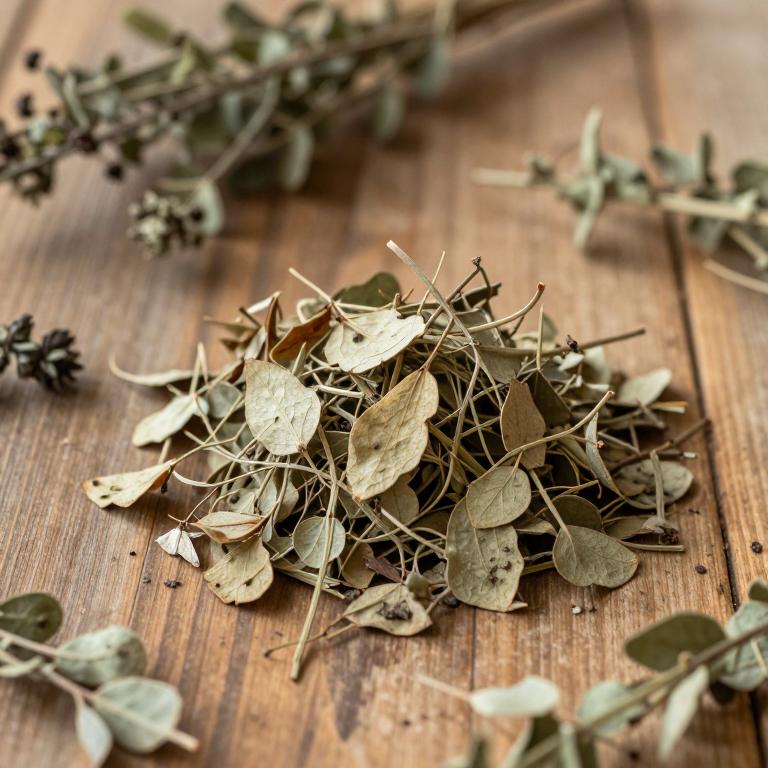
, scientifically known as Quercus phellos, is the willow oak, a distinguished deciduous tree prized for its medicinal properties. Its bark and leaves contain tannins used traditionally to treat inflammation and digestive ailments. Beyond its therapeutic potential, this resilient species offers significant ecological value within diverse forest ecosystems.
- Family
- Not available
- Native range
- Northern America
- Parts used
- Not available
- Common names
- Not available
- Scientific synonyms
- Not available
Names and Synonyms
Scientific Names
Accepted name
Quercus phellosDistribution
This plant, Quercus phellos, exhibits a diverse range of habitats across several regions of the United States. In the North-Central portion of the country, it can be found growing in Illinois, Missouri, and Oklahoma. Its presence also extends into the Northeastern United States, where it is documented in New York. Furthermore, the species is known to inhabit the coastal and inland areas of New Jersey. Collectively, these locations demonstrate a broad distribution spanning from the central plains to the eastern seaboard.
| Region | Area |
|---|---|
| North-Central U.S.A. | Illinois |
| North-Central U.S.A. | Missouri |
| North-Central U.S.A. | Oklahoma |
| Northeastern U.S.A. | New Jersey |
| Northeastern U.S.A. | New York |
| Northeastern U.S.A. | Pennsylvania |
| South-Central U.S.A. | Texas |
| Southeastern U.S.A. | Alabama |
| Southeastern U.S.A. | Arkansas |
| Southeastern U.S.A. | Delaware |
Sources: The World Checklist of Vascular Plants (WCVP)
Botanical Identification
Life history
The life history of Quercus phellos is characterized by a perennial lifecycle, allowing the individual to persist through many growing seasons and establish a long-term presence within its ecosystem. As a phanerophyte, its regenerative buds are located high above the ground on woody branches, a structural adaptation that defines its growth habit and survival strategy. This phanerophyte classification is consistent across its developmental stages, ensuring that its primary biomass remains elevated, protecting it from various ground-level environmental stressors throughout its extended lifespan.
- Life form :
- phanerophyte
- Lifecycle :
- perennial
Morphology
The morphology of Quercus phellos is characterized by its robust growth form as a woody tree, reaching an average height of approximately 28.715 meters. As a self-supporting organism, it does not exhibit climbing behavior such as a liana or vine, nor does it function as an epiphyte or a parasite, maintaining an independent lifestyle. The plant is strictly terrestrial in its habitat, lacking any aquatic or semiaquatic tendencies. Its structural integrity is defined by its woody nature, which supports its significant vertical stature and overall tree-like architecture.
- Aquatic :
- terrestrial
- Climber :
- self-supporting
- Epiphyte :
- terrestrial
- Growth form :
- tree
- Parasite :
- independent
- Plant height mean:
- 28.715 m
- Woodiness :
- woody
Physiology
The physiology of Quercus phellos is characterized by a metabolic framework centered on the C3 photosynthetic pathway, which dictates its carbon fixation processes and gas exchange efficiency. As a C3 plant, the initial fixation of atmospheric carbon dioxide occurs via the enzyme RuBisCO, resulting in the direct production of a three-carbon molecule, 3-phosphoglycerate, within the mesophyll cells. This metabolic strategy implies that the plant relies on high concentrations of CO2 and moderate temperatures to minimize photorespiration, a process where RuBisCO reacts with oxygen instead of carbon dioxide. Consequently, its physiological adaptations are optimized for environments where water availability and light intensity support the standard Calvin cycle without the specialized carbon-concentrating mechanisms found in C4 or CAM species. This reliance on the C3 pathway influences its transpiration rates and stomatal conductance, shaping its overall energy acquisition and resource management strategies.
- Photosynthetic pathway :
- C3
Reproduction
The reproduction of Quercus phellos is characterized by the production of dry fruits containing seeds with specific physical properties. The seeds exhibit a consistent volume of 1000 mm³, as both the minimum and maximum recorded values, with a mean volume of 1000 mm³. In terms of mass, the seeds range from a minimum of 0.71429 g to a maximum of 0.984 g, maintaining an average seed mass of approximately 0.922907777666667 g. The dispersal syndrome for this species is classified as zoochorous, meaning it relies on animals for the spread of its progeny, though it may also interact with other mechanisms such as anemochory, autochory, hydrochory, or unspecialized dispersal methods.
- Dispersal syndrome :
- zoochorous
- Fruit dryness :
- dry
- Seed mass max:
- 0.984 g
- Seed mass mean:
- 0.922907777666667 g
- Seed mass min:
- 0.71429 g
- Seed volume max:
- 1000 mm³
Sources: Global Inventory of Floras and Traits (GIFT)
Chemicals
Quercus phellos has 22 reported phytochemicals identified across 0 scientific publications and several other databases. The most consistently reported chemicals include ALUMINUM, Ash, BARIUM, BORON, CADMIUM.
| Chemical | Supporting sources | Consensus |
|---|---|---|
| ALUMINUM | 1 supporting sources | ★☆☆☆☆ |
| Ash | 1 supporting sources | ★☆☆☆☆ |
| BARIUM | 1 supporting sources | ★☆☆☆☆ |
| BORON | 1 supporting sources | ★☆☆☆☆ |
| CADMIUM | 1 supporting sources | ★☆☆☆☆ |
| CALCIUM | 1 supporting sources | ★☆☆☆☆ |
| CHROMIUM | 1 supporting sources | ★☆☆☆☆ |
| COBALT | 1 supporting sources | ★☆☆☆☆ |
| COPPER | 1 supporting sources | ★☆☆☆☆ |
| FLUORINE | 1 supporting sources | ★☆☆☆☆ |
ALUMINUM
- Dr. Duke
Ash
- Dr. Duke
BARIUM
- Dr. Duke
BORON
- Dr. Duke
CADMIUM
- Dr. Duke
CALCIUM
- Dr. Duke
CHROMIUM
- Dr. Duke
COBALT
- Dr. Duke
COPPER
- Dr. Duke
FLUORINE
- Dr. Duke
Activities
Quercus phellos has 208 reported activities identified across 0 scientific publications and several other databases. The most consistently reported activities include ACE-Inhibitor, AP-1-Inhibitor, Acnegenic, Amphiglycemic?, Analgesic.
| Activity | Supporting sources | Consensus |
|---|---|---|
| ACE-Inhibitor | 1 supporting sources | ★☆☆☆☆ |
| AP-1-Inhibitor | 1 supporting sources | ★☆☆☆☆ |
| Acnegenic | 1 supporting sources | ★☆☆☆☆ |
| Amphiglycemic? | 1 supporting sources | ★☆☆☆☆ |
| Analgesic | 1 supporting sources | ★☆☆☆☆ |
| Androgenic | 1 supporting sources | ★☆☆☆☆ |
| Angiotensin-Receptor-Blocker | 1 supporting sources | ★☆☆☆☆ |
| Anorexic | 1 supporting sources | ★☆☆☆☆ |
| AntiAGE | 1 supporting sources | ★☆☆☆☆ |
| AntiBPH | 1 supporting sources | ★☆☆☆☆ |
ACE-Inhibitor
- Dr. Duke
AP-1-Inhibitor
- Dr. Duke
Acnegenic
- Dr. Duke
Amphiglycemic?
- Dr. Duke
Analgesic
- Dr. Duke
Androgenic
- Dr. Duke
Angiotensin-Receptor-Blocker
- Dr. Duke
Anorexic
- Dr. Duke
AntiAGE
- Dr. Duke
AntiBPH
- Dr. Duke