durmast oak
Quercus petraea · Accepted scientific name
Scientific literature: Very Sparse (9 studies) · ★☆☆☆☆
Durmast oak, scientifically known as Quercus petraea, is a majestic deciduous tree valued for its diverse medicinal properties. Historically utilized in traditional practices, its bark and wood contain tannins and bioactive compounds. These elements offer significant antioxidant and anti-inflammatory benefits, making it a subject of enduring botanical interest.
- Family
- Fagaceae
- Native range
- Europe
- Parts used
- Not available
- Common names
- Durmast Oak · Sessile Oak · 2 more
- Scientific synonyms
- Quercus Robur Var. Petraea
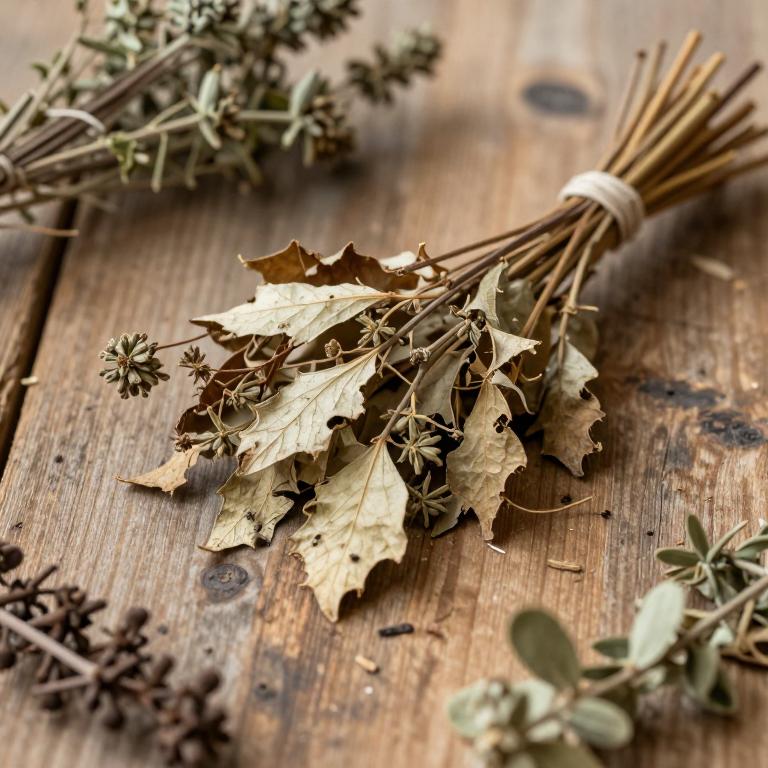
Names and Synonyms
Common Names
- Durmast Oak
- Sessile Oak
- Cornish oak
- Irish oak
Scientific Names
Accepted name
Quercus petraeaSynonyms
- Quercus robur var. petraea
Regional and Traditional Names
Spanish:
- Roble montano
- Veceña
- Marfueyo
- Roble comun
- Vecena
- Roble de fruto sentado y axilar
- Roble
- Roble albar
- Roble albar
German:
- Traubeneiche
- Trauben-Eiche
- Wintereiche
- Winter-Eiche
- chêne rouvre
- Artengruppe Trauben-Eiche
- Trauben-Eiche
- Traubeneiche
French:
- Chêne rouvre
- Chêne sessile
- Chene sessile
- Chêne rouvre
- Chêne sessile
Sources: Wikidata, Catalogue of Life
Taxonomical Classification
This plant belongs to the kingdom Plantae and the phylum Streptophyta, placing it within the class Equisetopsida and subclass Magnoliidae. It is further classified under the order Fagales and the family Fagaceae. Finally, it is identified by the genus Quercus.
| Rank | Classification |
|---|---|
| Kingdom | Plantae |
| Phylum | Streptophyta |
| Class | Equisetopsida |
| Subclass | Magnoliidae |
| Order | Fagales |
| Family | Fagaceae |
| Genus | Quercus |
Sources: The World Checklist of Vascular Plants (WCVP)
Distribution
This plant exhibits a specific geographical range concentrated within the northern regions of the European continent. Its distribution is notably present across various countries in Northern Europe, including Denmark and Great Britain. In the British Isles, the species can also be found growing in Ireland. Further north, the plant extends its reach into the Scandinavian landscapes of Norway. Finally, its habitat includes the forested areas of Sweden, completing its northern European range.
| Region | Area |
|---|---|
| Northern Europe | Denmark |
| Northern Europe | Great Britain |
| Northern Europe | Ireland |
| Northern Europe | Norway |
| Northern Europe | Sweden |
| Middle Europe | Austria |
| Middle Europe | Belgium |
| Middle Europe | Czechia-Slovakia |
| Middle Europe | Germany |
| Middle Europe | Hungary |
Sources: The World Checklist of Vascular Plants (WCVP)
Botanical Identification
Ecology
The ecology of Quercus petraea is defined by its preference for complex woodland environments, primarily thriving within forest ecosystems and mountainous terrains. It typically colonizes well-drained, often acidic soils, playing a structural role in the development of temperate deciduous forests. By inhabiting montane regions, the species adapts to varying elevations and climatic shifts, contributing to the stability of the local lithology and soil composition. Its presence within these forest habitats facilitates a diverse microclimate, supporting a wide array of symbiotic fungi and understory flora, while its distribution is closely tied to the availability of moisture and the specific topographical features of mountainous landscapes.
- Habitat :
- forest, mountains
Life history
The life history of Quercus petraea is characterized by a perennial lifecycle, allowing the individual to persist across many years and seasons. As a phanerophyte, it maintains its photosynthetic organs high above the ground on woody stems, specifically functioning as a phanerophyte to withstand environmental pressures. This species exhibits a deciduous habit, shedding its foliage annually in response to seasonal changes.
- Deciduousness :
- deciduous
- Life form :
- phanerophyte
- Lifecycle :
- perennial
Morphology
The morphology of Quercus petraea is characterized by its growth form as a woody tree, functioning as a self-supporting structure rather than a climber or liana. It is a terrestrial plant, maintaining an independent existence without acting as a parasite or an epiphyte. In terms of stature, the species exhibits significant vertical development, with a plant height that typically ranges from a minimum of 10 m to a maximum of 30 m, maintaining an average height of approximately 35.663 m.
- Aquatic :
- terrestrial
- Climber :
- self-supporting
- Epiphyte :
- terrestrial
- Growth form :
- tree
- Parasite :
- independent
- Plant height max:
- 30 m
- Plant height mean:
- 35.663 m
- Plant height min:
- 10 m
- Woodiness :
- woody
Physiology
The physiology of Quercus petraea is characterized by a C3 photosynthetic pathway, a common metabolic strategy among temperate woody species that optimizes carbon fixation under moderate light and temperature conditions. The plant exhibits a non-carnivorous nutritional strategy, relying entirely on autotrophic processes for nutrient acquisition. Morphologically, its leaf physiology is defined by a mean leaf size of approximately 35.00325 cm² and a mean Specific Leaf Area (SLA) of 125.76 cm²/g, which reflects its leaf mass distribution and resource allocation strategies. Furthermore, the structural integrity and wood density are indicated by a mean stem specific density (SSD) of 687.667 mg/cm³, a physiological trait essential for its mechanical support and hydraulic conductivity.
- Carnivory :
- non-carnivorous
- Leaf size mean:
- 35.00325 cm²
- Photosynthetic pathway :
- C3
- Specific Leaf Area (SLA) mean:
- 125.76 cm²/g
- Stem specific density (SSD) mean:
- 687.667 mg/cm³
Reproduction
The reproduction of Quercus petraea is characterized by a sexual process, as both asexual reproduction and self-fertilization are absent. The flowering period typically begins in April and concludes in May. As an abiotic pollination specialist, the plant relies on a wind-driven pollination syndrome to facilitate fertilization. The resulting fruit is classified as an achene, which is indehiscent, meaning it does not split open at maturity to release its contents. The seeds produced vary in size, with a minimum mass of approximately 0.7447 g, a mean mass of 1.6668993335 g, and a maximum mass reaching up to 4.6 g. Regarding the movement of offspring, the species utilizes an autochorous dispersal syndrome.
- Dehiscence :
- indehiscent
- Dispersal syndrome :
- autochorous
- Flowering time :
- Apr
- Flowering time :
- May
- Fruit type :
- achene
- Pollination syndrome :
- wind
- Pollination syndrome :
- abiotic
- Reproduction asexual :
- absent
- Seed mass max:
- 4.6 g
- Seed mass mean:
- 1.6668993335 g
- Seed mass min:
- 0.7447 g
- Self fertilization :
- absent
Sources: Global Inventory of Floras and Traits (GIFT)
Chemicals
Quercus petraea has 4 reported phytochemicals identified across 0 scientific publications and several other databases. The most consistently reported chemicals include CATECHIN, Flavonoids, Gallic acid, Gallocatechin.
| Chemical | Supporting sources | Consensus |
|---|---|---|
| CATECHIN | 1 supporting sources | ★☆☆☆☆ |
| Flavonoids | 1 supporting sources | ★☆☆☆☆ |
| Gallic acid | 1 supporting sources | ★☆☆☆☆ |
| Gallocatechin | 1 supporting sources | ★☆☆☆☆ |
CATECHIN
- Foods (Basel, Switzerland)
Flavonoids
- Plants (Basel, Switzerland)
Gallic acid
- Foods (Basel, Switzerland)
Gallocatechin
- Foods (Basel, Switzerland)
Activities
Quercus petraea has 4 reported activities identified across 0 scientific publications and several other databases. The most consistently reported activities include Antioxidant, Antibacterial, Antifungal, Antimicrobial.
| Activity | Supporting sources | Consensus |
|---|---|---|
| Antioxidant | 2 supporting sources | ★☆☆☆☆ |
| Antibacterial | 1 supporting sources | ★☆☆☆☆ |
| Antifungal | 1 supporting sources | ★☆☆☆☆ |
| Antimicrobial | 1 supporting sources | ★☆☆☆☆ |
Antioxidant
- Antioxidants (Basel, Switzerland)
- Plants (Basel, Switzerland)
Antibacterial
- Antioxidants (Basel, Switzerland)
Antifungal
- Antioxidants (Basel, Switzerland)
Antimicrobial
- Plants (Basel, Switzerland)
Preparations
Quercus petraea has 1 reported preparations identified across 0 scientific publications and several other databases. The most consistently reported preparations include aqueous extracts.
| Preparation | Supporting sources | Consensus |
|---|---|---|
| Aqueous extracts | 1 supporting sources | ★☆☆☆☆ |
Aqueous extracts
- Plants (Basel, Switzerland)