Blackjack Oak
Quercus marilandica var. marilandica · Accepted scientific name
Scientific literature: Very Sparse (14 studies) · ★☆☆☆☆
Blackjack Oak, scientifically known as Quercus marilandica var. marilandica, is a resilient deciduous tree native to the southeastern United States. Renowned for its hardiness, this species holds traditional significance in ethnobotany. Its bark and various components have been historically utilized in folk medicine for their potential therapeutic properties and tannins.
- Family
- Fagaceae
- Native range
- Northern America
- Parts used
- Not available
- Common names
- Blackjack Oak
- Scientific synonyms
- Quercus Marilandica F. Aequilobata · Quercus Marilandica F. Incisa · 15 more
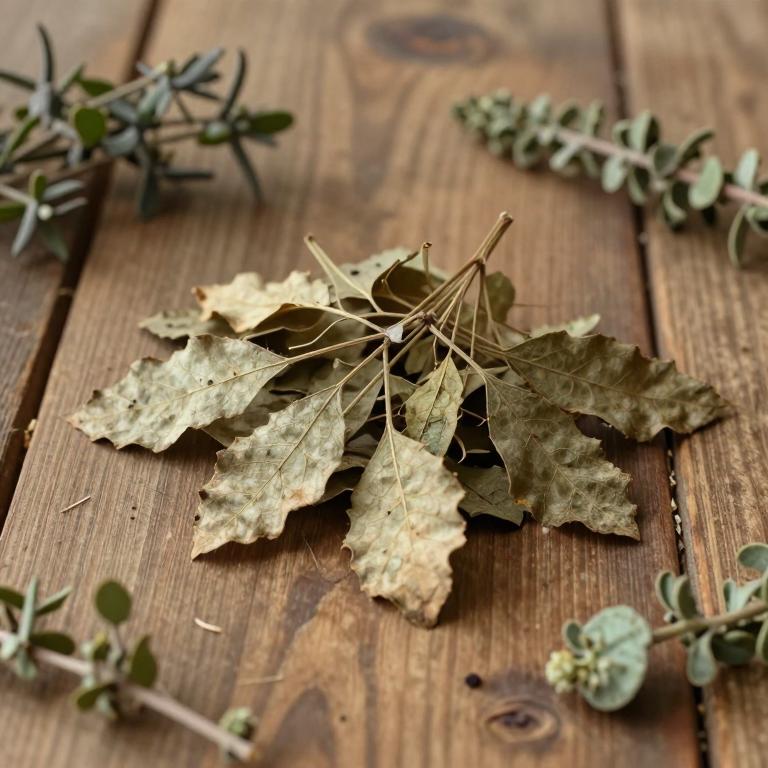
Names and Synonyms
Common Names
- Blackjack Oak
Scientific Names
Accepted name
Quercus marilandica var. marilandicaSynonyms
- Quercus marilandica f. aequilobata
- Quercus marilandica f. incisa
- Quercus marilandica f. obovata
- Quercus marilandica f. paucidentata
- Quercus marilandica f. cuneata
- Quercus marilandica f. integrifolia
- Quercus marilandica f. quinqueloba
- Quercus nigra var. integrifolia
- Quercus nigra var. quinqueloba
- Quercus nobilis
- Quercus marilandica f. subtypica
- Quercus cuneata
- Quercus marilandica f. truncata
- Quercus dilatata
- Quercus ferruginea
- Quercus marilandica f. sublyrata
- Quercus marilandica f. subquinqueloba
Sources: Wikidata, Catalogue of Life
Taxonomical Classification
This plant belongs to the kingdom Plantae and the phylum Streptophyta, specifically falling under the class Equisetopsida and subclass Magnoliidae. Within the order Fagales and the family Fagaceae, it is classified under the genus Quercus. Its specific taxonomic designation is Quercus marilandica var. marilandica.
| Rank | Classification |
|---|---|
| Kingdom | Plantae |
| Phylum | Streptophyta |
| Class | Equisetopsida |
| Subclass | Magnoliidae |
| Order | Fagales |
| Family | Fagaceae |
| Genus | Quercus |
Sources: The World Checklist of Vascular Plants (WCVP)
Distribution
This plant is primarily located within the North-Central region of the United States. Its geographical range encompasses several specific states throughout this central territory. For instance, it can be found growing across the landscapes of Illinois and Iowa. Additionally, the species extends its presence into the states of Kansas and Missouri. Finally, its distribution reaches into Nebraska, completing its regional footprint.
| Region | Area |
|---|---|
| North-Central U.S.A. | Illinois |
| North-Central U.S.A. | Iowa |
| North-Central U.S.A. | Kansas |
| North-Central U.S.A. | Missouri |
| North-Central U.S.A. | Nebraska |
| North-Central U.S.A. | Oklahoma |
| Northeastern U.S.A. | Indiana |
| Northeastern U.S.A. | New Jersey |
| Northeastern U.S.A. | New York |
| Northeastern U.S.A. | Ohio |
Sources: The World Checklist of Vascular Plants (WCVP)
Chemicals
Quercus marilandica var. marilandica has 7 reported phytochemicals identified across 0 scientific publications and several other databases. The most consistently reported chemicals include CATECHIN, CHLOROGENIC ACID, Gallic acid, ferulic acid, p-coumaric acid.
| Chemical | Supporting sources | Consensus |
|---|---|---|
| CATECHIN | 1 supporting sources | ★☆☆☆☆ |
| CHLOROGENIC ACID | 1 supporting sources | ★☆☆☆☆ |
| Gallic acid | 1 supporting sources | ★☆☆☆☆ |
| ferulic acid | 1 supporting sources | ★☆☆☆☆ |
| p-coumaric acid | 1 supporting sources | ★☆☆☆☆ |
| pyrocatechol | 1 supporting sources | ★☆☆☆☆ |
| quercetin | 1 supporting sources | ★☆☆☆☆ |
CATECHIN
- BMC complementary and alternative medicine
CHLOROGENIC ACID
- BMC complementary and alternative medicine
Gallic acid
- BMC complementary and alternative medicine
ferulic acid
- BMC complementary and alternative medicine
p-coumaric acid
- BMC complementary and alternative medicine
pyrocatechol
- BMC complementary and alternative medicine
quercetin
- BMC complementary and alternative medicine
Activities
Quercus marilandica var. marilandica has 6 reported activities identified across 0 scientific publications and several other databases. The most consistently reported activities include Antidiabetic, Antifungal, Antinociceptive, Antioxidant, Antiproliferative.
| Activity | Supporting sources | Consensus |
|---|---|---|
| Antidiabetic | 1 supporting sources | ★☆☆☆☆ |
| Antifungal | 1 supporting sources | ★☆☆☆☆ |
| Antinociceptive | 1 supporting sources | ★☆☆☆☆ |
| Antioxidant | 1 supporting sources | ★☆☆☆☆ |
| Antiproliferative | 1 supporting sources | ★☆☆☆☆ |
| Cytotoxic | 1 supporting sources | ★☆☆☆☆ |
Antidiabetic
- BMC complementary and alternative medicine
Antifungal
- BMC complementary and alternative medicine
Antinociceptive
- Evidence-based complementary and alternative medicine : eCAM
Antioxidant
- BMC complementary and alternative medicine
Antiproliferative
- BMC complementary and alternative medicine
Cytotoxic
- BMC complementary and alternative medicine
Preparations
Quercus marilandica var. marilandica has 7 reported preparations identified across 0 scientific publications and several other databases. The most consistently reported preparations include Chloroform extract, Chloroform-Methanol extract, Distilled water extract, Ethyl acetate-Acetone extract, Methanol extract.
| Preparation | Supporting sources | Consensus |
|---|---|---|
| Chloroform extract | 1 supporting sources | ★☆☆☆☆ |
| Chloroform-methanol extract | 1 supporting sources | ★☆☆☆☆ |
| Distilled water extract | 1 supporting sources | ★☆☆☆☆ |
| Ethyl acetate-acetone extract | 1 supporting sources | ★☆☆☆☆ |
| Methanol extract | 1 supporting sources | ★☆☆☆☆ |
| Methanol-ethyl acetate extract | 1 supporting sources | ★☆☆☆☆ |
| Distilled water-acetone extract | 1 supporting sources | ★☆☆☆☆ |
Chloroform extract
- BMC complementary and alternative medicine
Chloroform-methanol extract
- BMC complementary and alternative medicine
Distilled water extract
- BMC complementary and alternative medicine
Ethyl acetate-acetone extract
- BMC complementary and alternative medicine
Methanol extract
- BMC complementary and alternative medicine
Methanol-ethyl acetate extract
- BMC complementary and alternative medicine
Distilled water-acetone extract
- BMC complementary and alternative medicine