Scrub Gall Oak
Quercus lusitanica · Accepted scientific name
Scientific literature: Very Sparse (1 studies) · ★☆☆☆☆
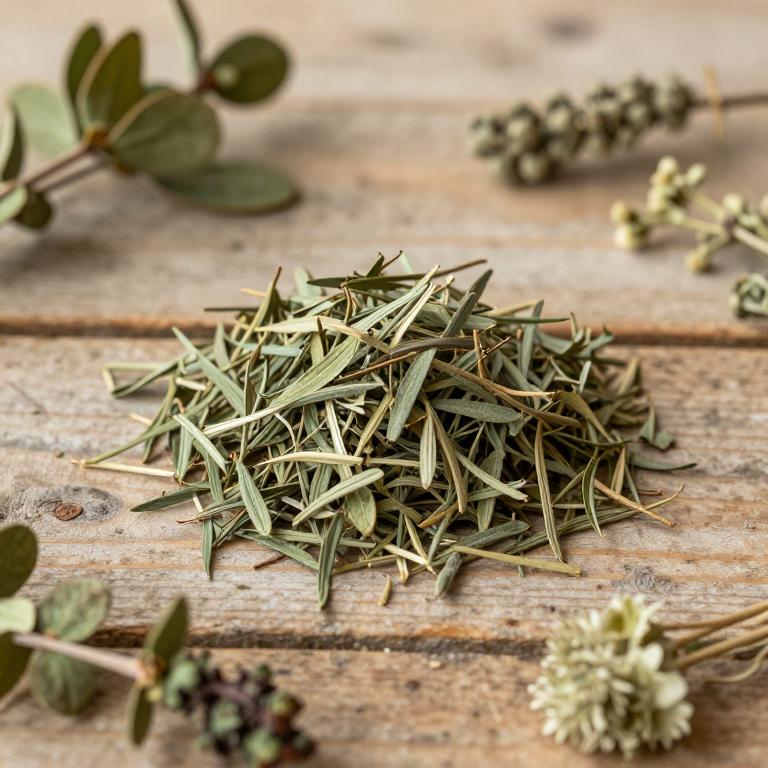
Scrub Gall Oak, scientifically known as Quercus lusitaniica, is a resilient deciduous shrub native to the Mediterranean region. Renowned for its dense foliage and tannin-rich acorns, this plant plays a vital role in local ecosystems. Traditionally, its bark and galls have been utilized in various medicinal and tanning applications.
Names and Synonyms
Common Names
- Scrub Gall Oak
- Dyer's Oak
- Gall Oak
- Lusitanian Oak
Scientific Names
Accepted name
Quercus lusitanicaSynonyms
- Quercus fruticosa var. pedunculata
- Quercus fruticosa var. subinclusa
- Quercus humilis f. brachycarpa
- Quercus muricata
- Quercus humilis f. microcarpa
- Quercus humilis f. pedunculata
- Quercus humilis var. subinclusa
- Quercus lusitanica var. stenoglandis
- Quercus lusitanica f. subinclusa
- Quercus lusitanica var. valentina
- Quercus lusitanica subsp. valentina
- Quercus lusitanica var. macrobalanus
- Quercus lusitanica var. humilis
- Quercus mirbeckii var. spinosa
- Quercus prasina
- Quercus zang
- Quercus lusitanica var. subinclusa
- Quercus brachycarpa
- Quercus fruticosa subvar. subinclusa
- Quercus brachycarpa
- Quercus fruticosa
- Quercus faginea var. spinosa
- Quercus faginea subsp. lusitanica
- Quercus faginea f. macrobalanus
- Quercus faginea var. macrobalanus
Regional and Traditional Names
Spanish:
- Quejigeta
- Robledilla
Sources: Wikidata, Catalogue of Life
Taxonomical Classification
This plant belongs to the kingdom Plantae and the phylum Streptophyta, situated within the class Equisetopsida and subclass Magnoliidae. It is further classified under the order Fagales and the family Fagaceae. Finally, its taxonomic identity is defined by its placement in the genus Quercus.
| Rank | Classification |
|---|---|
| Kingdom | Plantae |
| Phylum | Streptophyta |
| Class | Equisetopsida |
| Subclass | Magnoliidae |
| Order | Fagales |
| Family | Fagaceae |
| Genus | Quercus |
Sources: The World Checklist of Vascular Plants (WCVP)
Distribution
This plant, known as Quercus lusitanica, exhibits a specific distribution across several distinct regions. In Southwestern Europe, it can be found growing throughout the country of Portugal. It also maintains a significant presence within the borders of Spain. Beyond the European continent, its range extends into Northern Africa. Specifically, this medicinal species is documented to inhabit the territory of Morocco.
| Region | Area |
|---|---|
| Southwestern Europe | Portugal |
| Southwestern Europe | Spain |
| Northern Africa | Morocco |
Sources: The World Checklist of Vascular Plants (WCVP)
Botanical Identification
Ecology
The ecology of Quercus lusitanica is characterized by its adaptation to specific montane and sub-montane environments, where it plays a fundamental role in the structure of sclerophyllous woodlands. This species thrives within a distinct altitudinal niche, exhibiting an elevational range that centers around a mean elevation of 348 m AMSL. It typically occupies well-drained slopes and varied terrains, often forming part of complex forest ecosystems that influence local soil composition and moisture retention. Its distribution is closely tied to specific climatic variables, including seasonal rainfall patterns and temperature fluctuations, which dictate its competitive success among other Mediterranean oak species. By stabilizing soil structures and providing specialized microhabitats, Quercus lusitanica contributes significantly to the biodiversity and ecological stability of its native landscape.
- Elevational range mean:
- 348 m AMSL
Life history
The life history of Quercus lusitanica is characterized by a perennial lifecycle, allowing the plant to establish long-term presence within its ecosystem. As a phanerophyte, it maintains its conducting shoots well above the ground, contributing to its structural development and longevity. The species exhibits a deciduous nature, shedding its foliage seasonally as part of its physiological adaptation to changing environmental conditions. While its primary growth habit is categorized under the phanerophyte life form, its developmental stages and structural complexities can occasionally intersect with nanophanerophyte characteristics in specific growth contexts or smaller woody structures.
- Deciduousness :
- deciduous
- Life form :
- nanophanerophyte
- Life form :
- phanerophyte
- Lifecycle :
- perennial
Morphology
The morphology of Quercus lusitanica is characterized by its robust, woody structure, primarily manifesting as a tree or occasionally appearing as a subshrub depending on environmental conditions. As a self-supporting organism, it lacks any climbing or liana-like tendencies, maintaining a sturdy vertical growth habit. The plant is strictly terrestrial in its ecological niche, neither functioning as an aquatic, semiaquatic, nor epiphytic species. Furthermore, it operates as an independent organism, showing no parasitic behavior, and relies on its heavily lignified, woody tissue to provide the necessary structural integrity for its upright growth form.
- Aquatic :
- terrestrial
- Climber :
- self-supporting
- Epiphyte :
- terrestrial
- Growth form :
- tree
- Growth form :
- subshrub
- Parasite :
- independent
- Woodiness :
- woody
Physiology
The physiology of Quercus lusitanica is fundamentally characterized by a C3 photosynthetic pathway, a common adaptation among temperate woody species that utilizes the enzyme Rubisco to fix atmospheric carbon dioxide during the Calvin cycle. This metabolic strategy involves the direct fixation of CO2 into three-carbon compounds within the mesophyll cells, which is highly efficient under the moderate temperatures and consistent moisture levels typical of its natural forest habitats. Beyond its carbon assimilation mechanisms, the plant's physiological processes are tightly regulated by seasonal environmental cues, governing its phenological shifts such as budburst and leaf senescence. The water relations and nutrient uptake processes are integrated into its overall metabolic framework, ensuring that transpiration rates are balanced with hydraulic conductivity to maintain turgor and facilitate the transport of essential minerals through the xylem to support its structural growth and secondary metabolism.
- Photosynthetic pathway :
- C3
Reproduction
The reproduction of Quercus lusitanica is characterized by the production of relatively heavy seeds, which play a crucial role in its propagation strategy. The seed mass exhibits a narrow range of variation, with a minimum mass of 8 g, a maximum of 8.1169 g, and a calculated mean mass of 8.05845 g. Regarding its dispersal mechanisms, the plant primarily utilizes a zoochorous dispersal syndrome, relying on animals to facilitate the movement of its seeds across the landscape. While its dispersal potential encompasses a broad spectrum of methods—including anemochorous, autochorous, hydrochorous, and unspecialized strategies—the zoochorous mode remains a defining trait for its reproductive success.
- Dispersal syndrome :
- zoochorous
- Seed mass max:
- 8.1169 g
- Seed mass mean:
- 8.05845 g
- Seed mass min:
- 8 g
Sources: Global Inventory of Floras and Traits (GIFT)
Activities
Quercus lusitanica has 1 reported activities identified across 0 scientific publications and several other databases. The most consistently reported activities include Anticancer.
| Activity | Supporting sources | Consensus |
|---|---|---|
| Anticancer | 1 supporting sources | ★☆☆☆☆ |
Anticancer
- Evidence-based complementary and alternative medicine : eCAM