Quercus glabrescens
Quercus glabrescens · Accepted scientific name
Scientific literature: Very Sparse (6 studies) · ★☆☆☆☆
, scientifically known as Quercus glabrescens, is a resilient deciduous tree native to the southeastern United States. Often referred to as the ringbark oak, it is highly valued for its rugged bark and timber. Historically, various parts of this species have been utilized in traditional medicinal practices for diverse healing purposes.
- Family
- Fagaceae
- Native range
- Northern America
- Parts used
- Not available
- Common names
- Not available
- Scientific synonyms
- Quercus Glabrescens Var. Integrifolia · Quercus Glabrescens Var. Radlkoferiana · 1 more
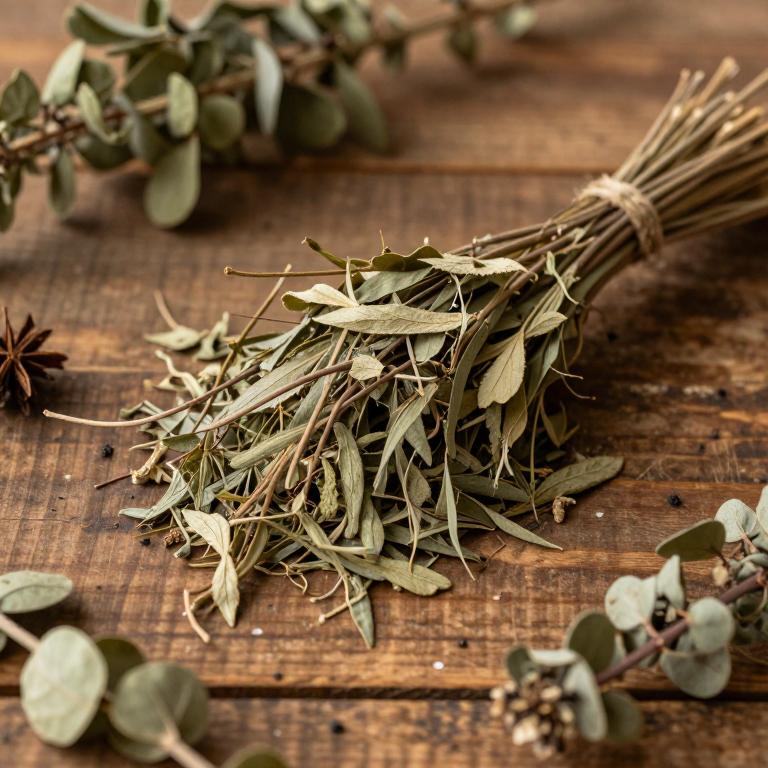
Names and Synonyms
Scientific Names
Accepted name
Quercus glabrescensSynonyms
- Quercus glabrescens var. integrifolia
- Quercus glabrescens var. radlkoferiana
- Quercus radlkoferiana
Sources: Wikidata
Taxonomical Classification
This plant belongs to the kingdom Plantae and the phylum Streptophyta, falling under the class Equisetopsida and subclass Magnoliidae. Within the order Fagales and the family Fagaceae, it is classified under the genus Quercus.
| Rank | Classification |
|---|---|
| Kingdom | Plantae |
| Phylum | Streptophyta |
| Class | Equisetopsida |
| Subclass | Magnoliidae |
| Order | Fagales |
| Family | Fagaceae |
| Genus | Quercus |
Sources: The World Checklist of Vascular Plants (WCVP)
Distribution
This plant, known as Quercus glabrescens, exhibits a specific range across several key regions within Mexico. Its distribution begins in the central part of the country, where it occupies the Mexico Central territory. Furthermore, the species can be found extending toward the Mexico Northeast region. The plant's presence is also documented throughout the Mexico Gulf area. Finally, its geographical reach concludes within the Mexico Southwest zone.
| Region | Area |
|---|---|
| Mexico | Mexico Central |
| Mexico | Mexico Northeast |
| Mexico | Mexico Gulf |
| Mexico | Mexico Southwest |
Sources: The World Checklist of Vascular Plants (WCVP)
Botanical Identification
Life history
The life history of Quercus glabrescens is characterized by its classification as a phanerophyte, a life form defined by its ability to maintain its conductive and photosynthetic tissues well above the ground level during unfavorable seasons. As a perennial woody species, it progresses through distinct developmental stages, beginning with seed germination from acorns, followed by a period of vegetative growth where it establishes a robust structural framework. Throughout its lifecycle, the plant functions as a phanerophyte, utilizing elevated buds to survive environmental stresses, though its ecological niche may occasionally exhibit characteristics associated with different growth habits depending on environmental constraints; however, its primary structural identity remains that of a large woody plant. Its reproductive cycle involves seasonal flowering and the production of mast crops, ensuring the continuation of its lineage through long-lived individual specimens that contribute to the forest canopy.
- Life form :
- nanophanerophyte
- Life form :
- phanerophyte
Morphology
The morphology of Quercus glabrescens is characterized by its growth form as a woody tree, exhibiting a robust and perennial structural development. As a terrestrial organism, it occupies land-based habitats, existing as an independent species that does not function as a parasite or an epiphyte. The plant is strictly self-supporting in its architecture, lacking any climbing or vining tendencies, and does not require external structures for vertical stability. Its physical constitution is defined by its woodiness, which supports its stature as a substantial, non-aquatic, and non-semiaquatic woody perennial.
- Aquatic :
- terrestrial
- Climber :
- self-supporting
- Epiphyte :
- terrestrial
- Growth form :
- tree
- Parasite :
- independent
- Woodiness :
- woody
Sources: Global Inventory of Floras and Traits (GIFT)
Chemicals
Quercus glabrescens has 6 reported phytochemicals identified across 0 scientific publications and several other databases. The most consistently reported chemicals include Kaempferol 3-O-glucoside, Kaempferol 3-O-sambubioside, Kaempferol 3-O-sophoroside, Luteolin 7-O-glucoside, Ursolic acid.
| Chemical | Supporting sources | Consensus |
|---|---|---|
| Kaempferol 3-O-glucoside | 1 supporting sources | ★☆☆☆☆ |
| Kaempferol 3-O-sambubioside | 1 supporting sources | ★☆☆☆☆ |
| Kaempferol 3-O-sophoroside | 1 supporting sources | ★☆☆☆☆ |
| Luteolin 7-O-glucoside | 1 supporting sources | ★☆☆☆☆ |
| Ursolic acid | 1 supporting sources | ★☆☆☆☆ |
| scopoletin | 1 supporting sources | ★☆☆☆☆ |
Kaempferol 3-O-glucoside
- Plants (Basel, Switzerland)
Kaempferol 3-O-sambubioside
- Plants (Basel, Switzerland)
Kaempferol 3-O-sophoroside
- Plants (Basel, Switzerland)
Luteolin 7-O-glucoside
- Plants (Basel, Switzerland)
Ursolic acid
- Plants (Basel, Switzerland)
scopoletin
- Plants (Basel, Switzerland)