Dalechamp's Oak
Quercus dalechampii · Accepted scientific name
Scientific literature: Very Sparse (15 studies) · ★☆☆☆☆
Dalechamp's Oak, scientifically known as Quercus dalechampii, is a distinctive medicinal plant valued for its diverse therapeutic properties. Renowned in traditional medicine, its leaves and bark contain bioactive compounds used to treat various ailments. This species plays a vital role in herbal pharmacology and biodiversity within its natural habitat.
- Family
- Fagaceae
- Native range
- Europe
- Parts used
- Not available
- Common names
- Dalechamp'S Oak
- Scientific synonyms
- Quercus Pubescens Var. Dalechampii · Quercus Pubescens Subsp. Dalechampii · 2 more
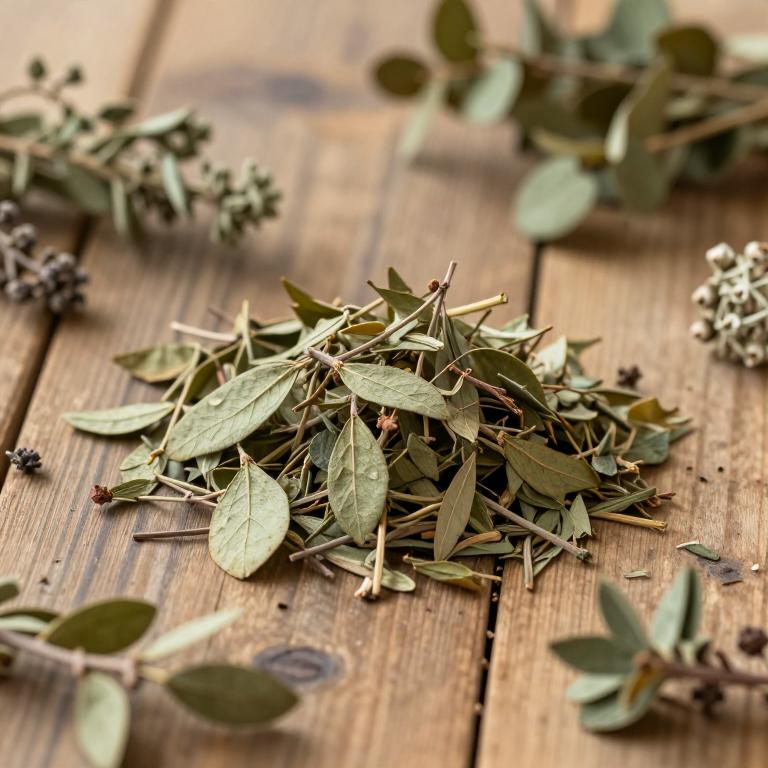
Names and Synonyms
Common Names
- Dalechamp's Oak
Scientific Names
Accepted name
Quercus dalechampiiSynonyms
- Quercus pubescens var. dalechampii
- Quercus pubescens subsp. dalechampii
- Quercus lanuginosa subsp. dalechampii
- Quercus robur var. dalechampii
Regional and Traditional Names
German:
- Dalechamps Eiche
French:
- Chêne de Daléchamps
Sources: Wikidata, Catalogue of Life
Taxonomical Classification
This plant belongs to the kingdom Plantae within the phylum Streptophyta and the class Equisetopsida. It is further classified under the subclass Magnoliidae and the order Fagales, falling into the family Fagaceae. Ultimately, its taxonomic identity is defined by its placement in the genus Quercus.
| Rank | Classification |
|---|---|
| Kingdom | Plantae |
| Phylum | Streptophyta |
| Class | Equisetopsida |
| Subclass | Magnoliidae |
| Order | Fagales |
| Family | Fagaceae |
| Genus | Quercus |
Sources: The World Checklist of Vascular Plants (WCVP)
Distribution
This plant is primarily found within a very specific geographic range. Its presence is concentrated in the region of Southeastern Europe. Specifically, its documented distribution is limited to the country of Italy. This localized occurrence suggests that the species thrives in particular Mediterranean environments. Therefore, the geographical footprint of Quercus dalechampii remains quite restricted to these Italian landscapes.
| Region | Area |
|---|---|
| Southeastern Europe | Italy |
Sources: The World Checklist of Vascular Plants (WCVP)
Botanical Identification
Life history
The life history of Quercus dalechampii is characterized by a perennial lifecycle, allowing the individual to persist through multiple growing seasons and establish a long-term presence within its ecosystem. As a member of the oak genus, it exhibits a phanerophyte life form, specifically classified under both phanerophyte categories, which indicates that its regenerative buds are located high above the ground on woody stems or branches. This structural strategy enables the plant to maintain a substantial canopy and survive varying environmental conditions over many years.
- Life form :
- phanerophyte
- Lifecycle :
- perennial
Morphology
The morphology of Quercus dalechampii is characterized by a woody growth form, manifesting primarily as a tree. Regarding its climbing habits, it functions as a self-supporting entity, categorized under the units of liana, vine, and self-supporting, while also displaying self-supporting characteristics in its climbing classification. The plant is an independent organism rather than a parasite, and it maintains a terrestrial existence rather than being an epiphyte. Its structure is defined by its persistent woodiness, distinguishing it from non-woody or variable growth types.
- Climber :
- self-supporting
- Epiphyte :
- terrestrial
- Growth form :
- tree
- Parasite :
- independent
- Woodiness :
- woody
Physiology
The physiology of Quercus dalechampii is fundamentally defined by its metabolic processes, most notably its utilization of the C3 photosynthetic pathway. As a member of the C3 group, the plant facilitates carbon fixation through the direct carboxylation of ribulose-1,5-bisphosphate (RuBP) by the enzyme RuBisCO, leading to the immediate production of three-carbon compounds during the Calvin cycle. This metabolic strategy dictates its resource management, particularly regarding transpiration and water-use efficiency, as the plant must maintain open stomata for CO2 uptake, which inherently increases the risk of water loss. The efficiency of this C3 mechanism is highly dependent on environmental factors such as light intensity, ambient temperature, and moisture availability, which influence the rate of gas exchange and the prevention of photorespiration. Consequently, the physiological performance of Quercus dalechampii is closely tied to its ability to balance carbon assimilation with hydraulic stability within its specific ecological niche.
- Photosynthetic pathway :
- C3
Sources: Global Inventory of Floras and Traits (GIFT)
Chemicals
Quercus dalechampii has 8 reported phytochemicals identified across 0 scientific publications and several other databases. The most consistently reported chemicals include CATECHIN, Epicatechin, Flavonoids, Gallic acid, TAXIFOLIN.
| Chemical | Supporting sources | Consensus |
|---|---|---|
| CATECHIN | 1 supporting sources | ★☆☆☆☆ |
| Epicatechin | 1 supporting sources | ★☆☆☆☆ |
| Flavonoids | 1 supporting sources | ★☆☆☆☆ |
| Gallic acid | 1 supporting sources | ★☆☆☆☆ |
| TAXIFOLIN | 1 supporting sources | ★☆☆☆☆ |
| Tannins | 1 supporting sources | ★☆☆☆☆ |
| Vanillic acid | 1 supporting sources | ★☆☆☆☆ |
| caffeic acid | 1 supporting sources | ★☆☆☆☆ |
CATECHIN
- Pharmaceutics
Epicatechin
- Pharmaceutics
Flavonoids
- Plants (Basel, Switzerland)
Gallic acid
- Pharmaceutics
TAXIFOLIN
- Pharmaceutics
Tannins
- Pharmaceutics
Vanillic acid
- Pharmaceutics
caffeic acid
- Pharmaceutics
Activities
Quercus dalechampii has 3 reported activities identified across 0 scientific publications and several other databases. The most consistently reported activities include Antimicrobial, Antioxidant, Cytotoxic.
| Activity | Supporting sources | Consensus |
|---|---|---|
| Antimicrobial | 2 supporting sources | ★☆☆☆☆ |
| Antioxidant | 2 supporting sources | ★☆☆☆☆ |
| Cytotoxic | 1 supporting sources | ★☆☆☆☆ |
Antimicrobial
- Pharmaceutics
- Plants (Basel, Switzerland)
Antioxidant
- Pharmaceutics
- Plants (Basel, Switzerland)
Cytotoxic
- Pharmaceutics
Preparations
Quercus dalechampii has 3 reported preparations identified across 0 scientific publications and several other databases. The most consistently reported preparations include Ultrasound and microwave-assisted extraction methods, aqueous Bark Extract, aqueous extracts.
| Preparation | Supporting sources | Consensus |
|---|---|---|
| Ultrasound and microwave-assisted extraction methods | 1 supporting sources | ★☆☆☆☆ |
| Aqueous bark extract | 1 supporting sources | ★☆☆☆☆ |
| Aqueous extracts | 1 supporting sources | ★☆☆☆☆ |
Ultrasound and microwave-assisted extraction methods
- Pharmaceutics
Aqueous bark extract
- Plants (Basel, Switzerland)
Aqueous extracts
- Plants (Basel, Switzerland)