Holm Oak
Quercus baloot · Accepted scientific name
Scientific literature: Very Sparse (5 studies) · ★☆☆☆☆
Holm Oak, scientifically known as Quercus baloot, is a resilient evergreen tree renowned for its diverse medicinal properties. Historically utilized in traditional healing, its bark, leaves, and acorns contain bioactive compounds with potent antimicrobial, anti-inflammatory, and antioxidant effects, making it a significant botanical resource in various therapeutic practices.
- Family
- Fagaceae
- Native range
- Asia-Temperate
- Parts used
- Seed
- Common names
- Holm Oak · Holy Oak
- Scientific synonyms
- Not available
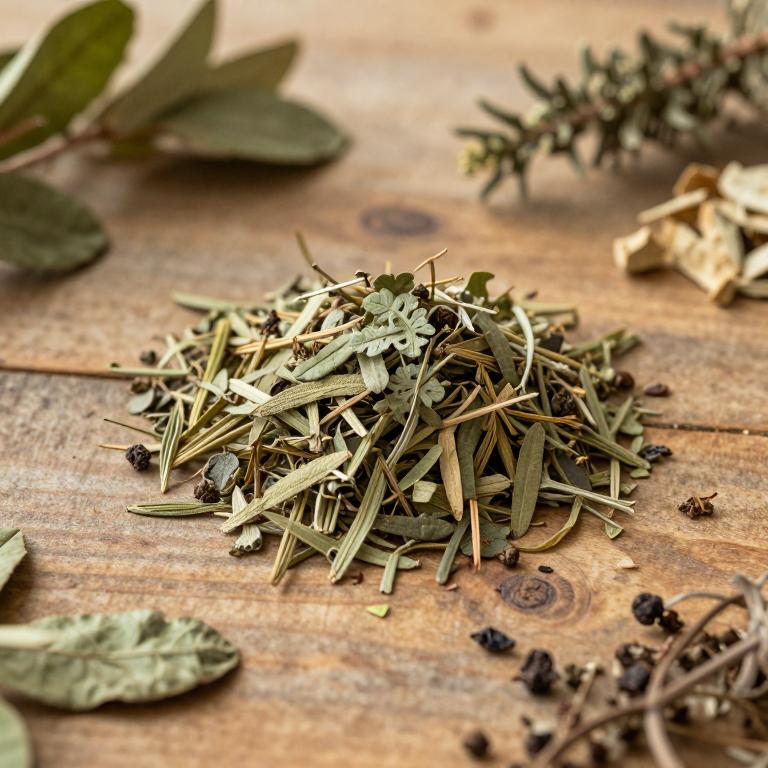
Names and Synonyms
Common Names
- Holm Oak
- Holy Oak
Scientific Names
Accepted name
Quercus balootSources: Wikidata, Catalogue of Life
Taxonomical Classification
This plant belongs to the kingdom Plantae and is classified under the phylum Streptophyta and class Equisetopsida. Within the subclass Magnoliidae and order Fagales, it is further categorized into the family Fagaceae. Finally, it is identified by the genus Quercus, commonly known as the oak genus.
| Rank | Classification |
|---|---|
| Kingdom | Plantae |
| Phylum | Streptophyta |
| Class | Equisetopsida |
| Subclass | Magnoliidae |
| Order | Fagales |
| Family | Fagaceae |
| Genus | Quercus |
Sources: The World Checklist of Vascular Plants (WCVP)
Distribution
This plant, known as Quercus baloot, exhibits a specific range of distribution across several key regions. In Western Asia, its presence is notably recorded within the borders of Afghanistan. Moving toward the Indian Subcontinent, the species is found extensively throughout Pakistan. Additionally, it occupies significant habitats within the West Himalaya region of the Indian Subcontinent. Together, these locations define the primary geographical footprint of this medicinal species.
| Region | Area |
|---|---|
| Western Asia | Afghanistan |
| Indian Subcontinent | Pakistan |
| Indian Subcontinent | West Himalaya |
Sources: The World Checklist of Vascular Plants (WCVP)
Botanical Identification
Ecology
The ecology of Quercus baloot is characterized by its ability to thrive within a specific altitudinal gradient, primarily occupying montane forest ecosystems. This species demonstrates significant adaptive capacity across varying topographical layers, maintaining a presence within an elevational range that spans from a minimum of 800 m AMSL to a maximum of 2800 m AMSL. This wide vertical distribution allows it to inhabit diverse microclimates, ranging from lower, warmer subtropical zones to the cooler, more temperate higher-altitude environments. Such an ecological niche enables the plant to interact with a variety of soil types and moisture regimes found across these elevations, playing a fundamental role in the structural integrity and biodiversity of its native forest habitats.
- Elevational range max:
- 2800 m AMSL
- Elevational range min:
- 800 m AMSL
Life history
The life history of Quercus baloot is characterized by a long-term existence as a perennial species, allowing it to establish stable presence within its ecosystem over many years. As a phanerophyte, its reproductive buds are elevated well above the ground level, typically supported by a woody structure that ensures survival through various seasonal changes. This phanerophyte life form facilitates a robust growth pattern, where the plant invests significant energy into maintaining a perennial lifecycle, ensuring continuous presence and resilience within its natural habitat.
- Life form :
- phanerophyte
- Lifecycle :
- perennial
Morphology
The morphology of Quercus baloot is characterized by its robust growth form as a tree, exhibiting a sturdy and well-developed structure. It is a woody plant, possessing a lignified stem and branches that provide significant structural integrity. Unlike climbing species, it does not function as a climber, being entirely self-supporting through its own mechanical strength. The plant is an independent organism, meaning it does not exhibit parasitic behavior, and it is strictly terrestrial in its growth habit, establishing itself firmly in the soil rather than growing as an epiphyte.
- Climber :
- self-supporting
- Epiphyte :
- terrestrial
- Growth form :
- tree
- Parasite :
- independent
- Woodiness :
- woody
Reproduction
The reproduction of Quercus baloot is characterized by a specific seasonal flowering cycle that dictates its reproductive success. The flowering process typically commences in May, marking the onset of its reproductive phase. This period of floral activity continues through the late spring and early summer, with the flowering stage reaching its conclusion in June. This relatively concentrated window of flowering is essential for the plant's pollination and subsequent seed development.
- Flowering time :
- May
- Flowering time :
- Jun
Sources: Global Inventory of Floras and Traits (GIFT)
Plant Parts
Quercus baloot has 1 reported plant parts identified across 1 scientific publications and several other databases that are studied for medicinal purposes. The most consistently reported plant part include seed.
| Plant part | Supporting sources | Consensus |
|---|---|---|
| Seed | 1 supporting sources | ★☆☆☆☆ |
Seed
- Current pharmaceutical design
Activities
Quercus baloot has 4 reported activities identified across 1 scientific publications and several other databases. The most consistently reported activities include Antihyperglycemic, Antihyperlipidemic, Hypoglycemic, Hypolipidemic.
| Activity | Supporting sources | Consensus |
|---|---|---|
| Antihyperglycemic | 1 supporting sources | ★☆☆☆☆ |
| Antihyperlipidemic | 1 supporting sources | ★☆☆☆☆ |
| Hypoglycemic | 1 supporting sources | ★☆☆☆☆ |
| Hypolipidemic | 1 supporting sources | ★☆☆☆☆ |
Antihyperglycemic
- Current pharmaceutical design
Antihyperlipidemic
- Current pharmaceutical design
Hypoglycemic
- Current pharmaceutical design
Hypolipidemic
- Current pharmaceutical design
Preparations
Quercus baloot has 1 reported preparations identified across 1 scientific publications and several other databases. The most consistently reported preparations include crude methanolic extract.
| Preparation | Supporting sources | Consensus |
|---|---|---|
| Crude methanolic extract | 1 supporting sources | ★☆☆☆☆ |
Crude methanolic extract
- Current pharmaceutical design