Pyrenacantha staudtii
Pyrenacantha staudtii · Accepted scientific name
Scientific literature: Very Sparse (9 studies) · ★☆☆☆☆
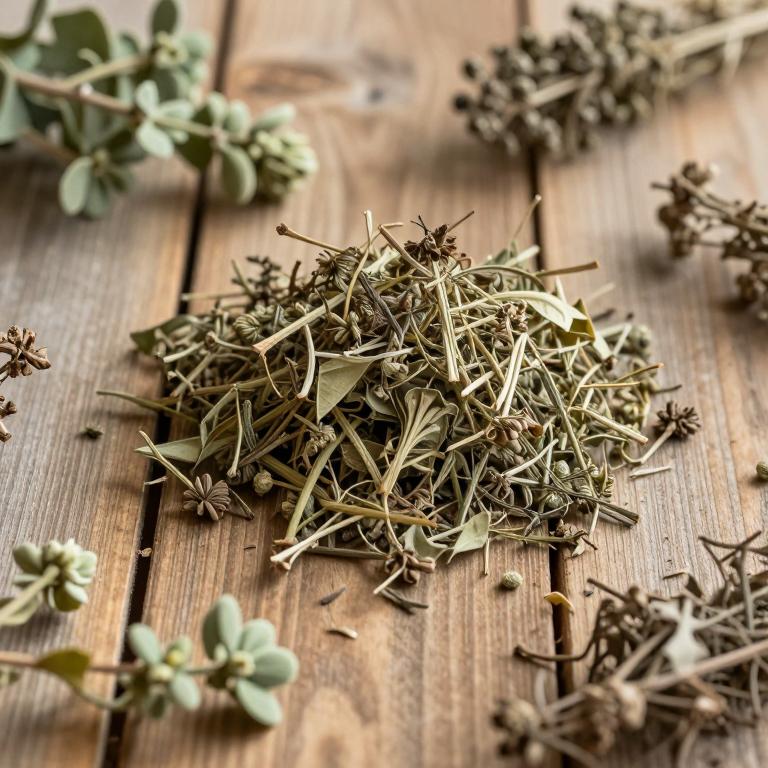
Pyrenacantha staudtii, scientifically known as Pyrenacantha staudtii, is a distinctive medicinal plant valued for its unique phytochemical profile. Native to specific ecological niches, this species is traditionally utilized in folk medicine to address various ailments. Understanding its botanical properties offers vital insights into potential therapeutic applications and natural pharmacology.
- Family
- Icacinaceae
- Native range
- Africa
- Parts used
- Leaf
- Common names
- Not available
- Scientific synonyms
- Chlamydocarya Staudtii
Names and Synonyms
Scientific Names
Accepted name
Pyrenacantha staudtiiSynonyms
- Chlamydocarya staudtii
Sources: Wikidata
Taxonomical Classification
This plant, known scientifically as Pyrenacantha staudtii, belongs to the kingdom Plantae and the phylum Streptophyta. Within the class Equisetopsida and subclass Magnoliidae, it is classified under the order Icacinales. Finally, it is a member of the Icacinaceae family and falls under the genus Pyrenacantha.
| Rank | Classification |
|---|---|
| Kingdom | Plantae |
| Phylum | Streptophyta |
| Class | Equisetopsida |
| Subclass | Magnoliidae |
| Order | Icacinales |
| Family | Icacinaceae |
| Genus | Pyrenacantha |
Sources: The World Checklist of Vascular Plants (WCVP)
Distribution
This plant exhibits a specific distribution across the tropical regions of the African continent. In West Tropical Africa, its presence is documented within the borders of Nigeria. Moving into the West-Central Tropical Africa zone, the species can be found in Cameroon. It also inhabits the diverse landscapes of Congo and Gabon within this same central region. Finally, its geographical range extends further into the Democratic Republic of the Congo.
| Region | Area |
|---|---|
| West Tropical Africa | Nigeria |
| West-Central Tropical Africa | Cameroon |
| West-Central Tropical Africa | Congo |
| West-Central Tropical Africa | Gabon |
| West-Central Tropical Africa | DR Congo |
| East Tropical Africa | Uganda |
| South Tropical Africa | Angola |
Sources: The World Checklist of Vascular Plants (WCVP)
Botanical Identification
Morphology
The morphology of Pyracantha staudtii is characterized by a woody growth form that functions primarily as a shrub. As a climbing plant, it exhibits a liana habit, utilizing its structure to ascend through surrounding vegetation. This climbing mechanism is classified as obligatory, meaning the plant relies on external support to achieve its full structural development rather than being self-supporting.
- Climber :
- liana
- Climber :
- obligatory
- Growth form :
- shrub
- Woodiness :
- woody
Sources: Global Inventory of Floras and Traits (GIFT)
Plant Parts
Pyrenacantha staudtii has 1 reported plant parts identified across 3 scientific publications and several other databases that are studied for medicinal purposes. The most consistently reported plant part include leaf.
| Plant part | Supporting sources | Consensus |
|---|---|---|
| Leaf | 3 supporting sources | ★★☆☆☆ |
Leaf
- Yao xue xue bao = Acta pharmaceutica Sinica
- European journal of pharmacology
- Acta poloniae pharmaceutica
Chemicals
Pyrenacantha staudtii has 4 reported phytochemicals identified across 3 scientific publications and several other databases. The most consistently reported chemicals include 3-Carbomethoxypyridine, 3-pyridinecarboxylic acid, BETA-SITOSTEROL, Taraxerol.
| Chemical | Supporting sources | Consensus |
|---|---|---|
| 3-Carbomethoxypyridine | 1 supporting sources | ★☆☆☆☆ |
| 3-pyridinecarboxylic acid | 1 supporting sources | ★☆☆☆☆ |
| BETA-SITOSTEROL | 1 supporting sources | ★☆☆☆☆ |
| Taraxerol | 1 supporting sources | ★☆☆☆☆ |
3-Carbomethoxypyridine
- Acta poloniae pharmaceutica
3-pyridinecarboxylic acid
- Yao xue xue bao = Acta pharmaceutica Sinica
BETA-SITOSTEROL
- Yao xue xue bao = Acta pharmaceutica Sinica
Taraxerol
- Yao xue xue bao = Acta pharmaceutica Sinica
Conditions
Pyrenacantha staudtii has 2 reported investigations on conditions identified across 3 scientific publications and several other databases. The most consistently reported conditions include gastric ulcer, xanthine oxidase.
| Condition | Supporting sources | Consensus |
|---|---|---|
| Gastric ulcer | 1 supporting sources | ★☆☆☆☆ |
| Xanthine oxidase | 1 supporting sources | ★☆☆☆☆ |
Gastric ulcer
- European journal of pharmacology
Xanthine oxidase
- Yao xue xue bao = Acta pharmaceutica Sinica
Preparations
Pyrenacantha staudtii has 3 reported preparations identified across 3 scientific publications and several other databases. The most consistently reported preparations include aqueous extract, aqueous extract of leaves, leaves.
| Preparation | Supporting sources | Consensus |
|---|---|---|
| Aqueous extract | 1 supporting sources | ★☆☆☆☆ |
| Aqueous extract of leaves | 1 supporting sources | ★☆☆☆☆ |
| Leaves | 1 supporting sources | ★☆☆☆☆ |
Aqueous extract
- European journal of pharmacology
Aqueous extract of leaves
- European journal of pharmacology
Leaves
- Yao xue xue bao = Acta pharmaceutica Sinica