Pycnanthemum verticillatum
Pycnanthemum verticillatum · Accepted scientific name
Scientific literature: Extensive (172 studies) · ★★★★☆
Pycnanthemum verticillatum, is commonly known as whorled mountain mint, a perennial herb native to North American woodlands. Renowned for its aromatic foliage and white flower clusters, this plant serves as a vital pollinator magnet. It possesses traditional medicinal properties, often utilized for its refreshing scent and various therapeutic applications.
- Family
- Not available
- Native range
- Northern America
- Parts used
- Not available
- Common names
- Not available
- Scientific synonyms
- Not available
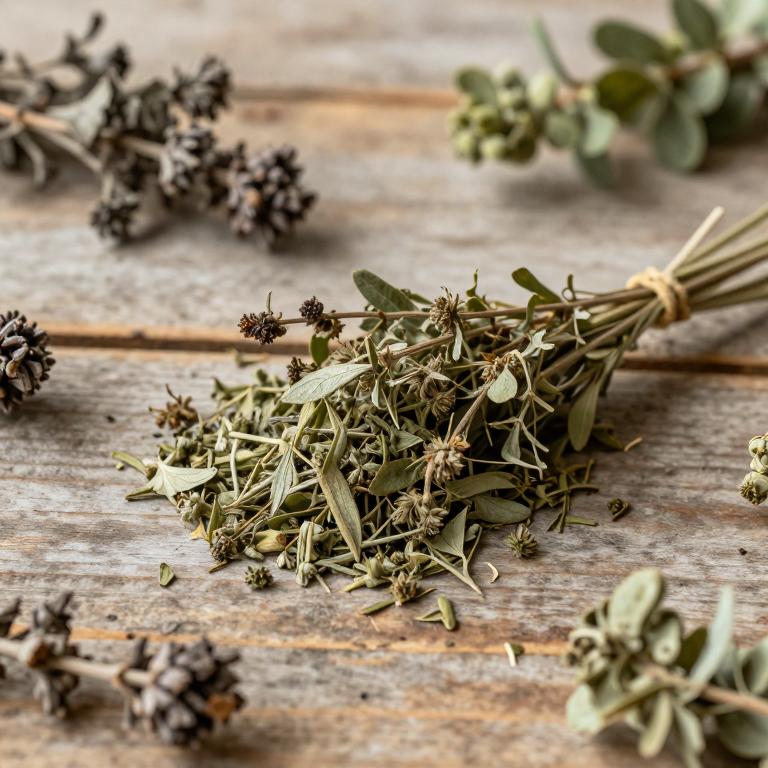
Names and Synonyms
Scientific Names
Accepted name
Pycnanthemum verticillatumDistribution
This plant exhibits a specific geographical range across parts of North America. In Eastern Canada, its distribution can be found within the province of Ontario. Moving into the North-Central United States, it is documented in the state of Illinois. The species also extends across the plains into Iowa and Kansas. Finally, its presence continues southward into Missouri.
| Region | Area |
|---|---|
| Eastern Canada | Ontario |
| North-Central U.S.A. | Illinois |
| North-Central U.S.A. | Iowa |
| North-Central U.S.A. | Kansas |
| North-Central U.S.A. | Missouri |
| North-Central U.S.A. | Nebraska |
| North-Central U.S.A. | Oklahoma |
| Northeastern U.S.A. | Connecticut |
| Northeastern U.S.A. | Massachusetts |
| Northeastern U.S.A. | Michigan |
Sources: The World Checklist of Vascular Plants (WCVP)
Botanical Identification
Life history
The life history of Pycnanthemum verticillatum is characterized by its status as a perennial plant, allowing it to persist across multiple growing seasons. As a hemicryptophyte, its perennating buds are located at the soil surface or just below it, protected by leaf litter or organic matter during unfavorable periods. This specific life form, categorized under both hemicryptophyte classifications, enables the plant to effectively manage seasonal transitions and re-emerge from its dormant state to support its long-term survival in its natural habitat.
- Life form :
- hemicryptophyte
- Lifecycle :
- perennial
Morphology
The morphology of Pycnanthemum verticillatum is characterized by a growth form classified as both a herb and a forb, exhibiting a non-woody structure throughout its development. This plant is strictly a terrestrial species, lacking any aquatic or semiaquatic tendencies, and it functions as a terrestrial organism rather than an epiphyte. It is a self-supporting plant that does not possess climbing mechanisms, such as liana or vine traits, nor does it require external support to maintain its stature. Furthermore, it is an independent organism, showing no parasitic behavior toward other plants.
- Aquatic :
- terrestrial
- Climber :
- self-supporting
- Epiphyte :
- terrestrial
- Growth form :
- herb
- Growth form :
- forb
- Parasite :
- independent
- Woodiness :
- non-woody
Reproduction
The reproduction of Pycnanthemum verticillatum is driven by its seasonal flowering cycle, which is timed to coincide with specific environmental conditions to ensure successful pollination and seed development. The flowering period typically commences in June and extends through July, though the specific timing can be variable depending on local climatic conditions. During this window, the plant produces its reproductive structures, facilitating the genetic exchange necessary for the continuation of the species. Following the peak flowering months, the plant focuses on seed maturation, which serves as the primary method for dispersal and the establishment of new individuals in its natural habitat.
- Flowering time :
- Jun
- Flowering time :
- Jul
Sources: Global Inventory of Floras and Traits (GIFT)
Chemicals
Pycnanthemum verticillatum has 15 reported phytochemicals identified across 0 scientific publications and several other databases. The most consistently reported chemicals include 1,8-Cineole, 1-OCTEN-3-OL, ALPHA-PINENE, BETA-PINENE, Caryophyllene.
| Chemical | Supporting sources | Consensus |
|---|---|---|
| 1,8-Cineole | 1 supporting sources | ★☆☆☆☆ |
| 1-OCTEN-3-OL | 1 supporting sources | ★☆☆☆☆ |
| ALPHA-PINENE | 1 supporting sources | ★☆☆☆☆ |
| BETA-PINENE | 1 supporting sources | ★☆☆☆☆ |
| Caryophyllene | 1 supporting sources | ★☆☆☆☆ |
| EO | 1 supporting sources | ★☆☆☆☆ |
| Germacrene D | 1 supporting sources | ★☆☆☆☆ |
| Isomenthone | 1 supporting sources | ★☆☆☆☆ |
| LIMONENE | 1 supporting sources | ★☆☆☆☆ |
| MENTHONE | 1 supporting sources | ★☆☆☆☆ |
1,8-Cineole
- Dr. Duke
1-OCTEN-3-OL
- Dr. Duke
ALPHA-PINENE
- Dr. Duke
BETA-PINENE
- Dr. Duke
Caryophyllene
- Dr. Duke
EO
- Dr. Duke
Germacrene D
- Dr. Duke
Isomenthone
- Dr. Duke
LIMONENE
- Dr. Duke
MENTHONE
- Dr. Duke
Activities
Pycnanthemum verticillatum has 157 reported activities identified across 0 scientific publications and several other databases. The most consistently reported activities include (-)-Chronotropic, (-)-Inotropic, ACE-Inhibitor, AChE-Inhibitor, Acaricide.
| Activity | Supporting sources | Consensus |
|---|---|---|
| (-)-Chronotropic | 1 supporting sources | ★☆☆☆☆ |
| (-)-Inotropic | 1 supporting sources | ★☆☆☆☆ |
| ACE-Inhibitor | 1 supporting sources | ★☆☆☆☆ |
| AChE-Inhibitor | 1 supporting sources | ★☆☆☆☆ |
| Acaricide | 1 supporting sources | ★☆☆☆☆ |
| Aldose-Reductase-Inhibitor | 1 supporting sources | ★☆☆☆☆ |
| Allelochemic | 1 supporting sources | ★☆☆☆☆ |
| Allelopathic | 1 supporting sources | ★☆☆☆☆ |
| Allergenic | 1 supporting sources | ★☆☆☆☆ |
| Analgesic | 1 supporting sources | ★☆☆☆☆ |
(-)-Chronotropic
- Dr. Duke
(-)-Inotropic
- Dr. Duke
ACE-Inhibitor
- Dr. Duke
AChE-Inhibitor
- Dr. Duke
Acaricide
- Dr. Duke
Aldose-Reductase-Inhibitor
- Dr. Duke
Allelochemic
- Dr. Duke
Allelopathic
- Dr. Duke
Allergenic
- Dr. Duke
Analgesic
- Dr. Duke