Pycnanthemum torreyi
Pycnanthemum torreyi · Accepted scientific name
Scientific literature: Extensive (179 studies) · ★★★★☆
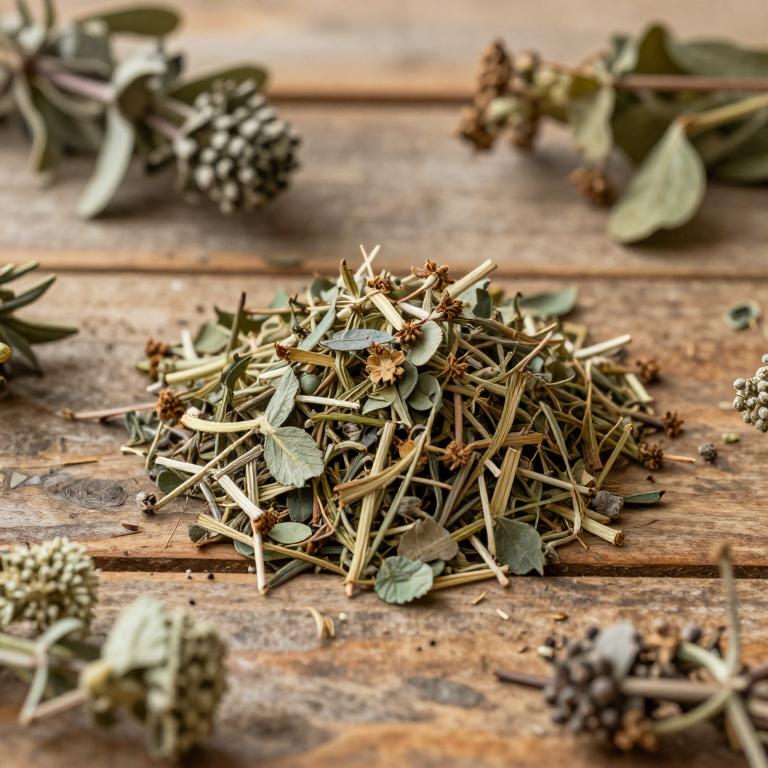
Pycnanthemum torreyi, scientifically known as Pycnanthemum torreyi, is a resilient perennial herb native to North American prairies. Often called Torreya Mountain Mint, this aromatic plant is prized for its dense, white flower clusters. It serves as a vital nectar source for pollinators and offers significant therapeutic potential in herbal medicine.
- Family
- Not available
- Native range
- Northern America
- Parts used
- Not available
- Common names
- Not available
- Scientific synonyms
- Not available
Names and Synonyms
Scientific Names
Accepted name
Pycnanthemum torreyiDistribution
This plant exhibits a specific range across different regions of the United States. In the North-Central U.S.A., it can be found growing in Illinois, Kansas, and Missouri. Its distribution also extends into the Northeastern U.S.A. through certain states. Specifically, this species is documented in both Connecticut and New Jersey. Together, these locations define the primary geographical footprint of the species.
| Region | Area |
|---|---|
| North-Central U.S.A. | Illinois |
| North-Central U.S.A. | Kansas |
| North-Central U.S.A. | Missouri |
| Northeastern U.S.A. | Connecticut |
| Northeastern U.S.A. | New Jersey |
| Northeastern U.S.A. | New York |
| Northeastern U.S.A. | Pennsylvania |
| Northeastern U.S.A. | West Virginia |
| Southeastern U.S.A. | Delaware |
| Southeastern U.S.A. | Georgia |
Sources: The World Checklist of Vascular Plants (WCVP)
Botanical Identification
Life history
The life history of Pycnanthemum torreyi is characterized by its status as a perennial plant, allowing it to persist across multiple growing seasons through established root systems. In terms of its structural growth strategy, it functions as a hemicryptophyte, meaning its perennial buds are located at or just below the soil surface, protected by leaf litter or surface debris during unfavorable conditions. This life form, classified both as a hemicryptophyte under different botanical frameworks, ensures its ability to re-emerge and thrive within its ecological niche year after year.
- Life form :
- hemicryptophyte
- Lifecycle :
- perennial
Morphology
The morphology of Pycnanthemum torreyi is characterized by its growth form as a non-woody herb, specifically classified as a forb. It functions as a self-supporting organism rather than a climber, exhibiting no liana or vine-like tendencies. The plant is strictly terrestrial in its habitat, lacking any aquatic, semiaquatic, or epiphytic characteristics. Furthermore, it is an independent organism that does not exhibit parasitic behavior, maintaining a growth habit that is entirely non-woody.
- Aquatic :
- terrestrial
- Climber :
- self-supporting
- Epiphyte :
- terrestrial
- Growth form :
- herb
- Growth form :
- forb
- Parasite :
- independent
- Woodiness :
- non-woody
Sources: Global Inventory of Floras and Traits (GIFT)
Chemicals
Pycnanthemum torreyi has 20 reported phytochemicals identified across 0 scientific publications and several other databases. The most consistently reported chemicals include 1,8-Cineole, 1-OCTEN-3-OL, ALPHA-PINENE, BETA-PINENE, CAMPHENE.
| Chemical | Supporting sources | Consensus |
|---|---|---|
| 1,8-Cineole | 1 supporting sources | ★☆☆☆☆ |
| 1-OCTEN-3-OL | 1 supporting sources | ★☆☆☆☆ |
| ALPHA-PINENE | 1 supporting sources | ★☆☆☆☆ |
| BETA-PINENE | 1 supporting sources | ★☆☆☆☆ |
| CAMPHENE | 1 supporting sources | ★☆☆☆☆ |
| Caryophyllene | 1 supporting sources | ★☆☆☆☆ |
| EO | 1 supporting sources | ★☆☆☆☆ |
| Germacrene D | 1 supporting sources | ★☆☆☆☆ |
| Isomenthone | 1 supporting sources | ★☆☆☆☆ |
| LIMONENE | 1 supporting sources | ★☆☆☆☆ |
1,8-Cineole
- Dr. Duke
1-OCTEN-3-OL
- Dr. Duke
ALPHA-PINENE
- Dr. Duke
BETA-PINENE
- Dr. Duke
CAMPHENE
- Dr. Duke
Caryophyllene
- Dr. Duke
EO
- Dr. Duke
Germacrene D
- Dr. Duke
Isomenthone
- Dr. Duke
LIMONENE
- Dr. Duke
Activities
Pycnanthemum torreyi has 159 reported activities identified across 0 scientific publications and several other databases. The most consistently reported activities include (-)-Chronotropic, (-)-Inotropic, ACE-Inhibitor, AChE-Inhibitor, Acaricide.
| Activity | Supporting sources | Consensus |
|---|---|---|
| (-)-Chronotropic | 1 supporting sources | ★☆☆☆☆ |
| (-)-Inotropic | 1 supporting sources | ★☆☆☆☆ |
| ACE-Inhibitor | 1 supporting sources | ★☆☆☆☆ |
| AChE-Inhibitor | 1 supporting sources | ★☆☆☆☆ |
| Acaricide | 1 supporting sources | ★☆☆☆☆ |
| Aldose-Reductase-Inhibitor | 1 supporting sources | ★☆☆☆☆ |
| Allelochemic | 1 supporting sources | ★☆☆☆☆ |
| Allelopathic | 1 supporting sources | ★☆☆☆☆ |
| Allergenic | 1 supporting sources | ★☆☆☆☆ |
| Analgesic | 1 supporting sources | ★☆☆☆☆ |
(-)-Chronotropic
- Dr. Duke
(-)-Inotropic
- Dr. Duke
ACE-Inhibitor
- Dr. Duke
AChE-Inhibitor
- Dr. Duke
Acaricide
- Dr. Duke
Aldose-Reductase-Inhibitor
- Dr. Duke
Allelochemic
- Dr. Duke
Allelopathic
- Dr. Duke
Allergenic
- Dr. Duke
Analgesic
- Dr. Duke