Pycnanthemum tenuifolium
Pycnanthemum tenuifolium · Accepted scientific name
Scientific literature: Very Extensive (269 studies) · ★★★★★
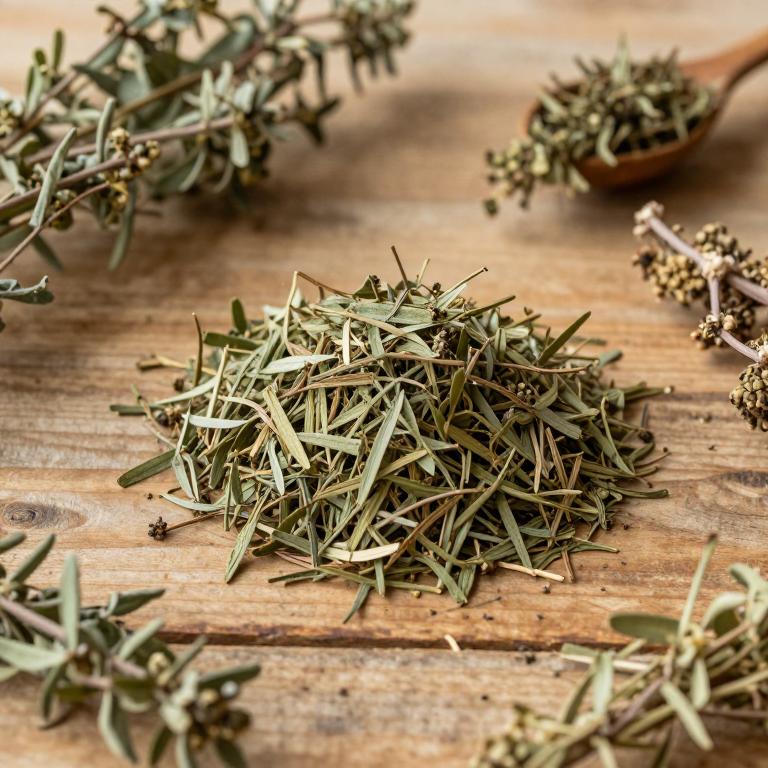
, scientifically known as Pycnanthemum tenuifolium, is commonly called narrow-leaf mountain mint. This aromatic perennial herb is native to North American prairies and woodlands. Renowned for its citrusy scent and ability to attract pollinators, it holds significant value in traditional herbalism and as a vital component of biodiverse ecosystems.
- Family
- Not available
- Native range
- Northern America
- Parts used
- Not available
- Common names
- Not available
- Scientific synonyms
- Not available
Names and Synonyms
Scientific Names
Accepted name
Pycnanthemum tenuifoliumDistribution
This plant exhibits a widespread presence across both Eastern Canada and the North-Central United States. Within the Canadian landscape, its range extends through the provinces of Ontario and Québec. Moving southward into the United States, the species is well-established in the North-Central region. Specifically, it can be found growing in the states of Illinois and Iowa. Additionally, its distribution reaches further west into the plains of Kansas.
| Region | Area |
|---|---|
| Eastern Canada | Ontario |
| Eastern Canada | Québec |
| North-Central U.S.A. | Illinois |
| North-Central U.S.A. | Iowa |
| North-Central U.S.A. | Kansas |
| North-Central U.S.A. | Minnesota |
| North-Central U.S.A. | Missouri |
| North-Central U.S.A. | Nebraska |
| North-Central U.S.A. | Oklahoma |
| North-Central U.S.A. | Wisconsin |
Sources: The World Checklist of Vascular Plants (WCVP)
Botanical Identification
Life history
The life history of Pycnanthemum tenuifolium is characterized by its status as a perennial organism, allowing it to persist through multiple growing seasons. As a hemicryptophyte, its perennimal life strategy involves protecting its dormant buds at or just below the soil surface during unfavorable conditions, ensuring its survival and ability to regrow once favorable environmental conditions return. This specific life form facilitates its long-term establishment within its habitat, utilizing its perennial nature to maintain a stable presence in the ecosystem over time.
- Life form :
- hemicryptophyte
- Lifecycle :
- perennial
Morphology
The morphology of Pycnanthemum tenuifolium is characterized by its growth form as a non-woody herb and forb, functioning as a self-supporting plant that does not exhibit climbing behavior. It is an independent organism, lacking any parasitic tendencies, and maintains a terrestrial existence rather than being aquatic, semiaquatic, or epiphytic. As a non-woody species, it lacks significant lignification, contributing to its herbaceous structure within its natural habitat.
- Aquatic :
- terrestrial
- Climber :
- self-supporting
- Epiphyte :
- terrestrial
- Growth form :
- herb
- Growth form :
- forb
- Parasite :
- independent
- Woodiness :
- non-woody
Physiology
The physiology of Pycnanthemum tenuifolium is characterized by a metabolic framework consistent with the C3 photosynthetic pathway, which dictates its carbon fixation processes and environmental adaptations. In this C3 pathway, the initial fixation of atmospheric carbon dioxide is catalyzed by the enzyme ribulose-1,5-bisphosphate carboxylase/oxygenase (RuBisCO), leading to the direct production of three-carbon compounds within the mesophyll cells. This metabolic strategy requires the plant to manage the trade-offs between efficient carbon assimilation and transpirational water loss, particularly as the plant regulates its stomatal conductance to maintain internal turgor and gas exchange. The energy utilization efficiency of the plant is fundamentally linked to this C3 mechanism, influencing its growth rates and resource allocation patterns in response to light availability and ambient temperature fluctuations.
- Photosynthetic pathway :
- C3
Reproduction
The reproduction of Pycnanthemum tenuifolium is characterized by a specific seasonal flowering window and the production of minute seeds. The plant enters its flowering stage in June, with the blooming period typically concluding in July. Throughout this reproductive cycle, the plant produces seeds that are remarkably uniform in size; the seed mass is consistent across the population, with a mean, maximum, and minimum value all measured at 7e-05 g.
- Flowering time :
- Jun
- Flowering time :
- Jul
- Seed mass mean:
- 7e-05 g
Sources: Global Inventory of Floras and Traits (GIFT)
Chemicals
Pycnanthemum tenuifolium has 42 reported phytochemicals identified across 0 scientific publications and several other databases. The most consistently reported chemicals include 1,8-Cineole, 1-OCTEN-3-OL, 3-Hexenol, 3-OCTANOL, ALPHA-PHELLANDRENE.
| Chemical | Supporting sources | Consensus |
|---|---|---|
| 1,8-Cineole | 1 supporting sources | ★☆☆☆☆ |
| 1-OCTEN-3-OL | 1 supporting sources | ★☆☆☆☆ |
| 3-Hexenol | 1 supporting sources | ★☆☆☆☆ |
| 3-OCTANOL | 1 supporting sources | ★☆☆☆☆ |
| ALPHA-PHELLANDRENE | 1 supporting sources | ★☆☆☆☆ |
| ALPHA-PINENE | 1 supporting sources | ★☆☆☆☆ |
| Allo-Aromadendrene | 1 supporting sources | ★☆☆☆☆ |
| BETA-ELEMENE | 1 supporting sources | ★☆☆☆☆ |
| BETA-PINENE | 1 supporting sources | ★☆☆☆☆ |
| BORNYL ACETATE | 1 supporting sources | ★☆☆☆☆ |
1,8-Cineole
- Dr. Duke
1-OCTEN-3-OL
- Dr. Duke
3-Hexenol
- Dr. Duke
3-OCTANOL
- Dr. Duke
ALPHA-PHELLANDRENE
- Dr. Duke
ALPHA-PINENE
- Dr. Duke
Allo-Aromadendrene
- Dr. Duke
BETA-ELEMENE
- Dr. Duke
BETA-PINENE
- Dr. Duke
BORNYL ACETATE
- Dr. Duke
Activities
Pycnanthemum tenuifolium has 227 reported activities identified across 0 scientific publications and several other databases. The most consistently reported activities include (-)-Chronotropic, (-)-Inotropic, ACE-Inhibitor, AChE-Inhibitor, Abortifacient.
| Activity | Supporting sources | Consensus |
|---|---|---|
| (-)-Chronotropic | 1 supporting sources | ★☆☆☆☆ |
| (-)-Inotropic | 1 supporting sources | ★☆☆☆☆ |
| ACE-Inhibitor | 1 supporting sources | ★☆☆☆☆ |
| AChE-Inhibitor | 1 supporting sources | ★☆☆☆☆ |
| Abortifacient | 1 supporting sources | ★☆☆☆☆ |
| Acaricide | 1 supporting sources | ★☆☆☆☆ |
| Aldose-Reductase-Inhibitor | 1 supporting sources | ★☆☆☆☆ |
| Allelochemic | 1 supporting sources | ★☆☆☆☆ |
| Allelopathic | 1 supporting sources | ★☆☆☆☆ |
| Allergenic | 1 supporting sources | ★☆☆☆☆ |
(-)-Chronotropic
- Dr. Duke
(-)-Inotropic
- Dr. Duke
ACE-Inhibitor
- Dr. Duke
AChE-Inhibitor
- Dr. Duke
Abortifacient
- Dr. Duke
Acaricide
- Dr. Duke
Aldose-Reductase-Inhibitor
- Dr. Duke
Allelochemic
- Dr. Duke
Allelopathic
- Dr. Duke
Allergenic
- Dr. Duke