southern mountain-mint
Pycnanthemum pycnanthemoides · Accepted scientific name
Scientific literature: Very Extensive (229 studies) · ★★★★★
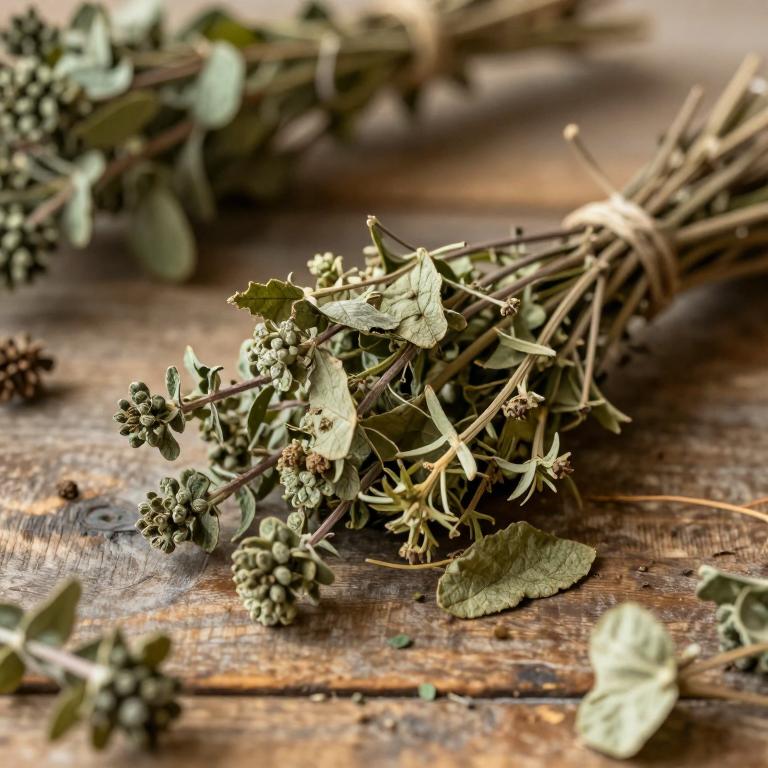
Southern mountain-mint, scientifically known as Pycnanthemum pycnanthemoides, is a resilient perennial herb native to North American woodlands. Renowned for its aromatic foliage and clusters of white flowers, it serves as a vital pollinator magnet. Traditionally used in herbalism, this plant offers unique medicinal properties and ecological benefits.
- Family
- Lamiaceae
- Native range
- Northern America
- Parts used
- Not available
- Common names
- Southern Mountain-Mint
- Scientific synonyms
- Tullia Pycnanthemoides · Koellia Pycnanthemodes · 1 more
Names and Synonyms
Common Names
- southern mountain-mint
Scientific Names
Accepted name
Pycnanthemum pycnanthemoidesSynonyms
- Tullia pycnanthemoides
- Koellia pycnanthemodes
- Pycnanthemum incanum var. tullia
Sources: Wikidata, Catalogue of Life
Taxonomical Classification
This plant, known as Pycnanthemum pycnanthemoides, belongs to the kingdom Plantae and the phylum Streptophyta. Within the class Equisetopsida and subclass Magnoliidae, it is classified under the order Lamiales and the family Lamiaceae. Finally, it is situated within the genus Pycnanthemum.
| Rank | Classification |
|---|---|
| Kingdom | Plantae |
| Phylum | Streptophyta |
| Class | Equisetopsida |
| Subclass | Magnoliidae |
| Order | Lamiales |
| Family | Lamiaceae |
| Genus | Pycnanthemum |
Sources: The World Checklist of Vascular Plants (WCVP)
Distribution
This plant exhibits a wide distribution across several regions of the United States. In the North-Central region, it can be found growing in Illinois. Its presence extends into the Northeastern United States, specifically within the state of Indiana and across West Virginia. Moving toward the Southeastern United States, the species is also located in Alabama. Finally, its range continues through the landscapes of Georgia.
| Region | Area |
|---|---|
| North-Central U.S.A. | Illinois |
| Northeastern U.S.A. | Indiana |
| Northeastern U.S.A. | West Virginia |
| Southeastern U.S.A. | Alabama |
| Southeastern U.S.A. | Georgia |
| Southeastern U.S.A. | Kentucky |
| Southeastern U.S.A. | North Carolina |
| Southeastern U.S.A. | South Carolina |
| Southeastern U.S.A. | Tennessee |
| Southeastern U.S.A. | Virginia |
Sources: The World Checklist of Vascular Plants (WCVP)
Botanical Identification
Life history
The life history of Pycnanthemum pycnanthemoides is characterized by its status as a perennial plant, meaning it undergoes multiple growing seasons and maintains its presence in the ecosystem over many years. As a hemicryptophyte, its survival strategy involves sheltering its perenn Perennating buds at the soil surface or just below it, protected by leaf litter or other organic debris during unfavorable conditions. This specific life form, classified both as a hemicryptophyte and a hemi-crypto-phyte within different taxonomic frameworks, allows the plant to persist through seasonal changes by regenerating from these near-surface buds each spring.
- Life form :
- hemicryptophyte
- Lifecycle :
- perennial
Morphology
The morphology of Pycnanthemum pycnanthemoides is characterized by its growth form as a non-woody herb, specifically classified as a forb. This plant is strictly terrestrial in its habitat, lacking any aquatic or semiaquatic tendencies, and functions as an independent organism without parasitic behavior. In terms of its physical structure, it is a self-supporting species rather than a climber, liana, or vine, and it does not exhibit epiphytic growth patterns, remaining rooted in the soil. Its vegetative structure is defined by its non-woody nature, which is consistent with its herbaceous habit.
- Aquatic :
- terrestrial
- Climber :
- self-supporting
- Epiphyte :
- terrestrial
- Growth form :
- herb
- Growth form :
- forb
- Parasite :
- independent
- Woodiness :
- non-woody
Sources: Global Inventory of Floras and Traits (GIFT)
Chemicals
Pycnanthemum pycnanthemoides has 28 reported phytochemicals identified across 0 scientific publications and several other databases. The most consistently reported chemicals include 1,8-Cineole, MYRCENE, Piperitenone, (R)-(+)-Pulegone, 1-OCTEN-3-OL.
| Chemical | Supporting sources | Consensus |
|---|---|---|
| 1,8-Cineole | 2 supporting sources | ★☆☆☆☆ |
| MYRCENE | 2 supporting sources | ★☆☆☆☆ |
| Piperitenone | 2 supporting sources | ★☆☆☆☆ |
| (R)-(+)-Pulegone | 1 supporting sources | ★☆☆☆☆ |
| 1-OCTEN-3-OL | 1 supporting sources | ★☆☆☆☆ |
| ALPHA-PINENE | 1 supporting sources | ★☆☆☆☆ |
| BETA-PINENE | 1 supporting sources | ★☆☆☆☆ |
| Borneol | 1 supporting sources | ★☆☆☆☆ |
| Caryophyllene | 1 supporting sources | ★☆☆☆☆ |
| EO | 1 supporting sources | ★☆☆☆☆ |
1,8-Cineole
- Dr. Duke
- Journal of agricultural and food chemistry
MYRCENE
- Dr. Duke
- Journal of agricultural and food chemistry
Piperitenone
- Dr. Duke
- Journal of agricultural and food chemistry
(R)-(+)-Pulegone
- Journal of agricultural and food chemistry
1-OCTEN-3-OL
- Dr. Duke
ALPHA-PINENE
- Dr. Duke
BETA-PINENE
- Dr. Duke
Borneol
- Dr. Duke
Caryophyllene
- Dr. Duke
EO
- Dr. Duke
Activities
Pycnanthemum pycnanthemoides has 198 reported activities identified across 0 scientific publications and several other databases. The most consistently reported activities include (-)-Chronotropic, (-)-Inotropic, ACE-Inhibitor, AChE-Inhibitor, Acaricide.
| Activity | Supporting sources | Consensus |
|---|---|---|
| (-)-Chronotropic | 1 supporting sources | ★☆☆☆☆ |
| (-)-Inotropic | 1 supporting sources | ★☆☆☆☆ |
| ACE-Inhibitor | 1 supporting sources | ★☆☆☆☆ |
| AChE-Inhibitor | 1 supporting sources | ★☆☆☆☆ |
| Acaricide | 1 supporting sources | ★☆☆☆☆ |
| Aldose-Reductase-Inhibitor | 1 supporting sources | ★☆☆☆☆ |
| Allelochemic | 1 supporting sources | ★☆☆☆☆ |
| Allelopathic | 1 supporting sources | ★☆☆☆☆ |
| Allergenic | 1 supporting sources | ★☆☆☆☆ |
| Analgesic | 1 supporting sources | ★☆☆☆☆ |
(-)-Chronotropic
- Dr. Duke
(-)-Inotropic
- Dr. Duke
ACE-Inhibitor
- Dr. Duke
AChE-Inhibitor
- Dr. Duke
Acaricide
- Dr. Duke
Aldose-Reductase-Inhibitor
- Dr. Duke
Allelochemic
- Dr. Duke
Allelopathic
- Dr. Duke
Allergenic
- Dr. Duke
Analgesic
- Dr. Duke