Pycnanthemum montanum
Pycnanthemum montanum · Accepted scientific name
Scientific literature: Very Extensive (239 studies) · ★★★★★
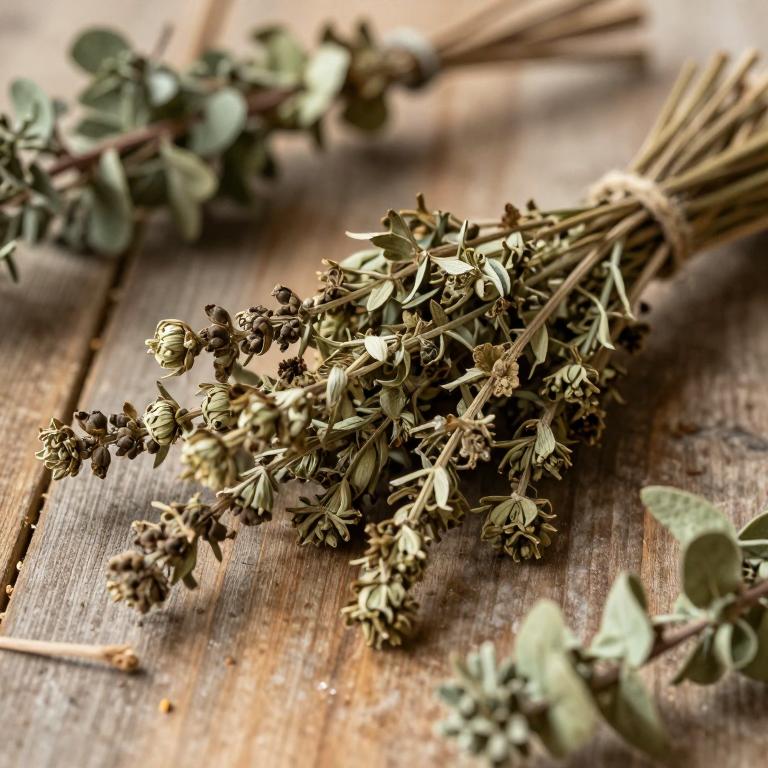
, scientifically known as Pycnanthemum montanum, is a perennial herb belonging to the Lamiaceae family. Commonly called Mountain Mountain Mint, this resilient plant is prized for its aromatic foliage and delicate white flowers. Often utilized in traditional herbalism, it serves as a vital resource for pollinators in diverse ecosystems.
- Family
- Not available
- Native range
- Northern America
- Parts used
- Not available
- Common names
- Not available
- Scientific synonyms
- Not available
Names and Synonyms
Scientific Names
Accepted name
Pycnanthemum montanumDistribution
This plant exhibits a specific range across several regions of the eastern United States. In the Northeastern U.S.A., it can be found growing in West Virginia. Its distribution extends significantly into the Southeastern U.S.A. through several states. Specifically, it inhabits parts of Alabama and Georgia within this southern region. Finally, the plant is also documented across North Carolina and South Carolina.
| Region | Area |
|---|---|
| Northeastern U.S.A. | West Virginia |
| Southeastern U.S.A. | Alabama |
| Southeastern U.S.A. | Georgia |
| Southeastern U.S.A. | North Carolina |
| Southeastern U.S.A. | South Carolina |
| Southeastern U.S.A. | Tennessee |
| Southeastern U.S.A. | Virginia |
Sources: The World Checklist of Vascular Plants (WCVP)
Botanical Identification
Life history
The life history of Pycnanthemum montanum is characterized by its classification as a perennial, meaning it completes its life cycle over multiple years rather than within a single growing season. Structurally, the plant functions as a hemicryptophyte, a life form in which the perennating buds are located at the soil surface, protected by leaf litter or other organic debris during unfavorable environmental conditions. This hemicryptophytic strategy allows the species to persist through seasonal changes, utilizing its underground structures to regrow each year.
- Life form :
- hemicryptophyte
- Lifecycle :
- perennial
Morphology
The morphology of Pycnanthemum montanum is characterized by its growth form as a non-woody herb and specifically a forb. As a self-supporting plant, it does not exhibit climbing behavior, functioning instead as a sturdy, upright organism. It is categorized as a terrestrial species, lacking any aquatic or semiaquatic adaptations, and it grows as an independent organism without any parasitic tendencies. Furthermore, it is not an epiphyte, maintaining a strictly terrestrial life habit.
- Aquatic :
- terrestrial
- Climber :
- self-supporting
- Epiphyte :
- terrestrial
- Growth form :
- herb
- Growth form :
- forb
- Parasite :
- independent
- Woodiness :
- non-woody
Sources: Global Inventory of Floras and Traits (GIFT)
Chemicals
Pycnanthemum montanum has 29 reported phytochemicals identified across 0 scientific publications and several other databases. The most consistently reported chemicals include 1,8-Cineole, 1-OCTEN-3-OL, 1-Octen-3-yl acetate, 3-OCTANOL, ALPHA-PINENE.
| Chemical | Supporting sources | Consensus |
|---|---|---|
| 1,8-Cineole | 1 supporting sources | ★☆☆☆☆ |
| 1-OCTEN-3-OL | 1 supporting sources | ★☆☆☆☆ |
| 1-Octen-3-yl acetate | 1 supporting sources | ★☆☆☆☆ |
| 3-OCTANOL | 1 supporting sources | ★☆☆☆☆ |
| ALPHA-PINENE | 1 supporting sources | ★☆☆☆☆ |
| ALPHA-THUJENE | 1 supporting sources | ★☆☆☆☆ |
| BETA-PINENE | 1 supporting sources | ★☆☆☆☆ |
| Bicyclogermacrene | 1 supporting sources | ★☆☆☆☆ |
| Borneol | 1 supporting sources | ★☆☆☆☆ |
| CAMPHENE | 1 supporting sources | ★☆☆☆☆ |
1,8-Cineole
- Dr. Duke
1-OCTEN-3-OL
- Dr. Duke
1-Octen-3-yl acetate
- Dr. Duke
3-OCTANOL
- Dr. Duke
ALPHA-PINENE
- Dr. Duke
ALPHA-THUJENE
- Dr. Duke
BETA-PINENE
- Dr. Duke
Bicyclogermacrene
- Dr. Duke
Borneol
- Dr. Duke
CAMPHENE
- Dr. Duke
Activities
Pycnanthemum montanum has 210 reported activities identified across 0 scientific publications and several other databases. The most consistently reported activities include (-)-Chronotropic, (-)-Inotropic, ACE-Inhibitor, AChE-Inhibitor, Acaricide.
| Activity | Supporting sources | Consensus |
|---|---|---|
| (-)-Chronotropic | 1 supporting sources | ★☆☆☆☆ |
| (-)-Inotropic | 1 supporting sources | ★☆☆☆☆ |
| ACE-Inhibitor | 1 supporting sources | ★☆☆☆☆ |
| AChE-Inhibitor | 1 supporting sources | ★☆☆☆☆ |
| Acaricide | 1 supporting sources | ★☆☆☆☆ |
| Aldose-Reductase-Inhibitor | 1 supporting sources | ★☆☆☆☆ |
| Allelochemic | 1 supporting sources | ★☆☆☆☆ |
| Allelopathic | 1 supporting sources | ★☆☆☆☆ |
| Allergenic | 1 supporting sources | ★☆☆☆☆ |
| Analgesic | 1 supporting sources | ★☆☆☆☆ |
(-)-Chronotropic
- Dr. Duke
(-)-Inotropic
- Dr. Duke
ACE-Inhibitor
- Dr. Duke
AChE-Inhibitor
- Dr. Duke
Acaricide
- Dr. Duke
Aldose-Reductase-Inhibitor
- Dr. Duke
Allelochemic
- Dr. Duke
Allelopathic
- Dr. Duke
Allergenic
- Dr. Duke
Analgesic
- Dr. Duke