Pycnanthemum flexuosum
Pycnanthemum flexuosum · Accepted scientific name
Scientific literature: Very Sparse (13 studies) · ★☆☆☆☆
Pycnanthemum flexuosum, scientifically known as Pycnanthemum flexuosum, is a resilient perennial herb native to North America. Commonly called mountain mint, this aromatic plant is celebrated for its refreshing scent and medicinal potential. Its bioactive compounds offer therapeutic benefits, making it a valuable subject in traditional and modern herbal studies.
- Family
- Not available
- Native range
- Northern America
- Parts used
- Not available
- Common names
- Not available
- Scientific synonyms
- Not available
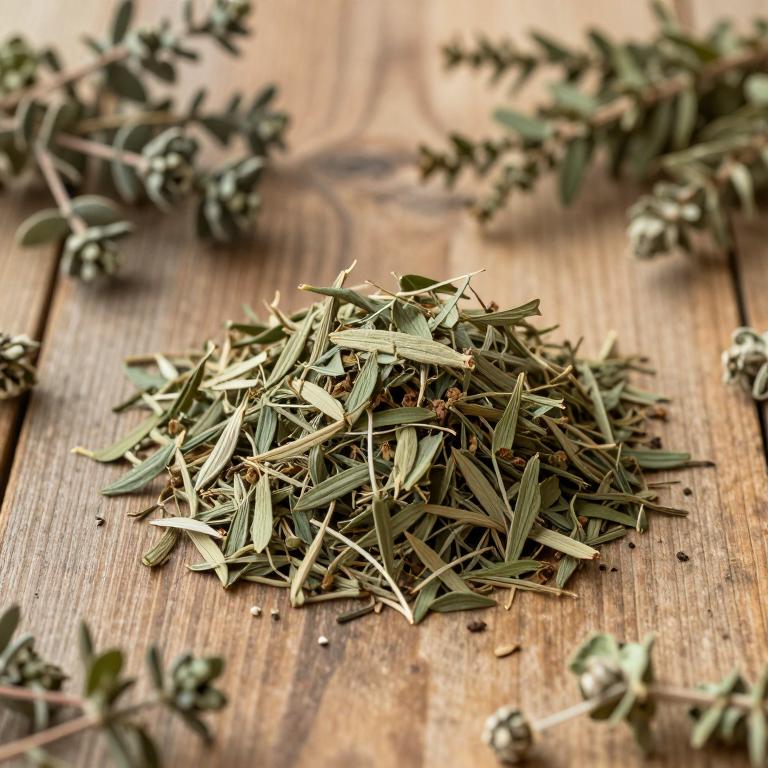
Names and Synonyms
Scientific Names
Accepted name
Pycnanthemum flexuosumDistribution
This plant is primarily distributed throughout the Southeastern United States. Its natural range includes several key states within this lush region. Specifically, you can find Pycnanthemum flexuosum growing in Alabama and Florida. It is also commonly documented across the landscapes of Georgia and Mississippi. Finally, its geographical presence extends into the state of North Carolina.
| Region | Area |
|---|---|
| Southeastern U.S.A. | Alabama |
| Southeastern U.S.A. | Florida |
| Southeastern U.S.A. | Georgia |
| Southeastern U.S.A. | Mississippi |
| Southeastern U.S.A. | North Carolina |
| Southeastern U.S.A. | South Carolina |
| Southeastern U.S.A. | Virginia |
| Southeastern U.S.A. | District of Columbia |
Sources: The World Checklist of Vascular Plants (WCVP)
Botanical Identification
Life history
The life history of Pycnanthemum flexuosum is characterized by its status as a perennial plant, allowing it to persist through multiple growing seasons. As a hemicryptophyte, its perennating buds are located at or just below the soil surface, protected by leaf litter or surface debris during unfavorable periods. This life form, classified both as a hemicryptophyte and specifically under the hemicryptophyte growth habit, enables the species to effectively navigate seasonal changes and re-emerge annually from its protected underground structures.
- Life form :
- hemicryptophyte
- Lifecycle :
- perennial
Morphology
The morphology of Pycnanthemum flexuosum is characterized by its growth form as a non-woody herb and forb, typically presenting a self-supporting structure rather than functioning as a climber, liana, or vine. It is a terrestrial species, lacking aquatic or semiaquatic tendencies, and does not exhibit epiphytic behavior. As an independent organism, it does not function as a parasite, maintaining a self-sufficient biological profile throughout its development.
- Aquatic :
- terrestrial
- Climber :
- self-supporting
- Epiphyte :
- terrestrial
- Growth form :
- herb
- Growth form :
- forb
- Parasite :
- independent
- Woodiness :
- non-woody
Reproduction
The reproduction of Pycnanthemum flexuosum is characterized by the production of specialized seeds that facilitate its dispersal and establishment within its ecosystem. Morphological analysis of its reproductive output reveals a highly consistent seed profile, with no observed variance in individual seed weights. The seed mass is measured at a constant mean of 8.8e-05 g, a value that is identically reflected in both the minimum and maximum recorded seed mass measurements (8.8e-05 g). This uniformity in seed mass suggests a highly standardized reproductive strategy, ensuring that each propagule carries a predictable amount of energy reserves to support initial germination and seedling development.
- Seed mass mean:
- 8.8e-05 g
Sources: Global Inventory of Floras and Traits (GIFT)
Chemicals
Pycnanthemum flexuosum has 4 reported phytochemicals identified across 0 scientific publications and several other databases. The most consistently reported chemicals include EO, Germacrene D, LINALYL ACETATE, Linalol.
| Chemical | Supporting sources | Consensus |
|---|---|---|
| EO | 1 supporting sources | ★☆☆☆☆ |
| Germacrene D | 1 supporting sources | ★☆☆☆☆ |
| LINALYL ACETATE | 1 supporting sources | ★☆☆☆☆ |
| Linalol | 1 supporting sources | ★☆☆☆☆ |
EO
- Dr. Duke
Germacrene D
- Dr. Duke
LINALYL ACETATE
- Dr. Duke
Linalol
- Dr. Duke
Activities
Pycnanthemum flexuosum has 9 reported activities identified across 0 scientific publications and several other databases. The most consistently reported activities include Anesthetic, Antioxidant, Antispasmodic, FLavor, Motor-Depressant.
| Activity | Supporting sources | Consensus |
|---|---|---|
| Anesthetic | 1 supporting sources | ★☆☆☆☆ |
| Antioxidant | 1 supporting sources | ★☆☆☆☆ |
| Antispasmodic | 1 supporting sources | ★☆☆☆☆ |
| FLavor | 1 supporting sources | ★☆☆☆☆ |
| Motor-Depressant | 1 supporting sources | ★☆☆☆☆ |
| Perfumery | 1 supporting sources | ★☆☆☆☆ |
| Pesticide | 1 supporting sources | ★☆☆☆☆ |
| Pheromone | 1 supporting sources | ★☆☆☆☆ |
| Sedative | 1 supporting sources | ★☆☆☆☆ |
Anesthetic
- Dr. Duke
Antioxidant
- Dr. Duke
Antispasmodic
- Dr. Duke
FLavor
- Dr. Duke
Motor-Depressant
- Dr. Duke
Perfumery
- Dr. Duke
Pesticide
- Dr. Duke
Pheromone
- Dr. Duke
Sedative
- Dr. Duke