Purshia mexicana
Purshia mexicana · Accepted scientific name
Scientific literature: Very Sparse (8 studies) · ★☆☆☆☆
Purshia mexicana, scientifically known as Purshia mexicana, is a resilient medicinal herb valued for its diverse therapeutic properties. Often utilized in traditional healing practices, this plant is recognized for its potential antioxidant and anti-inflammatory benefits. Understanding its botanical characteristics is essential for exploring its significant role in natural pharmacology.
- Family
- Rosaceae
- Native range
- Northern America
- Parts used
- Not available
- Common names
- Not available
- Scientific synonyms
- Cowania Mexicana · Greggia Purpurea · 3 more
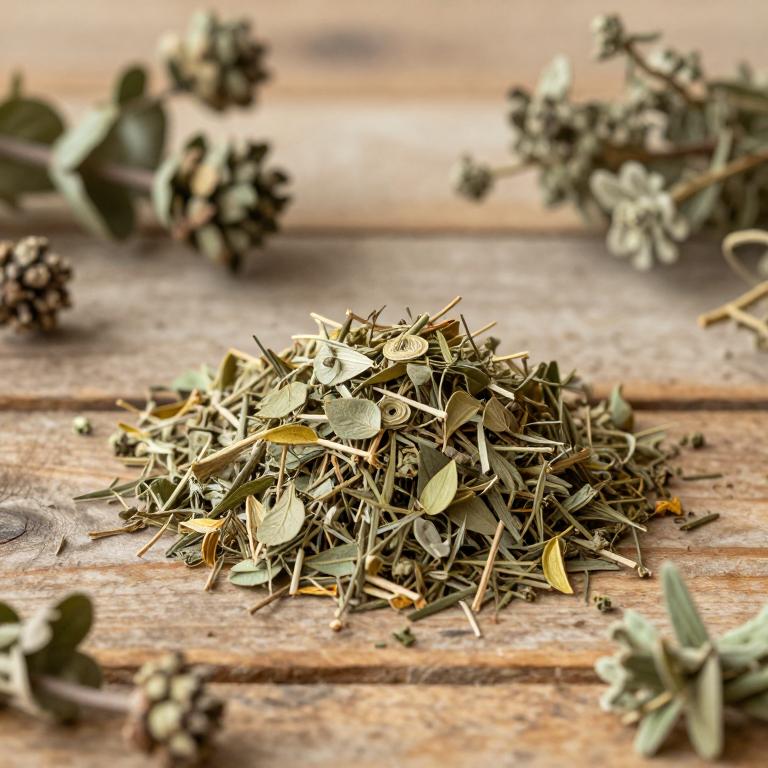
Names and Synonyms
Scientific Names
Accepted name
Purshia mexicanaSynonyms
- Cowania mexicana
- Greggia purpurea
- Cowania mexicana
- Cowania purpurea
- Cowania mexicana var. dubia
Sources: Wikidata, Catalogue of Life
Taxonomical Classification
This plant belongs to the kingdom Plantae and the phylum Streptophyta, falling under the class Equisetopsida and subclass Magnoliidae. Within the order Rosales and the family Rosaceae, it is classified under the genus Purshia. Specifically, Purshia mexicana represents a unique medicinal species within this taxonomic hierarchy.
| Rank | Classification |
|---|---|
| Kingdom | Plantae |
| Phylum | Streptophyta |
| Class | Equisetopsida |
| Subclass | Magnoliidae |
| Order | Rosales |
| Family | Rosaceae |
| Genus | Purshia |
Sources: The World Checklist of Vascular Plants (WCVP)
Distribution
This plant exhibits a wide range of presence across several key regions within Mexico. Specifically, its habitat extends into the Northeast portion of the country. It is also found throughout the Northwest territories of the nation. Furthermore, the species is distributed across the Southwest region as well. Together, these areas define the primary geographical footprint of Purshia mexicana.
| Region | Area |
|---|---|
| Mexico | Mexico Northeast |
| Mexico | Mexico Northwest |
| Mexico | Mexico Southwest |
Sources: The World Checklist of Vascular Plants (WCVP)
Botanical Identification
Life history
The life history of Purshia mexicana is characterized by its classification as a perennial, meaning it lives for more than two years and undergoes multiple growth cycles. As a perennial species, it establishes a persistent root system that allows it to survive through unfavorable seasons and regrow during favorable environmental conditions. Throughout its lifespan, the plant undergoes developmental stages typical of its taxa, progressing from seedling establishment to vegetative growth and, eventually, to reproductive maturity where it produces flowers and seeds. This perennial nature provides the plant with a stable presence in its habitat, allowing it to accumulate resources over several years to support episodic flowering and seed dispersal events.
- Lifecycle :
- perennial
Morphology
The morphology of Purshia mexicana is characterized by a woody structure that allows it to function primarily as a shrub or tree, reaching an average height of approximately 7.92 m. As a terrestrial species, it does not exhibit aquatic or epiphytic tendencies, maintaining an independent existence without acting as a parasite on other organisms. In terms of its structural habit, the plant is categorized as self-supporting, lacking the climbing mechanisms associated with vines or lianas.
- Aquatic :
- terrestrial
- Climber :
- self-supporting
- Epiphyte :
- terrestrial
- Growth form :
- tree
- Growth form :
- shrub
- Parasite :
- independent
- Plant height mean:
- 7.92 m
- Woodiness :
- woody
Physiology
The physiology of Purshia mexicana is characterized by a specialized metabolic framework designed to optimize carbon fixation and energy utilization within its specific environmental niche. A fundamental aspect of its metabolic efficiency is its photosynthetic pathway, which is strictly categorized as C3. In this physiological process, the plant utilizes the enzyme RuBisCO to fix atmospheric carbon dioxide directly into a three-carbon compound, such as 3-phosphoglycerate, during the initial stage of the Calvin cycle. This C3 pathway dictates the plant's water-use efficiency and its adaptive strategies regarding stomatal conductance and temperature regulation, as it lacks the specialized Kranz anatomy or temporal separation of carbon fixation found in C4 or CAM species. Consequently, its physiological performance is closely tied to the availability of moisture and light intensity, influencing its overall growth rate and resource allocation patterns.
- Photosynthetic pathway :
- C3
Reproduction
Reproduction in Purshia mexicana is characterized by the production of small, lightweight seeds that play a critical role in its propagation strategy. The seed mass of this species is remarkably consistent, with a mean mass of approximately 0.00699333333333333 g. Individual seeds fall within a narrow range of weight, with a minimum recorded mass of 0.0068 g and a maximum of 0.00709 g. In terms of its dispersal syndrome, the plant utilizes an anemochorous strategy, relying on wind to transport its seeds to new locations, which complements its overall reproductive capability within its ecosystem.
- Dispersal syndrome :
- anemochorous
- Seed mass max:
- 0.00709 g
- Seed mass mean:
- 0.00699333333333333 g
- Seed mass min:
- 0.0068 g
Sources: Global Inventory of Floras and Traits (GIFT)
Chemicals
Purshia mexicana has 5 reported phytochemicals identified across 0 scientific publications and several other databases. The most consistently reported chemicals include 15-Oxo-23,24-dihydrocucurbitacin F, 23,24-Dihydrocucurbitacin F, Cucurbitacin F, Lithospermoside, Stenophyllanin A.
| Chemical | Supporting sources | Consensus |
|---|---|---|
| 15-Oxo-23,24-dihydrocucurbitacin F | 1 supporting sources | ★☆☆☆☆ |
| 23,24-Dihydrocucurbitacin F | 1 supporting sources | ★☆☆☆☆ |
| Cucurbitacin F | 1 supporting sources | ★☆☆☆☆ |
| Lithospermoside | 1 supporting sources | ★☆☆☆☆ |
| Stenophyllanin A | 1 supporting sources | ★☆☆☆☆ |
15-Oxo-23,24-dihydrocucurbitacin F
- Chemical & pharmaceutical bulletin
23,24-Dihydrocucurbitacin F
- Chemical & pharmaceutical bulletin
Cucurbitacin F
- Chemical & pharmaceutical bulletin
Lithospermoside
- Cancer letters
Stenophyllanin A
- Cancer letters