forest burr
Pupalia lappacea · Accepted scientific name
Scientific literature: Very Sparse (10 studies) · ★☆☆☆☆
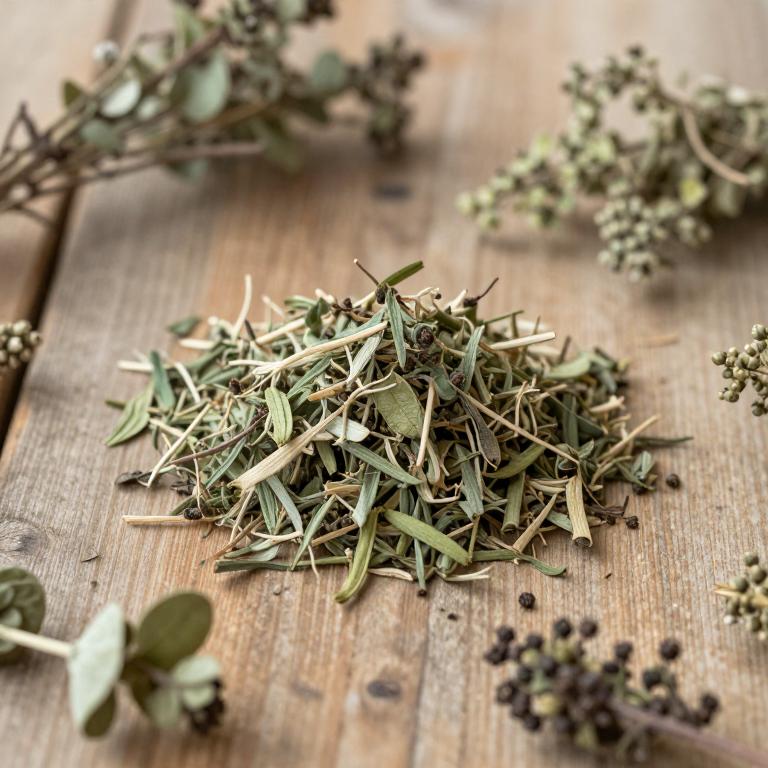
Forest burr, scientifically known as Pupalia lappacea, is a versatile medicinal shrub native to tropical regions. Renowned for its distinctive hooked fruits, this plant offers significant therapeutic potential. It is traditionally utilized in various folk medicines to treat skin ailments, inflammation, and digestive issues, showcasing its profound botanical importance.
- Family
- Amaranthaceae
- Native range
- Africa
- Parts used
- Flower
- Common names
- Forest Burr · Sweethearts
- Scientific synonyms
- Cadelari Lappacea · Celosia Lappacea · 3 more
Names and Synonyms
Common Names
- forest burr
- sweethearts
Scientific Names
Accepted name
Pupalia lappaceaSynonyms
- Cadelari lappacea
- Celosia lappacea
- Desmochaeta lappacea
- Codivalia lappacea
- Achyranthes lappacea
Regional and Traditional Names
German:
- Cadelari lappacea
- Celosia lappacea
- Codivalia lappacea
- Desmochaeta lappacea
Sources: Wikidata, Catalogue of Life
Taxonomical Classification
This plant belongs to the kingdom Plantae and is classified under the phylum Streptophyta within the class Equisetopsida. As a member of the subclass Magnoliidae and the order Caryophyllales, it is positioned in the family Amaranthaceae. Specifically, it is identified by the genus Pupalia, which includes the species Pupalia lappacea.
| Rank | Classification |
|---|---|
| Kingdom | Plantae |
| Phylum | Streptophyta |
| Class | Equisetopsida |
| Subclass | Magnoliidae |
| Order | Caryophyllales |
| Family | Amaranthaceae |
| Genus | Pupalia |
Sources: The World Checklist of Vascular Plants (WCVP)
Distribution
This plant, known as Pupalia lappacea, exhibits a specific geographical distribution across the West Tropical Africa region. It can be found growing within the borders of Benin, where it integrates into the local ecosystem. The species also extends its range into Burkina, contributing to the area's medicinal flora. Furthermore, its presence is documented in the countries of Gambia and Ghana. Finally, the distribution includes Guinea-Bissau, completing its footprint across these West African nations.
| Region | Area |
|---|---|
| West Tropical Africa | Benin |
| West Tropical Africa | Burkina |
| West Tropical Africa | Gambia |
| West Tropical Africa | Ghana |
| West Tropical Africa | Guinea-Bissau |
| West Tropical Africa | Guinea |
| West Tropical Africa | Ivory Coast |
| West Tropical Africa | Mali |
| West Tropical Africa | Mauritania |
| West Tropical Africa | Nigeria |
Sources: The World Checklist of Vascular Plants (WCVP)
Botanical Identification
Ecology
The ecology of Pupalia lappacea is characterized by a broad altitudinal distribution that allows it to inhabit diverse topographical landscapes. It thrives across a wide elevational range, beginning at sea level with a minimum altitude of 2 m AMSL and extending to significant heights reaching a maximum of 1705 m AMSL. On average, the species is most commonly found at a mean elevation of 600 m AMSL, suggesting a preference for lowland to mid-elevation habitats. This wide vertical gradient indicates an adaptability to varying climatic conditions and environmental pressures found across different montane and coastal zones.
- Elevational range max:
- 1705 m AMSL
- Elevational range mean:
- 600 m AMSL
- Elevational range min:
- 2 m AMSL
Life history
The life history of Pupalia lappacea is characterized by an annual lifecycle, meaning it completes its entire biological progression from germination to seed production within a single growing season. As a therophyte, the plant follows a specialized life strategy where the majority of its life is spent in a dormant seed stage, with the vegetative structures appearing only during favorable environmental conditions. This life form allows the species to efficiently exploit seasonal resources before returning to a state of dormancy, ensuring survival through periods of unfavorable climate.
- Life form :
- therophyte
- Lifecycle :
- annual
Morphology
The morphology of Pupalia lappacea is characterized by its growth form as a non-woody herb that is entirely terrestrial in its habitat. As a self-supporting plant, it does not function as a climber or an epiphyte, nor does it act as a parasite, maintaining an independent biological existence. The plant exhibits a relatively modest stature, with a height ranging from a minimum of 0.3 m to a maximum of approximately 1.22 m, maintaining an average height of about 0.775 m.
- Aquatic :
- terrestrial
- Climber :
- self-supporting
- Epiphyte :
- terrestrial
- Growth form :
- herb
- Parasite :
- independent
- Plant height max:
- 1.219214826 m
- Plant height mean:
- 0.775 m
- Plant height min:
- 0.3 m
- Woodiness :
- non-woody
Physiology
The physiology of Pupalia lappacea is characterized by its specific metabolic and biochemical processes, most notably its carbon assimilation strategy which utilizes the C3 photosynthetic pathway. This indicates that the plant fixes atmospheric carbon dioxide through the Calvin cycle using the enzyme Rubisco, without the specialized carbon-concentrating mechanisms found in C4 or CAM species. Furthermore, regarding its nutrient acquisition and symbiotic relationships, the species is not a nitrogen fixer, meaning it lacks the specialized root nodules or symbiotic associations with diazotrophic bacteria required to convert atmospheric nitrogen into a bioavailable form.
- Nitrogen fixer :
- no
- Photosynthetic pathway :
- C3
Reproduction
Reproduction in Pupalia lappacea is characterized by the production of seeds that exhibit significant variability in physical dimensions. The seed mass within a population fluctuates considerably, ranging from a minimum of 0.00027 g to a maximum of 0.04367 g. When observing the collective data for these seeds, the mean seed mass is calculated to be 0.01055 g, reflecting a wide distribution in the reproductive output of the species.
- Seed mass max:
- 0.04367 g
- Seed mass mean:
- 0.01055 g
- Seed mass min:
- 0.00027 g
Sources: Global Inventory of Floras and Traits (GIFT)
Plant Parts
Pupalia lappacea has 1 reported plant parts identified across 1 scientific publications and several other databases that are studied for medicinal purposes. The most consistently reported plant part include flower.
| Plant part | Supporting sources | Consensus |
|---|---|---|
| Flower | 1 supporting sources | ★☆☆☆☆ |
Flower
- BMC complementary medicine and therapies
Chemicals
Pupalia lappacea has 2 reported phytochemicals identified across 1 scientific publications and several other databases. The most consistently reported chemicals include Saponins, polyphenols.
| Chemical | Supporting sources | Consensus |
|---|---|---|
| Saponins | 1 supporting sources | ★☆☆☆☆ |
| polyphenols | 1 supporting sources | ★☆☆☆☆ |
Saponins
- Journal of ethnopharmacology
polyphenols
- Journal of ethnopharmacology
Activities
Pupalia lappacea has 1 reported activities identified across 1 scientific publications and several other databases. The most consistently reported activities include Antibacterial.
| Activity | Supporting sources | Consensus |
|---|---|---|
| Antibacterial | 1 supporting sources | ★☆☆☆☆ |
Antibacterial
- BMC complementary and alternative medicine
Conditions
Pupalia lappacea has 5 reported investigations on conditions identified across 1 scientific publications and several other databases. The most consistently reported conditions include Bacillus subtilis, Pseudomonas aeruginosa, Staphylococcus aureus, cancer, wounds.
| Condition | Supporting sources | Consensus |
|---|---|---|
| Bacillus subtilis | 1 supporting sources | ★☆☆☆☆ |
| Pseudomonas aeruginosa | 1 supporting sources | ★☆☆☆☆ |
| Staphylococcus aureus | 1 supporting sources | ★☆☆☆☆ |
| Cancer | 1 supporting sources | ★☆☆☆☆ |
| Wounds | 1 supporting sources | ★☆☆☆☆ |
Bacillus subtilis
- BMC complementary and alternative medicine
Pseudomonas aeruginosa
- BMC complementary and alternative medicine
Staphylococcus aureus
- BMC complementary and alternative medicine
Cancer
- African journal of traditional, complementary, and alternative medicines : AJTCAM
Wounds
- BMC complementary and alternative medicine
Preparations
Pupalia lappacea has 6 reported preparations identified across 1 scientific publications and several other databases. The most consistently reported preparations include 80% methanolic leave extract, Pupalia lappacea ointment, Water extracts, ethanolic extracts, hydroethanolic leaf extract.
| Preparation | Supporting sources | Consensus |
|---|---|---|
| 80% methanolic leave extract | 1 supporting sources | ★☆☆☆☆ |
| Pupalia lappacea ointment | 1 supporting sources | ★☆☆☆☆ |
| Water extracts | 1 supporting sources | ★☆☆☆☆ |
| Ethanolic extracts | 1 supporting sources | ★☆☆☆☆ |
| Hydroethanolic leaf extract | 1 supporting sources | ★☆☆☆☆ |
| Ointments | 1 supporting sources | ★☆☆☆☆ |
80% methanolic leave extract
- BMC complementary and alternative medicine
Pupalia lappacea ointment
- BMC complementary and alternative medicine
Water extracts
- Journal of ethnopharmacology
Ethanolic extracts
- African journal of traditional, complementary, and alternative medicines : AJTCAM
Hydroethanolic leaf extract
- Journal of ethnopharmacology
Ointments
- BMC complementary and alternative medicine