Pulsatilla sulphurea
Pulsatilla alpina subsp. apiifolia · Accepted scientific name
Scientific literature: Very Sparse (3 studies) · ★☆☆☆☆
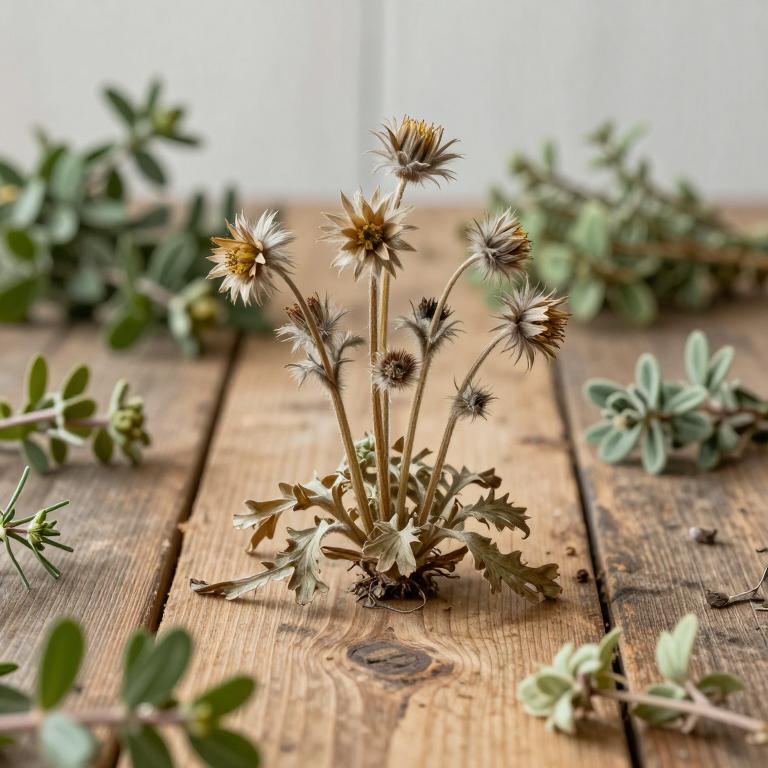
Pulsatilla sulphuridea, scientifically known as Pulsatilla alpina subsp. apiifolia, is a resilient alpine perennial celebrated for its striking bell-shaped flowers. Native to high-altitude meadows, this botanical treasure is valued in traditional herbalism for its potent properties, though it must be handled with extreme care due to its toxicity.
- Family
- Ranunculaceae
- Native range
- Europe
- Parts used
- Flower
- Common names
- Yellow Alpine Pasqueflower
- Scientific synonyms
- Pulsatilla Apiifolia · Preonanthus Apiifolius · 7 more
Names and Synonyms
Common Names
- yellow alpine pasqueflower
Scientific Names
Accepted name
Pulsatilla alpina subsp. apiifoliaSynonyms
- Pulsatilla apiifolia
- Preonanthus apiifolius
- Anemone alpina subsp. apiifolia
- Anemone alpina var. apiifolia
- Anemone alpina f. flavescens
- Pulsatilla alpina subsp. sulphurea
- Anemone apiifolia
- Pulsatilla lutea
- Pulsatilla alpina var. lutea
Regional and Traditional Names
Spanish:
- Pulsatilla sulphurea
German:
- Gelbe Alpen-Kuhschelle
- Schwefelanemone
- Schwefel-Anemone
- Schwefel-Küchenschelle
- Gelbe Alpen-Küchenschelle
- Gelbe Alpen-Kuhschelle
- Gelbe Alpen-Küchenschelle
- Schwefel-Anemone
- Schwefel-Kuechenschelle
French:
- Pulsatille soufrée
- Anémone souffrée
- Pulsatilla sulphurea
- Pulsatille a feuilles d'ache
- Pulsatille soufree
- Pulsatille alpine soufrée
- Pulsatille soufrée
Sources: Wikidata, Catalogue of Life
Taxonomical Classification
This plant belongs to the kingdom Plantae and the phylum Streptophyta, falling under the class Equisetopsida and subclass Magnoliidae. It is further classified within the order Ranunculales and the family Ranunculaceae. Finally, its specific taxonomic designation is within the genus Pulsatilla.
| Rank | Classification |
|---|---|
| Kingdom | Plantae |
| Phylum | Streptophyta |
| Class | Equisetopsida |
| Subclass | Magnoliidae |
| Order | Ranunculales |
| Family | Ranunculaceae |
| Genus | Pulsatilla |
Sources: The World Checklist of Vascular Plants (WCVP)
Distribution
This plant exhibits a wide geographical distribution across several regions of Europe. In Middle Europe, its presence is well-documented in Austria, Germany, and Switzerland. The species also extends into Southwestern Europe, where it can be found growing in France. Additionally, its range reaches further south into the territory of Spain. Overall, these locations highlight the specific continental habitats favored by this subspecies.
| Region | Area |
|---|---|
| Middle Europe | Austria |
| Middle Europe | Germany |
| Middle Europe | Switzerland |
| Southwestern Europe | France |
| Southwestern Europe | Spain |
| Southeastern Europe | Italy |
| Southeastern Europe | NW. Balkan Pen. |
Sources: The World Checklist of Vascular Plants (WCVP)
Plant Parts
Pulsatilla alpina subsp. apiifolia has 1 reported plant parts identified across 1 scientific publications and several other databases that are studied for medicinal purposes. The most consistently reported plant part include flower.
| Plant part | Supporting sources | Consensus |
|---|---|---|
| Flower | 1 supporting sources | ★☆☆☆☆ |
Flower
- Journal of ethnopharmacology
Chemicals
Pulsatilla alpina subsp. apiifolia has 2 reported phytochemicals identified across 1 scientific publications and several other databases. The most consistently reported chemicals include Anemonin, Protoanemonin.
| Chemical | Supporting sources | Consensus |
|---|---|---|
| Anemonin | 1 supporting sources | ★☆☆☆☆ |
| Protoanemonin | 1 supporting sources | ★☆☆☆☆ |
Anemonin
- Journal of ethnopharmacology
Protoanemonin
- Journal of ethnopharmacology