Pulicaria odora
Pulicaria odora · Accepted scientific name
Scientific literature: Very Sparse (9 studies) · ★☆☆☆☆
Pulicaria odora, scientifically known as Pulicaria odora, is a fragrant, perennial herb belonging to the Asteraceae family. Native to Europe and parts of Asia, this plant is prized for its aromatic foliage. Traditionally, it has been utilized in herbal medicine for its diverse therapeutic properties and insect-repellent qualities.
- Family
- Asteraceae
- Native range
- Europe
- Parts used
- Not available
- Common names
- Not available
- Scientific synonyms
- Pulicaria Odora Var. Burnatii · Pulicaria Atlantica · 5 more
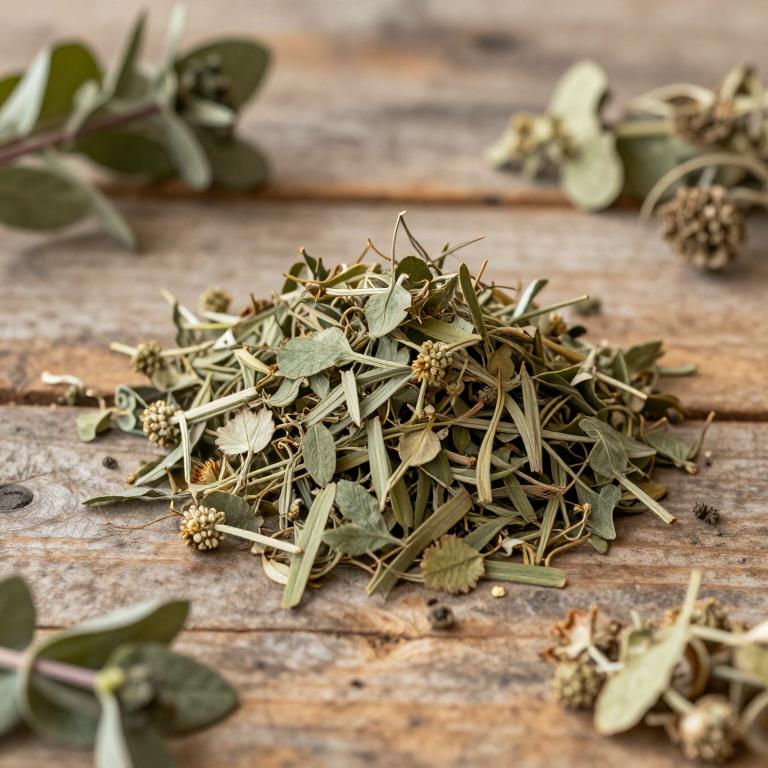
Names and Synonyms
Scientific Names
Accepted name
Pulicaria odoraSynonyms
- Pulicaria odora var. burnatii
- Pulicaria atlantica
- Pulicaria majoricensis
- Inula apula
- Inula dumetorum
- Pulicaria congesta
- Pulicaria dumetorum
Regional and Traditional Names
Spanish:
- Inula odora
- Pulguera con raíz olorosa
- Yerba de las machacauras
- Pulguera con raiz olorosa
French:
- Pulicaire odorante
Sources: Wikidata, Catalogue of Life
Taxonomical Classification
This plant, known as Pulicaria odora, belongs to the kingdom Plantae and the phylum Streptophyta. Within the class Equisetopsida and subclass Magnoliidae, it is classified under the order Asterales and the family Asteraceae. Its specific taxonomic placement is within the genus Pulicaria.
| Rank | Classification |
|---|---|
| Kingdom | Plantae |
| Phylum | Streptophyta |
| Class | Equisetopsida |
| Subclass | Magnoliidae |
| Order | Asterales |
| Family | Asteraceae |
| Genus | Pulicaria |
Sources: The World Checklist of Vascular Plants (WCVP)
Distribution
This plant, Pulicaria odora, exhibits a specific geographical distribution concentrated within Southwestern Europe. It can be found growing across the various territories of France and Portugal. The species also inhabits several Mediterranean islands, including the Baleares and Corse. Additionally, its presence is recorded in the region of Sardegna. Together, these locations define the primary natural range of this medicinal herb.
| Region | Area |
|---|---|
| Southwestern Europe | Baleares |
| Southwestern Europe | Corse |
| Southwestern Europe | France |
| Southwestern Europe | Portugal |
| Southwestern Europe | Sardegna |
| Southwestern Europe | Spain |
| Southeastern Europe | Albania |
| Southeastern Europe | Greece |
| Southeastern Europe | Italy |
| Southeastern Europe | Kriti |
Sources: The World Checklist of Vascular Plants (WCVP)
Botanical Identification
Life history
The life history of Pulicaria odora is characterized by its status as a perennial plant, allowing it to persist across multiple growing seasons. Structurally, the species is classified as a hemicryptophyte, a life form where the perennating buds are located at the soil surface, protected by leaf litter or other organic debris during unfavorable conditions. This growth habit enables the plant to re-emerge annually from its base, ensuring long-term survival within its ecological niche.
- Life form :
- hemicryptophyte
- Lifecycle :
- perennial
Morphology
The morphology of Pulicaria odora is characterized by its growth habit as a self-supporting, non-climbing herbaceous plant. It is a terrestrial species, meaning it does not exhibit aquatic or semiaquatic tendencies, nor does it function as an epiphyte, remaining firmly rooted in soil environments. The plant is entirely independent in its nutrient acquisition, lacking any parasitic nature, and it does not possess the structures required to act as a climber, whether as a liana, a vine, or a facultative climber; instead, it maintains a strictly self-supporting architecture.
- Aquatic :
- terrestrial
- Climber :
- self-supporting
- Epiphyte :
- terrestrial
- Parasite :
- independent
Sources: Global Inventory of Floras and Traits (GIFT)
Chemicals
Pulicaria odora has 4 reported phytochemicals identified across 0 scientific publications and several other databases. The most consistently reported chemicals include 2-Isopropyl-4-methylphenol, Isobutyrate, THYMOL, isobutyric acid 2-isopropyl-4-methylphenylester.
| Chemical | Supporting sources | Consensus |
|---|---|---|
| 2-Isopropyl-4-methylphenol | 1 supporting sources | ★☆☆☆☆ |
| Isobutyrate | 1 supporting sources | ★☆☆☆☆ |
| THYMOL | 1 supporting sources | ★☆☆☆☆ |
| isobutyric acid 2-isopropyl-4-methylphenylester | 1 supporting sources | ★☆☆☆☆ |
2-Isopropyl-4-methylphenol
- Journal of ethnopharmacology
Isobutyrate
- Journal of ethnopharmacology
THYMOL
- Journal of ethnopharmacology
isobutyric acid 2-isopropyl-4-methylphenylester
- Journal of ethnopharmacology
Activities
Pulicaria odora has 2 reported activities identified across 0 scientific publications and several other databases. The most consistently reported activities include Antibacterial, Antifungal.
| Activity | Supporting sources | Consensus |
|---|---|---|
| Antibacterial | 1 supporting sources | ★☆☆☆☆ |
| Antifungal | 1 supporting sources | ★☆☆☆☆ |
Antibacterial
- Journal of ethnopharmacology
Antifungal
- Journal of ethnopharmacology
Conditions
Pulicaria odora has 2 reported investigations on conditions identified across 0 scientific publications and several other databases. The most consistently reported conditions include inflammation, ulcers.
| Condition | Supporting sources | Consensus |
|---|---|---|
| Inflammation | 1 supporting sources | ★☆☆☆☆ |
| Ulcers | 1 supporting sources | ★☆☆☆☆ |
Inflammation
- Journal of ethnopharmacology
Ulcers
- Journal of ethnopharmacology
Preparations
Pulicaria odora has 1 reported preparations identified across 0 scientific publications and several other databases. The most consistently reported preparations include essential oil.
| Preparation | Supporting sources | Consensus |
|---|---|---|
| Essential oil | 1 supporting sources | ★☆☆☆☆ |
Essential oil
- Journal of ethnopharmacology