Pulicaria incisa
Pulicaria incisa · Accepted scientific name
Scientific literature: Very Sparse (7 studies) · ★☆☆☆☆
Pulicaria inciosa, scientifically known as Pulicaria inciosa, is a resilient perennial herb belonging to the Asteraceae family. Native to various regions, this plant is celebrated in traditional medicine for its aromatic properties. Often used to treat respiratory ailments, it possesses potent antioxidant and antimicrobial qualities essential in herbal pharmacology.
- Family
- Asteraceae
- Native range
- Africa
- Parts used
- Leaf
- Common names
- Not available
- Scientific synonyms
- Pulicaria Desertorum · Pulicaria Incisa Subsp. Candolleana · 3 more
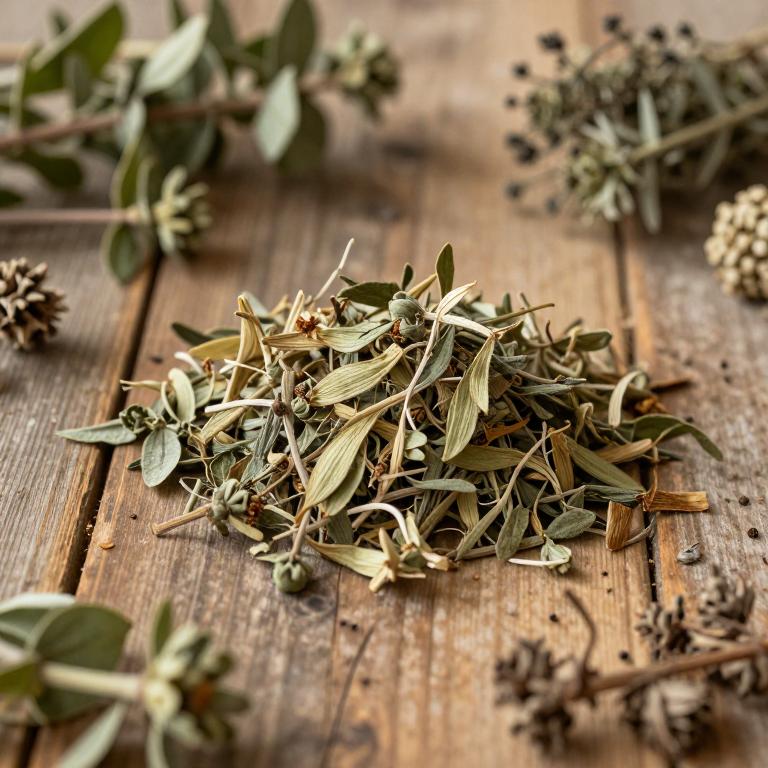
Names and Synonyms
Scientific Names
Accepted name
Pulicaria incisaSynonyms
- Pulicaria desertorum
- Pulicaria incisa subsp. candolleana
- Pulicaria incisa subsp. denticulata
- Pulicaria incisa subsp. suffrutescens
- Inula incisa
Sources: Wikidata, Catalogue of Life
Taxonomical Classification
This plant, Pulicaria incisa, belongs to the kingdom Plantae and the phylum Streptophyta. Within the class Equisetopsida and subclass Magnoliidae, it is categorized under the order Asterales. Finally, it is a member of the family Asteraceae within the genus Pulicaria.
| Rank | Classification |
|---|---|
| Kingdom | Plantae |
| Phylum | Streptophyta |
| Class | Equisetopsida |
| Subclass | Magnoliidae |
| Order | Asterales |
| Family | Asteraceae |
| Genus | Pulicaria |
Sources: The World Checklist of Vascular Plants (WCVP)
Distribution
This plant exhibits a broad geographical distribution across several key regions of the African continent. In Northern Africa, its presence is specifically documented within the territories of Algeria and Egypt. Moving toward the western part of the continent, it can also be found throughout West Tropical Africa. Within this tropical zone, the species inhabits the countries of Benin and Burkina Faso. Finally, its range extends further south into the nation of Ghana.
| Region | Area |
|---|---|
| Northern Africa | Algeria |
| Northern Africa | Egypt |
| West Tropical Africa | Benin |
| West Tropical Africa | Burkina |
| West Tropical Africa | Ghana |
| West Tropical Africa | Mali |
| West Tropical Africa | Mauritania |
| West Tropical Africa | Nigeria |
| West Tropical Africa | Niger |
| West Tropical Africa | Togo |
Sources: The World Checklist of Vascular Plants (WCVP)
Botanical Identification
Life history
The life history of Pulicaria incisa is characterized by a perennial lifecycle, allowing the plant to persist across multiple growing seasons. In terms of its structural growth strategy, it is classified as a chamaephyte, a life form where the permanent shoots are located close to the ground level, often protected by leaf litter or soil. This botanical classification as a chamaephyte applies to both its primary life form designation and its specific ecological positioning, ensuring its survival through varying environmental conditions.
- Life form :
- chamaephyte
- Lifecycle :
- perennial
Morphology
The morphology of Pulicaria incisa is characterized by its status as a non-woody, self-supporting plant that lacks any climbing or parasitic tendencies. Functioning as an independent organism, it exhibits a growth form described as a subshrub, though it maintains a herb-like quality due to its non-woody structure. In terms of its ecological habitat and positioning, the plant is primarily terrestrial rather than aquatic or epiphytic, growing directly in soil environments without the need for host support or submersion.
- Aquatic :
- terrestrial
- Climber :
- self-supporting
- Epiphyte :
- terrestrial
- Growth form :
- shrub
- Growth form :
- subshrub
- Parasite :
- independent
- Woodiness :
- non-woody
Reproduction
Reproduction in Pulicaria incisa is characterized by the production of specialized seeds that facilitate its dispersal and survival within its ecological niche. The reproductive output is defined by highly consistent seed dimensions, exhibiting a uniform seed mass across recorded samples. Specifically, the seed mass maintains a mean value of 0.00011 g, a figure that is mirrored by both the maximum and minimum measured values of 0.00011 g. This lack of variance in seed mass suggests a highly stabilized reproductive strategy, ensuring that each individual seed carries a precise and predictable amount of nutrient reserves to support early germination and seedling establishment.
- Seed mass mean:
- 0.00011 g
Sources: Global Inventory of Floras and Traits (GIFT)
Plant Parts
Pulicaria incisa has 1 reported plant parts identified across 1 scientific publications and several other databases that are studied for medicinal purposes. The most consistently reported plant part include leaf.
| Plant part | Supporting sources | Consensus |
|---|---|---|
| Leaf | 1 supporting sources | ★☆☆☆☆ |
Leaf
- Plants (Basel, Switzerland)
Chemicals
Pulicaria incisa has 2 reported phytochemicals identified across 1 scientific publications and several other databases. The most consistently reported chemicals include Flavonoids, polyphenols.
| Chemical | Supporting sources | Consensus |
|---|---|---|
| Flavonoids | 1 supporting sources | ★☆☆☆☆ |
| polyphenols | 1 supporting sources | ★☆☆☆☆ |
Flavonoids
- Molecules (Basel, Switzerland)
polyphenols
- Molecules (Basel, Switzerland)
Activities
Pulicaria incisa has 2 reported activities identified across 1 scientific publications and several other databases. The most consistently reported activities include Antibacterial, Antioxidant.
| Activity | Supporting sources | Consensus |
|---|---|---|
| Antibacterial | 1 supporting sources | ★☆☆☆☆ |
| Antioxidant | 1 supporting sources | ★☆☆☆☆ |
Antibacterial
- Molecules (Basel, Switzerland)
Antioxidant
- Molecules (Basel, Switzerland)
Conditions
Pulicaria incisa has 1 reported investigations on conditions identified across 1 scientific publications and several other databases. The most consistently reported conditions include cancer.
| Condition | Supporting sources | Consensus |
|---|---|---|
| Cancer | 2 supporting sources | ★☆☆☆☆ |
Cancer
- Journal of natural medicines
- Scientific reports
Preparations
Pulicaria incisa has 3 reported preparations identified across 1 scientific publications and several other databases. The most consistently reported preparations include aqueous extracts, extracts, solvent extract.
| Preparation | Supporting sources | Consensus |
|---|---|---|
| Aqueous extracts | 1 supporting sources | ★☆☆☆☆ |
| Extracts | 1 supporting sources | ★☆☆☆☆ |
| Solvent extract | 1 supporting sources | ★☆☆☆☆ |
Aqueous extracts
- Molecules (Basel, Switzerland)
Extracts
- Archiv fur experimentelle Veterinarmedizin
Solvent extract
- Journal of natural medicines