Pulicaria glutinosa
Pulicaria glutinosa · Accepted scientific name
Scientific literature: Very Sparse (3 studies) · ★☆☆☆☆
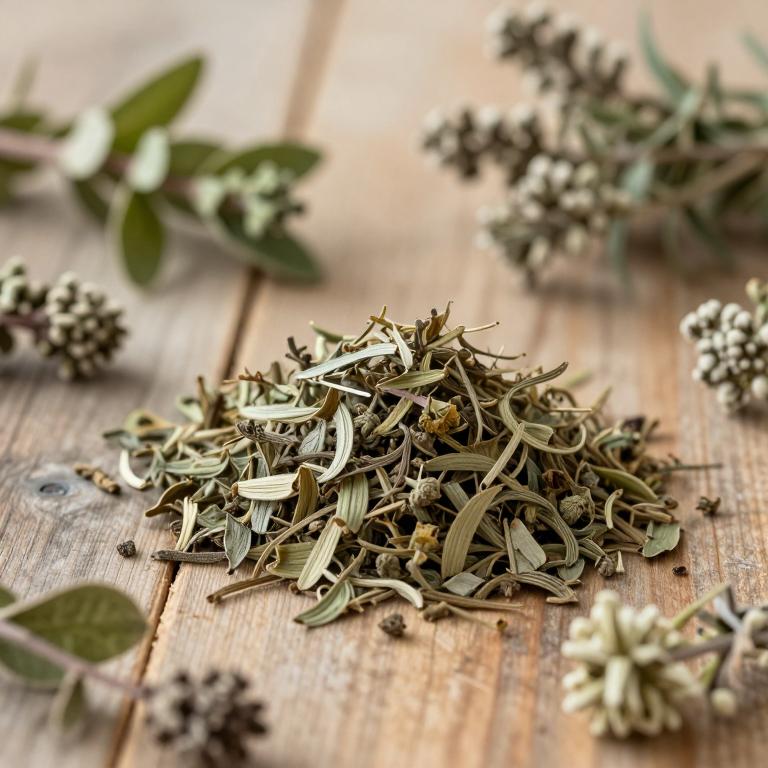
Pulicaria glutinosa, scientifically known as Pulicaria glutinosa, is a perennial herb belonging to the Asteraceae family. Commonly called feverfew or pleasing feverfew, it grows in damp habitats. Historically valued in traditional medicine, this aromatic plant is recognized for its potential antimicrobial and anti-inflammatory properties in herbal remedies.
- Family
- Not available
- Native range
- Africa
- Parts used
- Stem
- Common names
- Not available
- Scientific synonyms
- Not available
Names and Synonyms
Scientific Names
Accepted name
Pulicaria glutinosaSources: Wikidata
Distribution
This plant exhibits a specific geographical distribution across parts of Africa and the Middle East. In Northeast Tropical Africa, its presence is documented in Djibouti and Somalia. Moving toward the Arabian Peninsula, the species is also found throughout the Gulf States. Furthermore, it can be identified within the territories of Oman and Saudi Arabia. Together, these locations highlight the plant's range within these particular arid and tropical regions.
| Region | Area |
|---|---|
| Northeast Tropical Africa | Djibouti |
| Northeast Tropical Africa | Somalia |
| Arabian Peninsula | Gulf States |
| Arabian Peninsula | Oman |
| Arabian Peninsula | Saudi Arabia |
| Arabian Peninsula | Yemen |
| Indian Subcontinent | Pakistan |
Sources: The World Checklist of Vascular Plants (WCVP)
Botanical Identification
Morphology
The morphology of Pulicaria glutinosa is characterized by its growth form as a non-wooded herb, typically manifesting as a perennial forb. As a non-woody plant, it lacks a lignified stem structure, instead maintaining a soft, herbaceous consistency throughout its seasonal growth cycle. The plant typically develops from a creeping rhizome, giving rise to erect, unbranched or sparingly branched stems that can reach various heights depending on the environmental conditions.
- Growth form :
- herb
- Woodiness :
- non-woody
Reproduction
The reproduction of Pulicaria glutinosa is characterized by the production of numerous small seeds that facilitate its dispersal and establishment within its natural habitat. Quantitative analysis of its reproductive output reveals a highly consistent seed size distribution, which is critical for its survival strategies. The individual seed mass is remarkably uniform, with a measured mean seed mass of 0.00025 g. This consistency is further evidenced by the narrow range of variability observed in the population, where the seed mass fluctuates minimally between a minimum of 0.00024 g and a maximum of 0.00026 g. Such precise biometric traits suggest a stabilized reproductive mechanism aimed at optimizing seedling emergence and competitive success.
- Seed mass max:
- 0.00026 g
- Seed mass mean:
- 0.00025 g
- Seed mass min:
- 0.00024 g
Sources: Global Inventory of Floras and Traits (GIFT)
Plant Parts
Pulicaria glutinosa has 1 reported plant parts identified across 1 scientific publications and several other databases that are studied for medicinal purposes. The most consistently reported plant part include stem.
| Plant part | Supporting sources | Consensus |
|---|---|---|
| Stem | 1 supporting sources | ★☆☆☆☆ |
Stem
- Saudi journal of biological sciences
Conditions
Pulicaria glutinosa has 2 reported investigations on conditions identified across 1 scientific publications and several other databases. The most consistently reported conditions include liver cancer, lung cancer.
| Condition | Supporting sources | Consensus |
|---|---|---|
| Liver cancer | 1 supporting sources | ★☆☆☆☆ |
| Lung cancer | 1 supporting sources | ★☆☆☆☆ |
Liver cancer
- Saudi journal of biological sciences
Lung cancer
- International journal of nanomedicine
Preparations
Pulicaria glutinosa has 2 reported preparations identified across 1 scientific publications and several other databases. The most consistently reported preparations include extract, methanolic extracts of stem.
| Preparation | Supporting sources | Consensus |
|---|---|---|
| Extract | 1 supporting sources | ★☆☆☆☆ |
| Methanolic extracts of stem | 1 supporting sources | ★☆☆☆☆ |
Extract
- International journal of nanomedicine
Methanolic extracts of stem
- Saudi journal of biological sciences