Pulicaria burchardii
Pulicaria burchardii · Accepted scientific name
Scientific literature: Very Sparse (9 studies) · ★☆☆☆☆
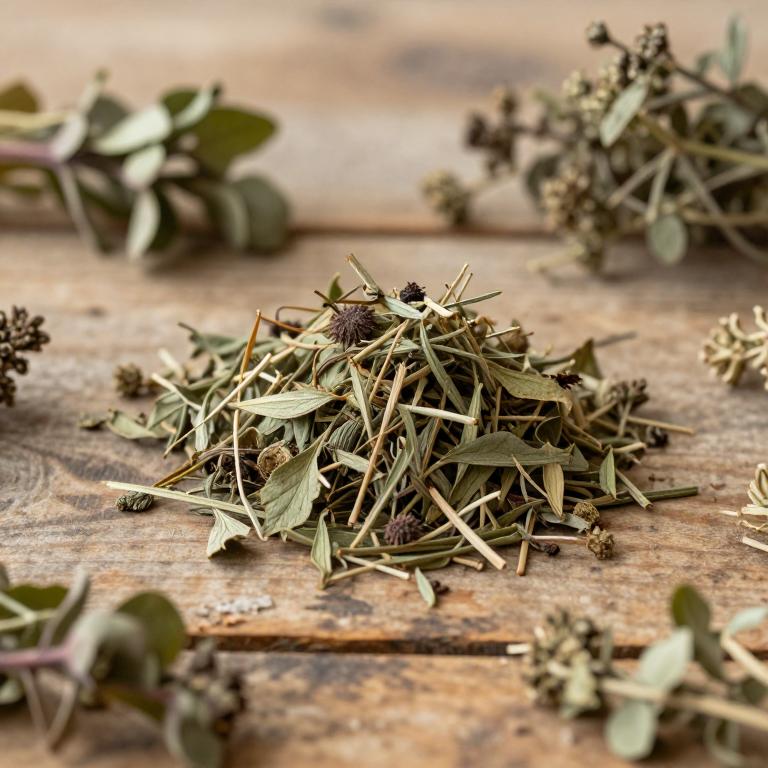
, scientifically known as Pulicaria burchardii, is a significant medicinal herb valued in traditional healing practices. Renowned for its potent bioactive compounds, this plant is frequently utilized to treat respiratory ailments, digestive issues, and skin inflammations. Its unique phytochemical profile offers promising potential for modern pharmacological research and development.
- Family
- Asteraceae
- Native range
- Africa
- Parts used
- Not available
- Common names
- Not available
- Scientific synonyms
- Not available
Names and Synonyms
Scientific Names
Accepted name
Pulicaria burchardiiSources: Wikidata, Catalogue of Life
Taxonomical Classification
This plant belongs to the kingdom Plantae and is classified within the phylum Streptophyta and the class Equisetopsida. As a member of the subclass Magnoliidae and the order Asterales, it falls under the family Asteraceae. Specifically, its taxonomic identity is defined by the genus Pulicaria, where it is known as Pulicaria burchardii.
| Rank | Classification |
|---|---|
| Kingdom | Plantae |
| Phylum | Streptophyta |
| Class | Equisetopsida |
| Subclass | Magnoliidae |
| Order | Asterales |
| Family | Asteraceae |
| Genus | Pulicaria |
Sources: The World Checklist of Vascular Plants (WCVP)
Distribution
This plant exhibits a specific distribution pattern across several distinct regions of the African continent and its surrounding islands. In Northern Africa, its presence is recorded within the borders of Morocco. The species is also found throughout Macaronesia, specifically inhabiting the Canary Islands, Cape Verde, and the Selvagens. Additionally, its range extends into West Tropical Africa, where it can be located in Mauritania. Together, these locations define the unique geographical footprint of Pulicaria burchardii.
| Region | Area |
|---|---|
| Northern Africa | Morocco |
| Macaronesia | Canary Is. |
| Macaronesia | Cape Verde |
| Macaronesia | Selvagens |
| West Tropical Africa | Mauritania |
Sources: The World Checklist of Vascular Plants (WCVP)
Botanical Identification
Ecology
The ecology of Pulicaria burchardii is characterized by its distribution across specific altitudinal gradients, thriving in environments situated within an elevational range of 10 m to 200 m AMSL. This low-altitude preference suggests an adaptation to warmer, potentially more coastal or lowland terrestrial ecosystems where the plant can establish itself within its preferred niche. By occupying these specific elevations, the species interacts with a distinct set of climatic and soil conditions unique to these lower reaches of the landscape.
- Elevational range max:
- 200 m AMSL
- Elevational range min:
- 10 m AMSL
Morphology
The morphology of Pulicaria burchardii is characterized by its low-growing, non-woody structure, manifesting primarily as a subshrub or herb. The plant exhibits a compact growth form with a height that typically ranges from a minimum of 0.2 m to a maximum of 0.5 m.
- Growth form :
- shrub
- Growth form :
- subshrub
- Plant height max:
- 0.5 m
- Plant height min:
- 0.2 m
- Woodiness :
- non-woody
Physiology
The physiological structure of Pulicaria burchardii is characterized by a specific vegetative architecture that facilitates its environmental adaptation. The plant exhibits an elliptic leaf form, providing a streamlined surface area that optimizes light interception for photosynthesis while managing transpiration rates. These leaves are organized in an alternate leaf arrangement along the stem, a phyllotactic pattern that ensures minimal shading between successive nodes and maximizes the efficiency of nutrient distribution and gas exchange across the plant's canopy.
- Leaf arrangement :
- alternate
- Leaf form :
- elliptic
Reproduction
The reproduction of Pulicaria burchardii is characterized by a specific flowering phenology and distinct floral morphology. The flowering period typically begins in February and concludes around April, though the timing can be variable across different months. During this reproductive phase, the plant produces yellow flowers that exhibit specific dimensions, with a flower length reaching a maximum of 0.5 cm and a flower width ranging between a minimum of 1 cm and a maximum of 1.5 cm. Following successful pollination, the plant produces seeds that are remarkably lightweight; the seed mass is consistent at a mean, minimum, and maximum value of 0.00014 g, indicating a uniform and minute seed size.
- Flower colour :
- yellow
- Flower length max:
- 0.5 cm
- Flower width max:
- 1.5 cm
- Flower width min:
- 1 cm
- Flowering time :
- Feb
- Flowering time :
- Apr
- Seed mass mean:
- 0.00014 g
Sources: Global Inventory of Floras and Traits (GIFT)
Activities
Pulicaria burchardii has 4 reported activities identified across 0 scientific publications and several other databases. The most consistently reported activities include Antibacterial, Antimicrobial, Antioxidant, Antiviral.
| Activity | Supporting sources | Consensus |
|---|---|---|
| Antibacterial | 1 supporting sources | ★☆☆☆☆ |
| Antimicrobial | 1 supporting sources | ★☆☆☆☆ |
| Antioxidant | 1 supporting sources | ★☆☆☆☆ |
| Antiviral | 1 supporting sources | ★☆☆☆☆ |
Antibacterial
- Plants (Basel, Switzerland)
Antimicrobial
- Plants (Basel, Switzerland)
Antioxidant
- Plants (Basel, Switzerland)
Antiviral
- Plants (Basel, Switzerland)
Conditions
Pulicaria burchardii has 4 reported investigations on conditions identified across 0 scientific publications and several other databases. The most consistently reported conditions include HSV-1, SARS-CoV-2, bacteria, spores.
| Condition | Supporting sources | Consensus |
|---|---|---|
| Hsv-1 | 1 supporting sources | ★☆☆☆☆ |
| Sars-cov-2 | 1 supporting sources | ★☆☆☆☆ |
| Bacteria | 1 supporting sources | ★☆☆☆☆ |
| Spores | 1 supporting sources | ★☆☆☆☆ |
Hsv-1
- Plants (Basel, Switzerland)
Sars-cov-2
- Plants (Basel, Switzerland)
Bacteria
- Plants (Basel, Switzerland)
Spores
- Plants (Basel, Switzerland)