Indian kudzu
Pueraria tuberosa · Accepted scientific name
Scientific literature: Sparse (68 studies) · ★★☆☆☆
Indian kudzu, scientifically known as Pueraria tuberosa, is a versatile climbing legume native to India. Highly valued in traditional Ayurvedic medicine, this perennial herb is renowned for its potent antioxidant, anti-inflammatory, and neuroprotective properties. It serves as a vital natural remedy for managing various ailments and promoting overall wellness.
- Family
- Fabaceae
- Native range
- Asia-Tropical
- Parts used
- Leaf
- Common names
- Indian Kudzu · Nepalese Kudzu
- Scientific synonyms
- Hedysarum Tuberosum · Desmodium Tuberosum
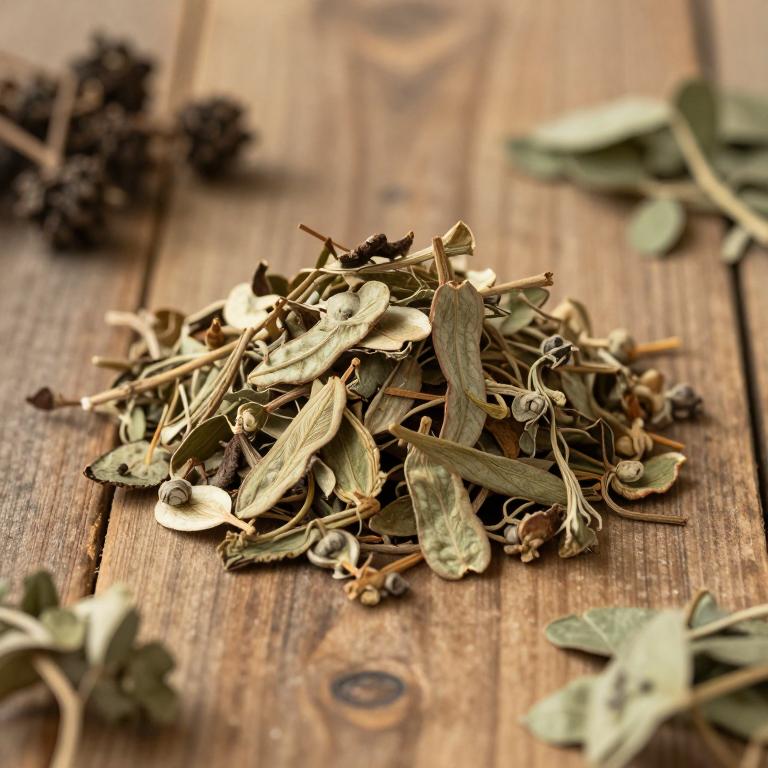
Names and Synonyms
Common Names
- Indian kudzu
- Nepalese kudzu
Scientific Names
Accepted name
Pueraria tuberosaSynonyms
- Hedysarum tuberosum
- Desmodium tuberosum
Sources: Wikidata, Catalogue of Life
Taxonomical Classification
This plant belongs to the kingdom Plantae and the phylum Streptophyta, falling under the class Equisetopsida and subclass Magnoliidae. Within the order Fabales, it is a member of the Fabaceae family. It is scientifically classified under the genus Pueraria, with the specific species being Pueraria tuberosa.
| Rank | Classification |
|---|---|
| Kingdom | Plantae |
| Phylum | Streptophyta |
| Class | Equisetopsida |
| Subclass | Magnoliidae |
| Order | Fabales |
| Family | Fabaceae |
| Genus | Pueraria |
Sources: The World Checklist of Vascular Plants (WCVP)
Distribution
This plant exhibits a broad geographical distribution across the diverse landscapes of the Indian Subcontinent. It is widely recognized as being native to various regions within India, including the specific area of Assam. Beyond these borders, the species can also be found flourishing in the neighboring country of Bangladesh. Its presence extends into the rugged terrains of the East Himalaya, showcasing its adaptability to different altitudes. Furthermore, the plant is well-established within the mountainous landscapes of Nepal.
| Region | Area |
|---|---|
| Indian Subcontinent | Assam |
| Indian Subcontinent | Bangladesh |
| Indian Subcontinent | East Himalaya |
| Indian Subcontinent | India |
| Indian Subcontinent | Nepal |
| Indian Subcontinent | Pakistan |
| Indian Subcontinent | West Himalaya |
Sources: The World Checklist of Vascular Plants (WCVP)
Botanical Identification
Morphology
The morphology of Pueraria tuberosa is characterized by its growth habit as an obligatory climber, utilizing surrounding structures for support to ascend. The plant typically reaches a plant height with a mean measurement of approximately 1 m. As a climbing species, its structural development is adapted for vertical expansion, often forming dense mats or climbing through vegetation.
- Climber :
- obligatory
- Plant height mean:
- 1 m
Physiology
The physiology of Pueraria tuberosa is characterized by a highly efficient metabolic synergy with soil microorganisms, most notably through its capacity as a nitrogen fixer. This process is facilitated by a symbiotic relationship with rhizobia bacteria, which colonize the plant's root nodules to convert atmospheric nitrogen into ammonia, a form readily assimilable by the plant. This biological nitrogen fixation provides a sustainable internal source of nutrients, reducing the plant's dependence on soil nitrogen levels and enhancing its growth vigor in nutrient-poor environments. Beyond this nitrogenous metabolism, the plant exhibits specialized physiological adaptations for storage and survival, utilizing its tuberous roots to accumulate significant starch reserves and secondary metabolites. These physiological mechanisms support energy mobilization during vegetative growth cycles and contribute to the complex biochemical profile used in various medicinal applications.
- Nitrogen fixer :
- yes
Sources: Global Inventory of Floras and Traits (GIFT)
Plant Parts
Pueraria tuberosa has 1 reported plant parts identified across 1 scientific publications and several other databases that are studied for medicinal purposes. The most consistently reported plant part include leaf.
| Plant part | Supporting sources | Consensus |
|---|---|---|
| Leaf | 1 supporting sources | ★☆☆☆☆ |
Leaf
- Frontiers in pharmacology
Chemicals
Pueraria tuberosa has 17 reported phytochemicals identified across 1 scientific publications and several other databases. The most consistently reported chemicals include Puerarin, 2,3-Dihydro-3,5-dihydroxy-6-methyl-4h-pyran-4-one, 5-HYDROXYMETHYLFURFURAL, 9-Octadecenoic acid (Z)-, Biochanin B.
| Chemical | Supporting sources | Consensus |
|---|---|---|
| Puerarin | 4 supporting sources | ★★☆☆☆ |
| 2,3-Dihydro-3,5-dihydroxy-6-methyl-4h-pyran-4-one | 1 supporting sources | ★☆☆☆☆ |
| 5-HYDROXYMETHYLFURFURAL | 1 supporting sources | ★☆☆☆☆ |
| 9-Octadecenoic acid (Z)- | 1 supporting sources | ★☆☆☆☆ |
| Biochanin B | 1 supporting sources | ★☆☆☆☆ |
| Flavonoids | 1 supporting sources | ★☆☆☆☆ |
| Irisolidone | 1 supporting sources | ★☆☆☆☆ |
| Isoorientin | 1 supporting sources | ★☆☆☆☆ |
| Mangiferin | 1 supporting sources | ★☆☆☆☆ |
| Tannins | 1 supporting sources | ★☆☆☆☆ |
Puerarin
- Pharmaceutical methods
- Cancer management and research
- Frontiers in pharmacology
- Evidence-based complementary and alternative medicine : eCAM
2,3-Dihydro-3,5-dihydroxy-6-methyl-4h-pyran-4-one
- BMC complementary and alternative medicine
5-HYDROXYMETHYLFURFURAL
- BMC complementary and alternative medicine
9-Octadecenoic acid (Z)-
- BMC complementary and alternative medicine
Biochanin B
- Frontiers in pharmacology
Flavonoids
- PloS one
Irisolidone
- Frontiers in pharmacology
Isoorientin
- Frontiers in pharmacology
Mangiferin
- Frontiers in pharmacology
Tannins
- PloS one
Activities
Pueraria tuberosa has 13 reported activities identified across 1 scientific publications and several other databases. The most consistently reported activities include Nephroprotective, Antioxidant, Antiapoptotic, Anticancer, Anticonvulsant.
| Activity | Supporting sources | Consensus |
|---|---|---|
| Nephroprotective | 4 supporting sources | ★★☆☆☆ |
| Antioxidant | 2 supporting sources | ★☆☆☆☆ |
| Antiapoptotic | 1 supporting sources | ★☆☆☆☆ |
| Anticancer | 1 supporting sources | ★☆☆☆☆ |
| Anticonvulsant | 1 supporting sources | ★☆☆☆☆ |
| Antidiabetic | 1 supporting sources | ★☆☆☆☆ |
| Antifertility | 1 supporting sources | ★☆☆☆☆ |
| Antiulcerogenic | 1 supporting sources | ★☆☆☆☆ |
| Cardioprotective | 1 supporting sources | ★☆☆☆☆ |
| Hepatoprotective | 1 supporting sources | ★☆☆☆☆ |
Nephroprotective
- The Journal of pharmacy and pharmacology
- Food and chemical toxicology : an international journal published for the British Industrial Biological Research Association
- Frontiers in pharmacology
- BMC complementary and alternative medicine
Antioxidant
- Frontiers in pharmacology
- BMC complementary and alternative medicine
Antiapoptotic
- BMC complementary and alternative medicine
Anticancer
- Frontiers in pharmacology
Anticonvulsant
- Frontiers in pharmacology
Antidiabetic
- Frontiers in pharmacology
Antifertility
- Frontiers in pharmacology
Antiulcerogenic
- Frontiers in pharmacology
Cardioprotective
- Frontiers in pharmacology
Hepatoprotective
- Frontiers in pharmacology
Conditions
Pueraria tuberosa has 11 reported investigations on conditions identified across 1 scientific publications and several other databases. The most consistently reported conditions include diabetic nephropathy, oxidative stress, DNA damage, Mycobacterium tuberculosis, apoptosis.
| Condition | Supporting sources | Consensus |
|---|---|---|
| Diabetic nephropathy | 4 supporting sources | ★★☆☆☆ |
| Oxidative stress | 2 supporting sources | ★☆☆☆☆ |
| Dna damage | 1 supporting sources | ★☆☆☆☆ |
| Mycobacterium tuberculosis | 1 supporting sources | ★☆☆☆☆ |
| Apoptosis | 1 supporting sources | ★☆☆☆☆ |
| Blood pressure | 1 supporting sources | ★☆☆☆☆ |
| Blood urea nitrogen | 1 supporting sources | ★☆☆☆☆ |
| Diabetes mellitus | 1 supporting sources | ★☆☆☆☆ |
| Fibrinolysis | 1 supporting sources | ★☆☆☆☆ |
| Helminthiasis | 1 supporting sources | ★☆☆☆☆ |
Diabetic nephropathy
- The Journal of pharmacy and pharmacology
- Biomedicine & pharmacotherapy = Biomedecine & pharmacotherapie
- Journal of diabetes
- BMC complementary and alternative medicine
Oxidative stress
- Pakistan journal of biological sciences : PJBS
- BMC complementary and alternative medicine
Dna damage
- Food and chemical toxicology : an international journal published for the British Industrial Biological Research Association
Mycobacterium tuberculosis
- International journal of microbiology
Apoptosis
- BMC complementary and alternative medicine
Blood pressure
- Pakistan journal of biological sciences : PJBS
Blood urea nitrogen
- Food and chemical toxicology : an international journal published for the British Industrial Biological Research Association
Diabetes mellitus
- Bioscience trends
Fibrinolysis
- Pakistan journal of biological sciences : PJBS
Helminthiasis
- PloS one
Preparations
Pueraria tuberosa has 5 reported preparations identified across 1 scientific publications and several other databases. The most consistently reported preparations include PTY-2r, Pueraria tuberosa extract (PTY-2r), active fraction of tubers from Pueraria tuberosa (hereafter referred to as PTY-2), extract of Pueraria tuberosa tubers, methanolic extract of tubers of Pueraria tuberosa.
| Preparation | Supporting sources | Consensus |
|---|---|---|
| Pty-2r | 1 supporting sources | ★☆☆☆☆ |
| Pueraria tuberosa extract (pty-2r) | 1 supporting sources | ★☆☆☆☆ |
| Active fraction of tubers from pueraria tuberosa (hereafter referred to as pty-2) | 1 supporting sources | ★☆☆☆☆ |
| Extract of pueraria tuberosa tubers | 1 supporting sources | ★☆☆☆☆ |
| Methanolic extract of tubers of pueraria tuberosa | 1 supporting sources | ★☆☆☆☆ |
Pty-2r
- The Journal of pharmacy and pharmacology
Pueraria tuberosa extract (pty-2r)
- Biomedicine & pharmacotherapy = Biomedecine & pharmacotherapie
Active fraction of tubers from pueraria tuberosa (hereafter referred to as pty-2)
- Journal of diabetes
Extract of pueraria tuberosa tubers
- Journal of diabetes
Methanolic extract of tubers of pueraria tuberosa
- Ayu