Pueraria candollei
Pueraria candollei · Accepted scientific name
Scientific literature: Very Sparse (15 studies) · ★☆☆☆☆
Pueraria candollei, scientifically known as Pueraria candollei, is a versatile climbing legume valued in traditional medicine. Native to various tropical regions, this plant is rich in bioactive compounds. It is primarily recognized for its potential anti-inflammatory, antioxidant, and restorative properties, offering significant therapeutic benefits in holistic healing practices.
- Family
- Fabaceae
- Native range
- Asia-Tropical
- Parts used
- Not available
- Common names
- Not available
- Scientific synonyms
- Not available
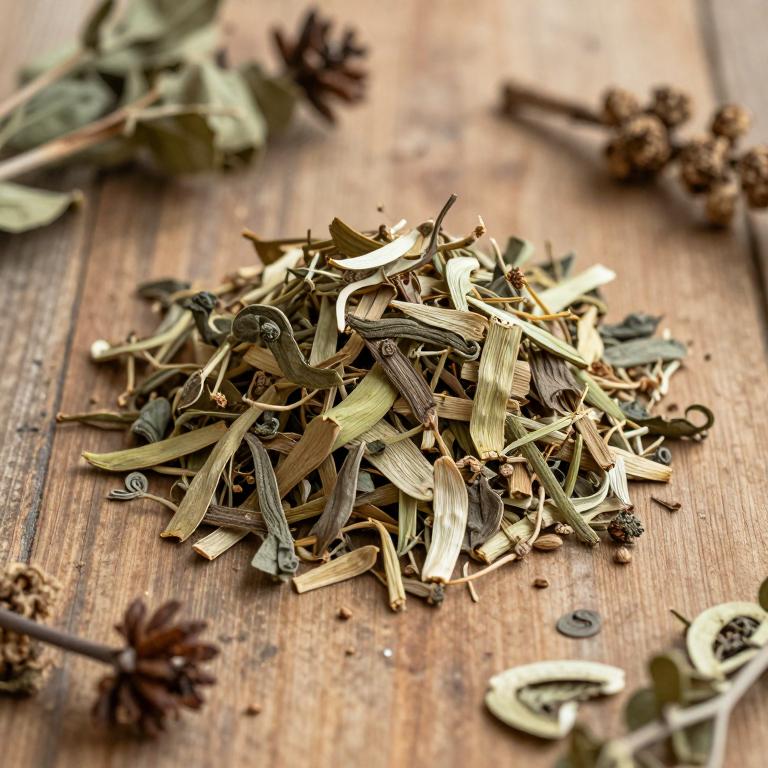
Names and Synonyms
Scientific Names
Accepted name
Pueraria candolleiSources: Wikidata, Catalogue of Life
Taxonomical Classification
This plant belongs to the kingdom Plantae and is classified under the phylum Streptophyta within the class Equisetopsida. As a member of the subclass Magnoliidae and the order Fabales, it is specifically situated in the family Fabaceae. Ultimately, it is identified by its genus, Pueraria.
| Rank | Classification |
|---|---|
| Kingdom | Plantae |
| Phylum | Streptophyta |
| Class | Equisetopsida |
| Subclass | Magnoliidae |
| Order | Fabales |
| Family | Fabaceae |
| Genus | Pueraria |
Sources: The World Checklist of Vascular Plants (WCVP)
Distribution
This plant exhibits a widespread presence across several key regions within the Asian continent. In the Indian Subcontinent, its distribution is notably documented in Assam, Bangladesh, and the East Himalaya. Moving into the Indo-China region, the species can also be found throughout the Andaman Islands. Additionally, its range extends into the country of Laos. Together, these locations highlight the diverse ecological habitats where the plant thrives.
| Region | Area |
|---|---|
| Indian Subcontinent | Assam |
| Indian Subcontinent | Bangladesh |
| Indian Subcontinent | East Himalaya |
| Indo-China | Andaman Is. |
| Indo-China | Laos |
| Indo-China | Myanmar |
| Indo-China | Thailand |
Sources: The World Checklist of Vascular Plants (WCVP)
Botanical Identification
Morphology
The morphology of Pueraria candollei is characterized by its growth habit as an obligatory climber, utilizing specialized structures to ascend through surrounding vegetation. The plant features slender, twining stems that exhibit a vigorous climbing nature, relying entirely on external support to reach sunlight. Its foliage typically consists of trifoliate leaves, where each leaf is composed of three distinct leaflets that are often ovate to elliptical in shape with acute or obtuse apices. The venation is prominent, providing structural integrity to the leaf blades. The inflorescence is generally arranged in axillary racemes, bearing small, papilionaceous flowers that are characteristic of the Fabaceae family. The root system is robust, often developing thickened structures that can serve as storage organs, while the reproductive organs consist of standard legume-type pods that dehisce to release seeds, ensuring the continuation of its climbing life cycle.
- Climber :
- obligatory
Physiology
The physiology of Pueraria candollei is characterized by its complex metabolic processes, particularly regarding its nutrient acquisition and growth strategies. A defining physiological attribute of this species is its relationship with soil nutrients; specifically, it is categorized as a nitrogen fixer, as it possesses the ability to engage in symbiotic associations with rhizobia bacteria to convert atmospheric nitrogen into a usable form for plant growth. This capacity for nitrogen fixation is a critical physiological trait that enhances its competitive advantage in nutrient-poor environments. Beyond nitrogen metabolism, the plant exhibits specialized photosynthetic efficiency and robust root development to support its climbing habit and survival in various ecological niches.
- Nitrogen fixer :
- no
Sources: Global Inventory of Floras and Traits (GIFT)
Chemicals
Pueraria candollei has 6 reported phytochemicals identified across 0 scientific publications and several other databases. The most consistently reported chemicals include Miroestrol, Puerarin, daidzein, Daidzin, Genistin.
| Chemical | Supporting sources | Consensus |
|---|---|---|
| Miroestrol | 2 supporting sources | ★☆☆☆☆ |
| Puerarin | 2 supporting sources | ★☆☆☆☆ |
| daidzein | 2 supporting sources | ★☆☆☆☆ |
| Daidzin | 1 supporting sources | ★☆☆☆☆ |
| Genistin | 1 supporting sources | ★☆☆☆☆ |
| genistein | 1 supporting sources | ★☆☆☆☆ |
Miroestrol
- Luminescence : the journal of biological and chemical luminescence
- Phytochemical analysis : PCA
Puerarin
- Planta medica
- Journal of natural medicines
daidzein
- Planta medica
- Journal of natural medicines
Daidzin
- Planta medica
Genistin
- Planta medica
genistein
- Planta medica
Activities
Pueraria candollei has 1 reported activities identified across 0 scientific publications and several other databases. The most consistently reported activities include Estrogenic.
| Activity | Supporting sources | Consensus |
|---|---|---|
| Estrogenic | 2 supporting sources | ★☆☆☆☆ |
Estrogenic
- Planta medica
- Journal of natural medicines
Conditions
Pueraria candollei has 2 reported investigations on conditions identified across 0 scientific publications and several other databases. The most consistently reported conditions include estrogenic effects, rejuvenation.
| Condition | Supporting sources | Consensus |
|---|---|---|
| Estrogenic effects | 2 supporting sources | ★☆☆☆☆ |
| Rejuvenation | 1 supporting sources | ★☆☆☆☆ |
Estrogenic effects
- Planta medica
- Journal of natural medicines
Rejuvenation
- Journal of ethnopharmacology
Preparations
Pueraria candollei has 2 reported preparations identified across 0 scientific publications and several other databases. The most consistently reported preparations include dried tuberous roots, plant raw materials.
| Preparation | Supporting sources | Consensus |
|---|---|---|
| Dried tuberous roots | 1 supporting sources | ★☆☆☆☆ |
| Plant raw materials | 1 supporting sources | ★☆☆☆☆ |
Dried tuberous roots
- Natural product communications
Plant raw materials
- Phytochemical analysis : PCA