saltmarsh grass
Puccinellia maritima · Accepted scientific name
Scientific literature: Very Sparse (11 studies) · ★☆☆☆☆
Saltmarsh grass, scientifically known as Puccinellia maritima, is a resilient halophyte essential to coastal ecosystems. Thriving in saline environments, it stabilizes mudflats and provides critical habitat for diverse fauna. Beyond its ecological role, this hardy grass holds significant potential in traditional medicine and pharmacological research for its bioactive compounds.
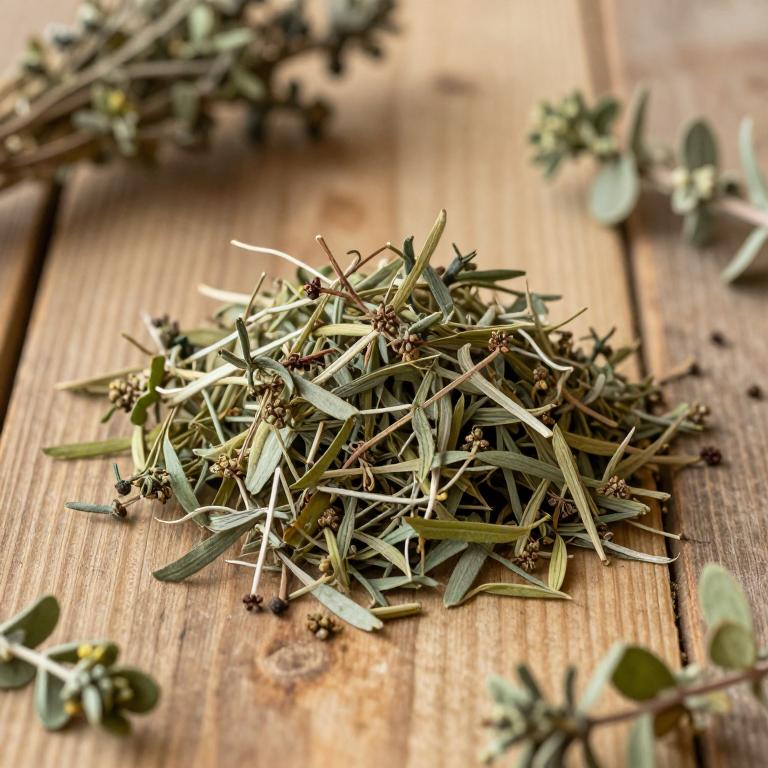
Names and Synonyms
Common Names
- saltmarsh grass
- seaside alkaligrass
- Common Salt-marsh-grass
- Common Saltmarsh-Grass
- Sea Meadow-Grass
- common saltmarsh grass
- American Alkali Grass
Scientific Names
Accepted name
Puccinellia maritimaSynonyms
- Atropis maritima
- Catabrosa maritima
- Festuca distans var. maritima
- Puccinellia baltica
- Molinia maritima
- Glyceria maritima
- Panicularia maritima
- Glyceria maritima var. deflexa
- Puccinellia maritima var. arenaria
- Puccinellia transsilvanica var. arenaria
- Sclerochloa arenaria
- Glyceria maritima subvar. subcaespitosa
- Sclerochloa maritima var. deflexa
- Glyceria dusenii
- Festuca thalassica
- Glyceria baltica
- Glyceria baumgarteniana
- Poa maritima var. hispida
- Poa maritima
- Puccinellia americana
- Puccinellia maritima f. glaberrima
- Puccinellia maritima var. major
- Glyceria maritima f. arenaria
- Festuca thalassica var. anomala
- Glyceria maritima var. hispida
- Glyceria maritima var. nana
- Glyceria maritima var. riparia
- Glyceria maritima var. amethystina
- Molinia distans var. reptans
- Puccinellia baltica f. setacea
- Atropis intermedia var. arenaria
- Puccinellia pseudomaritima
- Phippsia maritima
- Puccinellia transsilvanica var. pseudomaritima
- Puccinellia thalassica
- Puccinellia dusenii
- Atropis intermedia var. pseudomaritima
- Atropis pseudomaritima
- Atropis distans var. maritima
- Glyceria distans var. maritima
- Puccinellia maritima var. nana
- Puccinellia maritima var. subfistulosa
- Puccinellia maritima var. reptans
- Glyceria baltica f. vegetior
- Glyceria baltica f. setacea
- Puccinellia baltica f. vegetior
Regional and Traditional Names
Spanish:
- poa de seda
German:
- Andel
- Strandschwingel
- Strand-Salzschwaden
- Andelgras
- Strandschwingel
French:
- Glycérie maritime
- Puccinellie maritime
- atropis maritime
- atropis maritime
- glycérie maritime
- puccinellie maritime
Sources: Wikidata, Catalogue of Life
Taxonomical Classification
This plant belongs to the kingdom Plantae and is classified within the phylum Streptophyta and the class Equisetopsida. It falls under the subclass Magnoliidae and the order Poaales, belonging to the family Poaceae. Within this family, it is specifically categorized under the genus Puccinellia.
| Rank | Classification |
|---|---|
| Kingdom | Plantae |
| Phylum | Streptophyta |
| Class | Equisetopsida |
| Subclass | Magnoliidae |
| Order | Poales |
| Family | Poaceae |
| Genus | Puccinellia |
Sources: The World Checklist of Vascular Plants (WCVP)
Distribution
This plant exhibits a widespread presence across several regions in Northern Europe. Its distribution includes the coastal areas of Denmark and the islands of Førøya. It can also be found throughout the varied landscapes of Great Britain. Furthermore, the species is established within the unique environment of Iceland. Finally, its range extends to the maritime territories of Ireland.
| Region | Area |
|---|---|
| Northern Europe | Denmark |
| Northern Europe | Føroyar |
| Northern Europe | Great Britain |
| Northern Europe | Iceland |
| Northern Europe | Ireland |
| Northern Europe | Norway |
| Northern Europe | Sweden |
| Middle Europe | Belgium |
| Middle Europe | Germany |
| Middle Europe | Netherlands |
Sources: The World Checklist of Vascular Plants (WCVP)
Botanical Identification
Ecology
The ecology of Puccinellia maritima is fundamentally defined by its specialized adaptation to coastal saline environments, where it serves as a key component of salt marsh and maritime grassland ecosystems. This species is specifically adapted to thrive in unstable, nutrient-poor substrates, showing a strong ecological preference for habitats characterized by sand and fine alluvial sediments. It is typically found in the intertidal and supratidal zones, where it must withstand high levels of soil salinity, frequent tidal inundation, and intense salt spray. By colonizing sandy coastal margins, the plant plays a vital role in stabilizing shifting substrates and contributing to the gradual accretion of soil, which facilitates the transition of pioneer zones into more complex halophytic communities.
- Habitat :
- sand
Life history
The life history of Puccinellia maritima is characterized by its nature as a perennial species, allowing it to persist through multiple growing seasons within its saline habitats. As a hemicryptophyte, its perennating buds are located at or just below the soil surface, a strategic adaptation for surviving environmental stressors. This plant maintains an evergreen status, retaining its foliage throughout much of the year to facilitate continuous photosynthetic activity.
- Deciduousness :
- evergreen
- Life form :
- hemicryptophyte
- Lifecycle :
- perennial
Morphology
The morphology of Puccinellia maritima is characterized by a graminoid growth form, specifically classified as a non-woody herb. This plant is self-supporting and does not exhibit any climbing or parasitic behavior, functioning as an independent organism. Its shoot orientation is primarily ascending, and it occupies a terrestrial habitat rather than being aquatic or epiphytic. In terms of stature, the plant is relatively low-growing, with a minimum height of 0.1 m, a mean height of 0.2 m, and a maximum height reaching up to 0.9 m.
- Aquatic :
- terrestrial
- Climber :
- self-supporting
- Epiphyte :
- terrestrial
- Growth form :
- herb
- Growth form :
- graminoid
- Parasite :
- independent
- Plant height max:
- 0.9 m
- Plant height mean:
- 0.2 m
- Plant height min:
- 0.1 m
- Shoot orientation :
- ascending
- Woodiness :
- non-woody
Physiology
The physiology of Puccinellia maritima is characterized by a C3 photosynthetic pathway and a non-carnivorous nutritional strategy. The leaf morphology displays significant variability, with leaf lengths ranging from a minimum of 2 cm to a maximum of 15 cm. The width of the leaves is similarly variable, measuring between a minimum of 0.15 cm and a maximum of 0.35 cm, resulting in a mean leaf size of approximately 0.39 cm². Furthermore, the plant exhibits a mean Specific Leaf Area (SLA) of 159.7 cm²/g, reflecting its specific structural adaptations for biomass production and resource acquisition within its ecological niche.
- Carnivory :
- non-carnivorous
- Leaf length max:
- 15 cm
- Leaf length min:
- 2 cm
- Leaf size mean:
- 0.39 cm²
- Leaf width max:
- 0.35 cm
- Leaf width min:
- 0.15 cm
- Photosynthetic pathway :
- C3
- Specific Leaf Area (SLA) mean:
- 159.7 cm²/g
Reproduction
The reproduction of Puccinellia maritima is characterized by a sexual reproductive cycle involving an inflorescence structured as a panicle, which typically measures between 0.03 m and 0.15 m in length. The flowering period begins in April and concludes in July. During this stage, the individual flowers are relatively small, with lengths ranging from 0.35 cm to 0.45 cm. The plant utilizes an abiotic pollination syndrome, specifically relying on wind for the transfer of pollen. Notably, self-fertilization is absent in this species, and it does not employ asexual reproduction. Following successful fertilization, the plant produces seeds with a mean mass of approximately 0.000787 g, which are disseminated through an anemochorous dispersal syndrome, utilizing the wind to spread its progeny.
- Dispersal syndrome :
- anemochorous
- Flower length max:
- 0.45 cm
- Flower length min:
- 0.35 cm
- Flowering time :
- Apr
- Flowering time :
- Jul
- Inflorescence :
- panicle
- Inflorescence length max:
- 0.15 m
- Inflorescence length min:
- 0.03 m
- Pollination syndrome :
- wind
- Pollination syndrome :
- abiotic
- Reproduction asexual :
- absent
- Seed mass mean:
- 0.000787 g
- Self fertilization :
- absent
Sources: Global Inventory of Floras and Traits (GIFT)
Chemicals
Puccinellia maritima has 8 reported phytochemicals identified across 0 scientific publications and several other databases. The most consistently reported chemicals include Chlorophylls, Hydroxycinnamic Acids, Lignans, apigenin, caffeic acid.
| Chemical | Supporting sources | Consensus |
|---|---|---|
| Chlorophylls | 1 supporting sources | ★☆☆☆☆ |
| Hydroxycinnamic Acids | 1 supporting sources | ★☆☆☆☆ |
| Lignans | 1 supporting sources | ★☆☆☆☆ |
| apigenin | 1 supporting sources | ★☆☆☆☆ |
| caffeic acid | 1 supporting sources | ★☆☆☆☆ |
| ferulic acid | 1 supporting sources | ★☆☆☆☆ |
| flavonols | 1 supporting sources | ★☆☆☆☆ |
| trihydroxymethoxyflavone | 1 supporting sources | ★☆☆☆☆ |
Chlorophylls
- Molecules (Basel, Switzerland)
Hydroxycinnamic Acids
- Molecules (Basel, Switzerland)
Lignans
- Molecules (Basel, Switzerland)
apigenin
- Molecules (Basel, Switzerland)
caffeic acid
- Molecules (Basel, Switzerland)
ferulic acid
- Molecules (Basel, Switzerland)
flavonols
- Molecules (Basel, Switzerland)
trihydroxymethoxyflavone
- Molecules (Basel, Switzerland)
Activities
Puccinellia maritima has 3 reported activities identified across 0 scientific publications and several other databases. The most consistently reported activities include Antibacterial, Antifungal, Antioxidant.
| Activity | Supporting sources | Consensus |
|---|---|---|
| Antibacterial | 1 supporting sources | ★☆☆☆☆ |
| Antifungal | 1 supporting sources | ★☆☆☆☆ |
| Antioxidant | 1 supporting sources | ★☆☆☆☆ |
Antibacterial
- Molecules (Basel, Switzerland)
Antifungal
- Molecules (Basel, Switzerland)
Antioxidant
- Molecules (Basel, Switzerland)