Pteroxygonum denticulatum
Pteroxygonum denticulatum · Accepted scientific name
Scientific literature: Very Sparse (4 studies) · ★☆☆☆☆
Pteroxygonum denticulatum, scientifically known as Pteroxygonum denticulatum, is a medicinal plant valued in traditional healing practices. Often found in tropical regions, it is recognized for its diverse bioactive compounds. Researchers study this species for its potential therapeutic properties, particularly in managing inflammatory conditions and supporting overall wellness.
- Family
- Polygonaceae
- Native range
- Asia-Temperate
- Parts used
- Not available
- Common names
- Not available
- Scientific synonyms
- Fallopia Denticulata · Polygonum Denticulatum
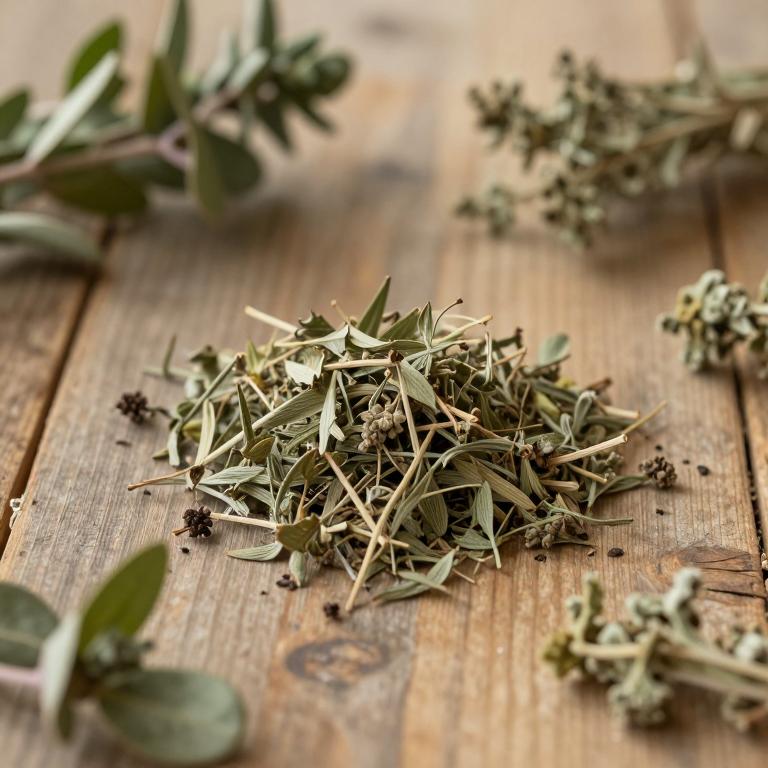
Names and Synonyms
Scientific Names
Accepted name
Pteroxygonum denticulatumSynonyms
- Fallopia denticulata
- Polygonum denticulatum
Sources: Wikidata, Catalogue of Life
Taxonomical Classification
This plant belongs to the kingdom Plantae and is classified under the phylum Streptophyta and the class Equisetopsida. Within the subclass Magnoliidae, it is ordered under Caryophyllales and placed in the family Polygonaceae. Ultimately, it is identified by the genus Pteroxygonum, with the specific species being Pteroxygonum denticulaatum.
| Rank | Classification |
|---|---|
| Kingdom | Plantae |
| Phylum | Streptophyta |
| Class | Equisetopsida |
| Subclass | Magnoliidae |
| Order | Caryophyllales |
| Family | Polygonaceae |
| Genus | Pteroxygonum |
Sources: The World Checklist of Vascular Plants (WCVP)
Distribution
This plant exhibits a specific geographical distribution across certain regions of East Asia. It is primarily documented within the South-Central part of China. Additionally, its presence extends into the high-altitude landscapes of Tibet. These locations represent the known habitats where the species can be found growing naturally. Consequently, its range is concentrated within these particular Chinese territories.
| Region | Area |
|---|---|
| China | China South-Central |
| China | Tibet |
Sources: The World Checklist of Vascular Plants (WCVP)
Botanical Identification
Ecology
The ecology of Pteroxygonum denticulatum is characterized by a highly specific altitudinal niche, as it is documented to exist within a very narrow environmental band. The species is found at a consistent elevation of 2450 m AMSL, representing its minimum, mean, and maximum elevational range. This precise vertical distribution suggests that the plant is adapted to the specific climatic conditions, such as temperature gradients, atmospheric pressure, and moisture levels, found exclusively at this high-altitude threshold.
- Elevational range max:
- 2450 m AMSL
Life history
The life history of Pteroxygonum denticulatum is characterized by its status as a perennial plant, allowing it to persist in its environment through multiple growing seasons. As a long-lived species, it does not follow the rapid single-season cycle of annuals or the two-year cycle of biennials, but instead maintains a sustained presence within its ecological niche. This perennial nature enables the plant to establish robust root systems and accumulate resources over time, facilitating repeated reproductive efforts and greater resilience against seasonal environmental fluctuations.
- Lifecycle :
- perennial
Physiology
The physiology of Pteroxygonum denticulatum is characterized by significant morphological variability in its foliar structure, which plays a critical role in its photosynthetic capacity and environmental adaptation. The leaf dimensions exhibit a wide range of plasticity, with leaf lengths varying from a minimum of 3 cm to a maximum of 11 cm, resulting in a calculated mean leaf length of 7 cm. Complementing this longitudinal variation is a corresponding breadth in leaf width, which fluctuates between a minimum of 2 cm and a maximum of 5 cm. This structural diversity in leaf surface area suggests a physiological mechanism for optimizing light interception and gas exchange across different microclimates or developmental stages.
- Leaf length max:
- 11 cm
- Leaf length mean:
- 7 cm
- Leaf length min:
- 3 cm
- Leaf width max:
- 5 cm
- Leaf width min:
- 2 cm
Reproduction
Reproduction in Pteroxygonum denticulatum is characterized by its specific flowering structures, which are organized into inflorescences that serve as the primary site for sexual reproduction. These inflorescences exhibit a consistent size range, typically measuring between a minimum of 0.1 m and a maximum of 0.15 m in length. Within these floral arrangements, the arrangement of flowers facilitates the necessary biological processes for pollination and subsequent seed development. The controlled dimensions of the inflorescence length ensure a specific spatial distribution of blooms, which is critical for the plant's reproductive success and its interaction with potential pollinators.
- Inflorescence length max:
- 0.15 m
- Inflorescence length min:
- 0.1 m
Sources: Global Inventory of Floras and Traits (GIFT)
Chemicals
Pteroxygonum denticulatum has 4 reported phytochemicals identified across 0 scientific publications and several other databases. The most consistently reported chemicals include (+)-catechin, (-)-Epicatechin gallate, Gallic acid, SYRINGIC ACID.
| Chemical | Supporting sources | Consensus |
|---|---|---|
| (+)-catechin | 1 supporting sources | ★☆☆☆☆ |
| (-)-Epicatechin gallate | 1 supporting sources | ★☆☆☆☆ |
| Gallic acid | 1 supporting sources | ★☆☆☆☆ |
| SYRINGIC ACID | 1 supporting sources | ★☆☆☆☆ |
(+)-catechin
- Biomedical chromatography : BMC
(-)-Epicatechin gallate
- Biomedical chromatography : BMC
Gallic acid
- Biomedical chromatography : BMC
SYRINGIC ACID
- Biomedical chromatography : BMC
Preparations
Pteroxygonum denticulatum has 1 reported preparations identified across 0 scientific publications and several other databases. The most consistently reported preparations include red dye.
| Preparation | Supporting sources | Consensus |
|---|---|---|
| Red dye | 1 supporting sources | ★☆☆☆☆ |
Red dye
- Journal of ethnobiology and ethnomedicine