Pterodon emarginatus
Pterodon emarginatus · Accepted scientific name
Scientific literature: Very Sparse (22 studies) · ★☆☆☆☆
, scientifically known as Pterodon emarginatus, is a distinctive medicinal plant valued for its unique therapeutic properties. Often found in specific ecological niches, it contains bioactive compounds used in traditional healing practices. Understanding its chemical profile and botanical characteristics is essential for exploring its potential in modern pharmacological research.
- Family
- Fabaceae
- Native range
- Southern America
- Parts used
- Seed · Fruit
- Common names
- Not available
- Scientific synonyms
- Commilobium Polygaliflorum · Pterodon Polygaliflorus
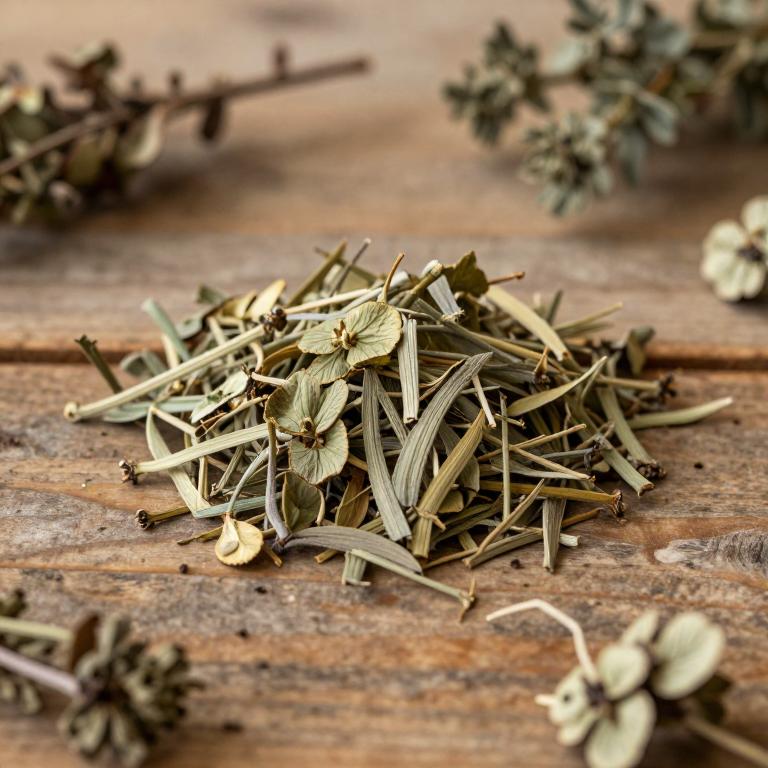
Names and Synonyms
Scientific Names
Accepted name
Pterodon emarginatusSynonyms
- Commilobium polygaliflorum
- Pterodon polygaliflorus
Regional and Traditional Names
French:
- Sucupira
Sources: Wikidata, Catalogue of Life
Taxonomical Classification
This plant belongs to the kingdom Plantae and the phylum Streptophyta, placing it within the class Equisetopsida and subclass Magnoliidae. It is further classified under the order Fabales and the family Fabaceae. Specifically, it is identified by the genus Pterodon, with its species designation being emarginatus.
| Rank | Classification |
|---|---|
| Kingdom | Plantae |
| Phylum | Streptophyta |
| Class | Equisetopsida |
| Subclass | Magnoliidae |
| Order | Fabales |
| Family | Fabaceae |
| Genus | Pterodon |
Sources: The World Checklist of Vascular Plants (WCVP)
Distribution
This plant exhibits a broad presence across several key regions within the South American continent. Its distribution begins in Western South America, where it is specifically found in Bolivia. A significant portion of its range is concentrated in Brazil, covering the North and Northeast territories. Furthermore, the species extends its reach into the West-Central and Southeast regions of Brazil. Together, these locations highlight the diverse environmental niches this medicinal plant occupies.
| Region | Area |
|---|---|
| Western South America | Bolivia |
| Brazil | Brazil West-Central |
| Brazil | Brazil Northeast |
| Brazil | Brazil Southeast |
| Brazil | Brazil North |
Sources: The World Checklist of Vascular Plants (WCVP)
Botanical Identification
Ecology
The ecology of Pterodon emarginatus is characterized by its adaptation to diverse Brazilian biomes, primarily occurring within the Cerrado (latu sensu), as well as in Atlantic Forest (Floresta Ciliar) environments or within gallery forests (Galeria). This distribution allows the species to occupy varied ecological niches, ranging from the open, seasonal landscapes of the tropical savanna to the more humid, sheltered environments found along riparian corridors. Its presence in these habitats suggests a capacity to thrive in both well-drained soils typical of the Cerrado and the more moisture-retentive substrates associated with gallery forests, playing a functional role in the structural complexity and biodiversity of these distinct ecosystems.
- Habitat :
- Cerrado (lato sensu), Floresta Ciliar ou Galeria
Life history
The life history of Pterodon emarginatus is characterized by its status as a perennial plant, allowing it to persist in its environment through multiple growing seasons. As a deciduous species, it undergoes a seasonal cycle where it sheds its foliage, typically in response to changing environmental conditions or temperature fluctuations, before entering a period of dormancy. This cyclical pattern of growth and leaf loss is central to its survival strategy, enabling the plant to manage resources effectively throughout its long-lived life cycle.
- Deciduousness :
- deciduous
- Lifecycle :
- perennial
Morphology
The morphology of Pterodon emarginatus is characterized by its robust growth form as a woody tree, reaching a mean height of approximately 12 m, with a maximum potential height of up to 15 m. It is a terrestrial species that functions as an independent organism, neither acting as a parasite nor existing as an epiphyte. In terms of its structural support and habit, the plant is categorized as self-supporting, lacking the climbing tendencies of lianas or vines.
- Aquatic :
- terrestrial
- Climber :
- self-supporting
- Epiphyte :
- terrestrial
- Growth form :
- tree
- Parasite :
- independent
- Plant height max:
- 15 m
- Plant height mean:
- 12 m
- Woodiness :
- woody
Physiology
The physiology of Pterodon emarginatus is characterized by a standard C3 photosynthetic pathway, utilizing the Calvin cycle to fix carbon dioxide during the light-independent reactions. This metabolic process involves the direct carboxylation of ribulose-1,5-bisphosphate by the enzyme RuBisCO, which is typical for most woody species in its taxonomic group. Furthermore, the plant does not function as a nitrogen fixer, meaning it lacks the symbiotic relationship with diazotrophic bacteria required to convert atmospheric nitrogen into bioavailable forms, and instead relies on the uptake of nitrates and ammonium from the soil to satisfy its nutritional requirements.
- Nitrogen fixer :
- no
- Photosynthetic pathway :
- C3
Reproduction
The reproduction of Pterodon emarginationus is driven by biotic mechanisms, specifically through a pollination syndrome that relies on living organisms to facilitate genetic exchange. The process is characterized by biotic pollination, where the transfer of pollen is mediated by biological agents rather than abiotic factors like wind or water. Within this framework, the plant utilizes insect-mediated pollination to ensure successful fertilization. This insect involvement encompasses a diverse range of pollinators, including bees, beetles, ants, butterflies, moths, and flies, all of which play a critical role in the reproductive cycle by transporting pollen between individual plants.
- Pollination syndrome :
- insect
- Pollination syndrome :
- biotic
Sources: Global Inventory of Floras and Traits (GIFT)
Plant Parts
Pterodon emarginatus has 2 reported plant parts identified across 3 scientific publications and several other databases that are studied for medicinal purposes. The most consistently reported plant part include seed, fruit.
| Plant part | Supporting sources | Consensus |
|---|---|---|
| Seed | 2 supporting sources | ★☆☆☆☆ |
| Fruit | 1 supporting sources | ★☆☆☆☆ |
Seed
- Journal of ethnopharmacology
- Molecules (Basel, Switzerland)
Fruit
- Tuberculosis (Edinburgh, Scotland)
Chemicals
Pterodon emarginatus has 9 reported phytochemicals identified across 3 scientific publications and several other databases. The most consistently reported chemicals include Hederagenin, Luteolin 7-O-rutinoside, Schaftoside, Soyasaponin Bb, Soyasaponin Be.
| Chemical | Supporting sources | Consensus |
|---|---|---|
| Hederagenin | 1 supporting sources | ★☆☆☆☆ |
| Luteolin 7-O-rutinoside | 1 supporting sources | ★☆☆☆☆ |
| Schaftoside | 1 supporting sources | ★☆☆☆☆ |
| Soyasaponin Bb | 1 supporting sources | ★☆☆☆☆ |
| Soyasaponin Be | 1 supporting sources | ★☆☆☆☆ |
| Terpenoids | 1 supporting sources | ★☆☆☆☆ |
| Vicenin 2 | 1 supporting sources | ★☆☆☆☆ |
| coumarin | 1 supporting sources | ★☆☆☆☆ |
| farnesol | 1 supporting sources | ★☆☆☆☆ |
Hederagenin
- Phytomedicine : international journal of phytotherapy and phytopharmacology
Luteolin 7-O-rutinoside
- Phytomedicine : international journal of phytotherapy and phytopharmacology
Schaftoside
- Phytomedicine : international journal of phytotherapy and phytopharmacology
Soyasaponin Bb
- Phytomedicine : international journal of phytotherapy and phytopharmacology
Soyasaponin Be
- Phytomedicine : international journal of phytotherapy and phytopharmacology
Terpenoids
- Phytomedicine : international journal of phytotherapy and phytopharmacology
Vicenin 2
- Phytomedicine : international journal of phytotherapy and phytopharmacology
coumarin
- Journal of ethnopharmacology
farnesol
- Molecules (Basel, Switzerland)
Activities
Pterodon emarginatus has 5 reported activities identified across 3 scientific publications and several other databases. The most consistently reported activities include Antinociceptive, Analgesic, Antiinflammatory, Bronchodilator, Tonic.
| Activity | Supporting sources | Consensus |
|---|---|---|
| Antinociceptive | 2 supporting sources | ★☆☆☆☆ |
| Analgesic | 1 supporting sources | ★☆☆☆☆ |
| Antiinflammatory | 1 supporting sources | ★☆☆☆☆ |
| Bronchodilator | 1 supporting sources | ★☆☆☆☆ |
| Tonic | 1 supporting sources | ★☆☆☆☆ |
Antinociceptive
- Journal of ethnopharmacology
- Phytomedicine : international journal of phytotherapy and phytopharmacology
Analgesic
- Phytomedicine : international journal of phytotherapy and phytopharmacology
Antiinflammatory
- Journal of ethnopharmacology
Bronchodilator
- Journal of ethnopharmacology
Tonic
- Journal of ethnopharmacology
Conditions
Pterodon emarginatus has 3 reported investigations on conditions identified across 3 scientific publications and several other databases. The most consistently reported conditions include Mycobacterium bovis, analgesic, experimental autoimmune encephalomyelitis.
| Condition | Supporting sources | Consensus |
|---|---|---|
| Mycobacterium bovis | 1 supporting sources | ★☆☆☆☆ |
| Analgesic | 1 supporting sources | ★☆☆☆☆ |
| Experimental autoimmune encephalomyelitis | 1 supporting sources | ★☆☆☆☆ |
Mycobacterium bovis
- Tuberculosis (Edinburgh, Scotland)
Analgesic
- Phytomedicine : international journal of phytotherapy and phytopharmacology
Experimental autoimmune encephalomyelitis
- Journal of ethnopharmacology
Preparations
Pterodon emarginatus has 7 reported preparations identified across 3 scientific publications and several other databases. The most consistently reported preparations include essential oil (EO), chloroform, ethanol extract (EthE), ethyl acetate, hydroalcoholic extracts (HAEs).
| Preparation | Supporting sources | Consensus |
|---|---|---|
| Essential oil (eo) | 3 supporting sources | ★★☆☆☆ |
| Chloroform | 1 supporting sources | ★☆☆☆☆ |
| Ethanol extract (ethe) | 1 supporting sources | ★☆☆☆☆ |
| Ethyl acetate | 1 supporting sources | ★☆☆☆☆ |
| Hydroalcoholic extracts (haes) | 1 supporting sources | ★☆☆☆☆ |
| Methanol | 1 supporting sources | ★☆☆☆☆ |
| N-hexane | 1 supporting sources | ★☆☆☆☆ |
Essential oil (eo)
- Tuberculosis (Edinburgh, Scotland)
- Journal of ethnopharmacology
- Molecules (Basel, Switzerland)
Chloroform
- Molecules (Basel, Switzerland)
Ethanol extract (ethe)
- Molecules (Basel, Switzerland)
Ethyl acetate
- Molecules (Basel, Switzerland)
Hydroalcoholic extracts (haes)
- Journal of ethnopharmacology
Methanol
- Molecules (Basel, Switzerland)
N-hexane
- Molecules (Basel, Switzerland)