Applebush
Pterocaulon sphacelatum · Accepted scientific name
Scientific literature: Very Sparse (3 studies) · ★☆☆☆☆
Applebush, scientifically known as Pterocaulon sphaceatum, is a versatile medicinal shrub native to tropical regions. Renowned in traditional medicine, its leaves and roots are frequently utilized to treat various ailments, including inflammation, skin infections, and digestive issues. This potent botanical offers significant therapeutic potential for holistic wellness practices.
- Family
- Asteraceae
- Native range
- Asia-Tropical
- Parts used
- Not available
- Common names
- Applebush
- Scientific synonyms
- Sphaeranthus Erectus · Monenteles Sphacelatus · 1 more
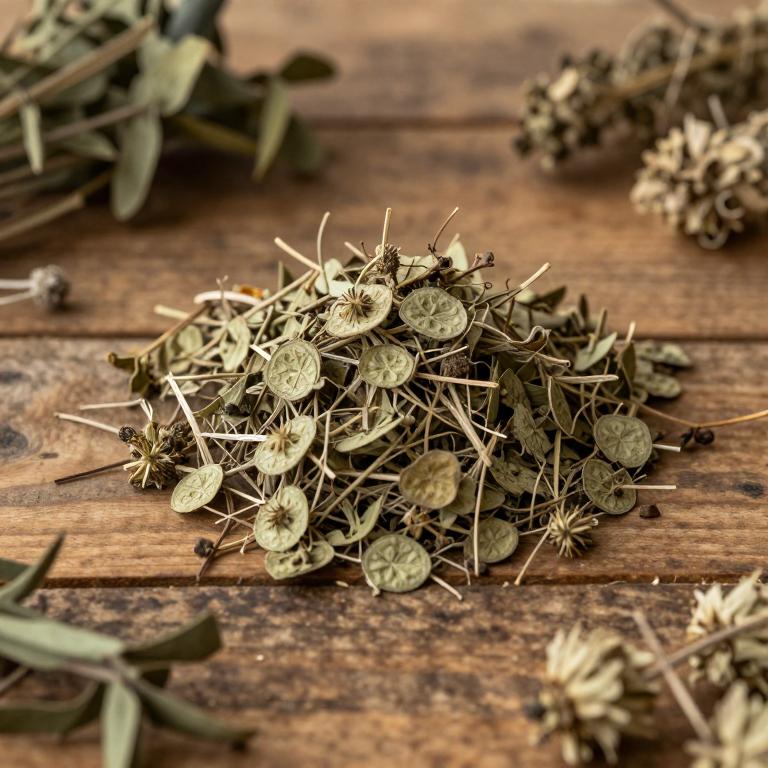
Names and Synonyms
Common Names
- Applebush
Scientific Names
Accepted name
Pterocaulon sphacelatumSynonyms
- Sphaeranthus erectus
- Monenteles sphacelatus
- Pterocaulon tomentosus
Sources: Wikidata, Catalogue of Life
Taxonomical Classification
This plant belongs to the kingdom Plantae within the phylum Streptophyta and is classified under the class Equisetopsida. It is further categorized in the subclass Magnoliidae and the order Asterales, specifically falling under the family Asteraceae. Within this family, it is identified by its genus, Pterocaulon.
| Rank | Classification |
|---|---|
| Kingdom | Plantae |
| Phylum | Streptophyta |
| Class | Equisetopsida |
| Subclass | Magnoliidae |
| Order | Asterales |
| Family | Asteraceae |
| Genus | Pterocaulon |
Sources: The World Checklist of Vascular Plants (WCVP)
Distribution
This plant exhibits a broad geographical distribution spanning across several distinct regions of Southeast Asia and Oceania. Within the Malesian region, it can be specifically found inhabiting the Lesser Sunda Islands. Its presence extends significantly into Australia, where it is documented in the Northern Territory and Queensland. Furthermore, the species occupies southern territories, including South Australia. Finally, its range reaches as far as New South Wales, demonstrating its wide ecological adaptability.
| Region | Area |
|---|---|
| Malesia | Lesser Sunda Is. |
| Australia | New South Wales |
| Australia | Northern Territory |
| Australia | Queensland |
| Australia | South Australia |
| Australia | Victoria |
| Australia | Western Australia |
| Southwestern Pacific | New Caledonia |
Sources: The World Checklist of Vascular Plants (WCVP)
Botanical Identification
Ecology
The ecology of Pterocaulon sphacelatum is characterized by its adaptation to open and disturbed landscapes, primarily thriving within savanna ecosystems. It is frequently found amidst dense secondary shrublands and within rudeal vegetation, where it colonizes areas of recent disturbance or human-impacted ground. This preference for ruderal habitats suggests a high capacity for opportunistic growth in environments where light availability is relatively high and soil conditions are shaped by periodic disturbances. By occupying these transitional and shrub-dominated zones, the species integrates into the complex structural dynamics of savanna biomes and recovering secondary growth habitats.
- Habitat :
- Savanna, dense secondary shrub and ruderal vegetation
Life history
The life history of Pterocaulon sphacelatum is characterized by its status as a perennial plant, allowing it to persist through multiple growing seasons. As a perennial species, it undergoes a recurring cycle of vegetative growth and reproductive phases, often establishing a robust root system that enables it to survive dormant periods. Its developmental trajectory involves establishing itself in its natural habitat and periodically producing flowering structures to facilitate seed dispersal and genetic continuity. This long-term survival strategy distinguishes it from annual or biennial species, as it can maintain its presence in an ecosystem over several years, contributing to its stability within its specific ecological niche.
- Lifecycle :
- perennial
Morphology
The morphology of Pterocaulon sphacelatum is characterized by a growth form consisting of a non-woody herb or forb. It functions as an independent organism rather than a parasite or epiphyte, maintaining a primarily terrestrial existence, though it can inhabit aquactic or semiaquatic environments. The plant is self-supporting in its growth habit, rather than acting as a liana, vine, or obligatory climber. In terms of stature, it is a relatively small species, with a plant height ranging from a minimum of 0.2 m to a maximum of 1.2 m.
- Aquatic :
- terrestrial
- Climber :
- self-supporting
- Epiphyte :
- terrestrial
- Growth form :
- herb
- Growth form :
- forb
- Parasite :
- independent
- Plant height max:
- 1.2 m
- Plant height min:
- 0.2 m
- Woodiness :
- non-woody
Physiology
The physiology of Pterocaulon sphacelatum is characterized by a C3 photosynthetic pathway, which dictates its metabolic processes and carbon fixation strategies. The plant's vegetative structure includes leaves that exhibit significant morphological variation in size, with individual leaf lengths ranging from a minimum of 1 cm to a maximum of 5 cm. Complementing these dimensions, the leaf width fluctuates between a minimum of 0.3 cm and a maximum of 1.5 cm, reflecting a slender and variable foliar architecture that supports its physiological functions within its habitat.
- Leaf length max:
- 5 cm
- Leaf length min:
- 1 cm
- Leaf width max:
- 1.5 cm
- Leaf width min:
- 0.3 cm
- Photosynthetic pathway :
- C3
Reproduction
The reproduction of Pterocaulon sphacelatum is characterized by a specialized dispersal mechanism and highly specific seed morphology. The plant employs an anemochorous dispersal syndrome, relying primarily on wind to transport its seeds to new locations. The seeds produced are remarkably minute, exhibiting a significant range in mass that facilitates efficient movement through air currents. Specifically, the seed mass ranges from a minimum of $3 \times 10^{-5}$ g to a maximum of $5 \times 10^{-5}$ g, with an average seed mass of $3.73 \times 10^{-5}$ g. This lightweight profile is a critical adaptation for its wind-driven dispersal strategy, ensuring the effective colonization of suitable habitats.
- Dispersal syndrome :
- anemochorous
- Seed mass max:
- 5e-05 g
- Seed mass mean:
- 3.73e-05 g
- Seed mass min:
- 3e-05 g
Sources: Global Inventory of Floras and Traits (GIFT)
Chemicals
Pterocaulon sphacelatum has 1 reported phytochemicals identified across 0 scientific publications and several other databases. The most consistently reported chemicals include Chrysosplenol C.
| Chemical | Supporting sources | Consensus |
|---|---|---|
| Chrysosplenol C | 1 supporting sources | ★☆☆☆☆ |
Chrysosplenol C
- Journal of cardiovascular pharmacology
Conditions
Pterocaulon sphacelatum has 1 reported investigations on conditions identified across 0 scientific publications and several other databases. The most consistently reported conditions include poliovirus type 1.
| Condition | Supporting sources | Consensus |
|---|---|---|
| Poliovirus type 1 | 1 supporting sources | ★☆☆☆☆ |
Poliovirus type 1
- Journal of ethnopharmacology